

2026 Best Deep Hole Honing Machines for Sale

Choosing a deep-hole honing machine is not a catalog exercise. It is a decision about bore geometry, material, production volume, and the finish your parts must hold. A cylinder block, hydraulic tube, and precision sleeve can demand different tooling, stroke lengths, and process controls. The right machine should fit the work—not merely look impressive on a specification sheet.

This guide compares Deep Hole Honing machines for sale in 2026, with attention to bore capacity, achievable surface finish, automation, setup requirements, and service support. Look closely at the details: a long workpiece needs stable support, while a narrow bore may require tooling that reaches deep without sacrificing control. Ask suppliers how they verify straightness and roundness under production conditions. Request sample results on material and dimensions close to your own parts. A polished demonstration piece is useful, but it is not enough.

One point deserves care. No verified expert quotation or source was provided, so attributing a fabricated statement to a named honing specialist would undermine trust. Before publication, add a checked quote from an identifiable industry expert. Then compare machine specifications against your actual process, including operator skill and maintenance time. Those details are easy to underestimate. A machine that performs well on paper may still be the wrong fit for your shop.
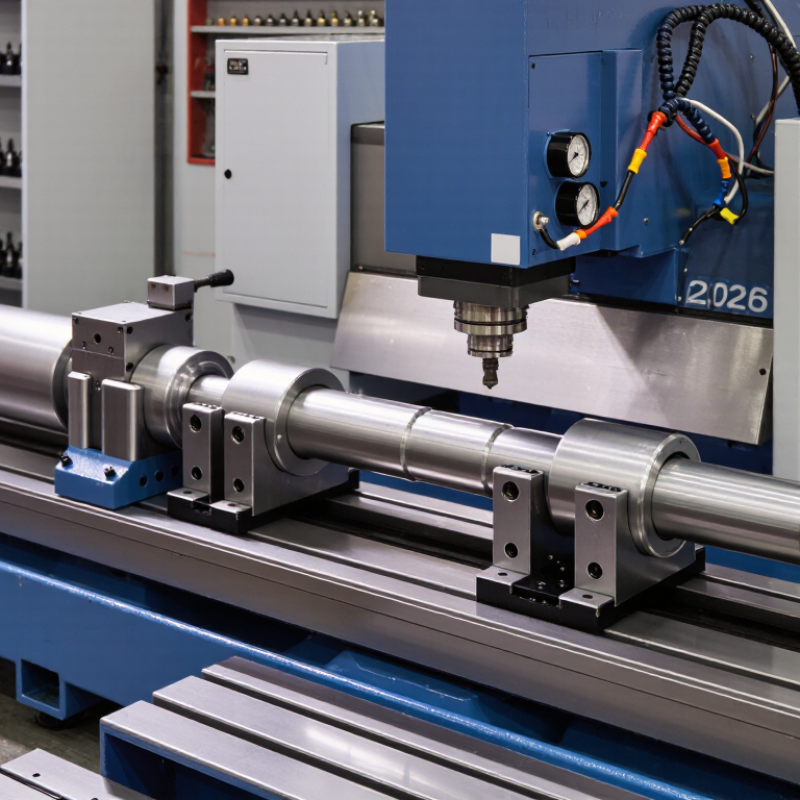
2026 Best Deep Hole Honing Machines for Sale

What Deep Hole Honing Machines Do and How They Work

Deep hole honing machines refine long internal bores after drilling or boring. They use an expanding honing head fitted with abrasive stones. As the head rotates and moves back and forth, the stones contact the bore wall and remove a small amount of material. This controlled action can improve roundness, straightness, and surface finish. It is a finishing process, not a fast way to remove large amounts of stock. Slow, deliberate work.

A typical setup supports the workpiece, aligns the spindle with the bore, and supplies honing fluid. The fluid cools the contact area and carries away fine abrasive and metal particles. The operator adjusts stone pressure and stroke length to suit the bore’s diameter and depth. Measurements before and after honing help confirm whether the geometry has changed as intended. A clean bore matters. Even small chips can mark the surface or affect readings. In practice, alignment deserves special attention: a machine may seem properly set, yet a long bore can reveal slight deflection. Results also depend on material, abrasive choice, and starting condition, so one setting rarely suits every job. The process is precise, but not automatic.

Types of Deep Hole Honing Machines Available in 2026

Deep-hole honing machines in 2026 generally fall into horizontal and vertical configurations. Horizontal models support long workpieces along the machine bed, making alignment and loading easier to manage. They suit tubes and hydraulic cylinders with extended bores. Vertical machines hold the workpiece upright, which can help with heavy parts and shop-floor handling. That layout needs enough overhead clearance. Check it.

Control systems also vary. CNC machines coordinate tool stroke, rotation, and stone expansion, helping operators repeat a specified bore finish. Semi-automatic machines handle some movements while leaving setup and adjustments to the operator. Manual models offer direct control, but results depend more on operator skill and consistent measurement. No control type fixes poor workholding.

Machines may use a single spindle or multiple stations, depending on production needs and part geometry. A single-spindle setup can be practical for varied jobs. Multi-station equipment may reduce handling time when parts repeat. Still, faster output is not guaranteed. Match the machine’s working length, bore range, and tooling to actual parts, then verify performance with a trial bore and surface measurements.

2026 Best Deep Hole Honing Machines for Sale - Types of Deep Hole Honing Machines Available in 2026

Compare machine configurations by workpiece, production needs, and control requirements. Capabilities vary by machine design, tooling, and setup; confirm the supplier’s specifications for the workpiece you plan to hone.

Machine type Typical configuration Typical applications Main advantages Points to check before purchase
Conventional horizontal honing machine Workpiece is held horizontally; a honing tool rotates and reciprocates through the bore. Setup and adjustments are typically operator-controlled. Repair work, job shops, and low-to-medium-volume honing of long bores. Flexible for varied jobs and practical where a fully automated production cycle is not required. Check workpiece support, stroke capacity, tool compatibility, operator controls, and measurement method.
CNC horizontal deep hole honing machine Horizontal workholding with programmable spindle and stroke motion; some models also control tool expansion and process sequences. Repeat production, precision bores, and jobs that need stored or repeatable process settings. Programmable cycles can improve process repeatability and reduce manual adjustments between similar parts. Confirm axis control, recipe storage, gauging options, alarm functions, and required operator training.
Vertical honing machine The tool or workpiece is arranged vertically, with the honing motion aligned to the bore axis. Parts that are easier to load vertically, and applications where floor layout or workpiece support favors a vertical arrangement. Can provide convenient access and support for suitable workpieces while limiting the horizontal machine footprint. Check maximum workpiece height and mass, loading method, alignment, and access for long tools.
Multi-spindle honing machine Two or more honing spindles work in parallel or in a coordinated sequence, depending on the machine design. Higher-volume production of parts with multiple bores or repeated, similar honing operations. Parallel processing can increase output when parts, tooling, and cycle requirements suit the setup. Compare spindle count, bore-to-bore consistency, changeover time, fixture design, and maintenance needs.
Dedicated or special-purpose honing machine Configured around a defined part family, bore geometry, fixture, or production sequence; automation may be integrated. Stable, repeated production where the part design and process are well established. Purpose-built fixturing and process flow can support efficient, consistent production of the intended parts. Assess flexibility for future parts, tooling availability, automation interfaces, and total setup and service requirements.

Selection note: “Deep hole” does not have one universal length-to-diameter definition across industries. Before purchasing, provide the bore diameter and length, material, required finish and geometry, production volume, and inspection requirements so the machine configuration can be evaluated against the actual job.

Key Specifications for Comparing Machine Capabilities

A deep-hole honing machine should be judged by the bore it can hold, not by spindle speed alone. Compare the stated bore-diameter range, maximum stroke, workpiece length, and honing-head expansion range. Then check roundness, straightness, cylindricity, and surface-finish figures under defined test conditions. A quoted tolerance without a measurement method is hard to compare.

Look for test evidence. ISO 230-2 covers accuracy and repeatability testing for numerically controlled machine axes; ISO 12181 addresses roundness measurement. Ask whether accuracy figures apply across the full stroke, after warm-up, and with a representative workpiece. Small details matter: coolant temperature, tool wear, and clamping can change the result. A polished sample bore is useful, but it is not enough.

Controls and monitoring deserve attention, too. Deloitte and MAPI’s 2023 Smart Manufacturing Survey found that 86% of surveyed manufacturing executives expected smart-factory solutions to drive competitiveness within five years. That is not a honing-machine performance rating. Still, it supports checking data logging, alarm history, and recipe repeatability. Request a trial using your material and target bore geometry. I would not rely on brochure values alone; real production conditions can be less tidy.

2026 Best Deep Hole Honing Machines for Sale — Key Specifications for Comparing Machine Capabilities

Compare a machine’s rated honing stroke with the bore depth required for your application. The bars show calculated depth examples at length-to-diameter ratios of 10:1, 20:1, and 30:1.

Values are calculated as bore diameter × length-to-diameter ratio; they are not specifications for particular machines. Deep-hole definitions and required stroke allowances vary by application. Confirm usable stroke, workpiece setup, and tooling requirements with the machine supplier.

How to Evaluate the Best Deep Hole Honing Machines for Sale

How to Evaluate the Best Deep Hole Honing Machines for Sale

When comparing deep hole honing machines for sale in 2026, start with the parts you actually make. Check bore diameter, maximum stroke, workpiece length, and the machine’s ability to control roundness, straightness, and surface finish. A long stroke alone is not enough; the machine must hold consistent results across the full bore. Ask for test data from a sample part made with your material and abrasive. Look closely at coolant filtration, tooling availability, setup time, and how easily operators can inspect finished bores. Small details matter. A filter that clogs often can disrupt production.

Automation and process monitoring may also affect long-term value. Deloitte and MAPI’s 2019 Smart Factory Study found that 86% of surveyed manufacturing executives expected smart factory initiatives to drive competitiveness within five years. That figure covers manufacturing broadly, not honing machines specifically, but it supports checking for useful monitoring features. Compare purchase price with tooling, maintenance, energy use, and operator training. Be cautious when a supplier quotes only ideal-cycle results; real parts and real setups can be less predictable.

Tips: Request a demonstration using your workpiece material, target bore size, and finish specification. Confirm the measuring method and repeatability, not just the best result. If the machine meets every headline specification but is awkward to set up, reconsider the fit.

Applications, Maintenance, and Purchase Considerations

A deep-hole honing machine earns its place where long bores need consistent geometry and a controlled crosshatch. Typical work includes hydraulic cylinders, engine blocks, and precision sleeves. Match the machine’s stroke, spindle speed, and tool range to the actual part family. A bore several metres long needs different support and chip management from a short sleeve. Ask for trial results on your material, not just a catalogue tolerance. The bore tells the truth.

Maintenance begins with clean oil, stable filtration, and checks for stone wear. Record spindle load, coolant temperature, and bore measurements by shift. A gradual rise in load can point to glazing or misalignment; it is not proof on its own. The U.S. Department of Energy’s Operations & Maintenance Best Practices Guide describes predictive maintenance as a way to reduce failures and maintenance costs, but results depend on implementation. McKinsey’s predictive-maintenance analysis estimates downtime reductions of 30–50% in suitable settings. Treat that as a potential, not a machine-specific guarantee.

When comparing machines for sale, inspect the guideway condition, guarding, service access, and available tooling. Request a sample run with the intended workpiece and a measurement report. Also price consumables, operator training, installation, and support response time. A low purchase price can hide long setup delays. Be cautious: a polished demonstration part may not represent a full production shift. Check repeatability across several parts, and confirm how measurements were taken.

Go to Top