

2026 Best IPS LCD Display Manufacturers for Global Buyers

Choosing an Ips Lcd Display manufacturer in 2026 means looking beyond brightness claims and attractive product photos. Global buyers need panels that match the real job: a sunlight-readable screen for outdoor equipment, a wide-viewing panel for a control room, or a compact display that fits a tight enclosure. Small details matter. Check the connector, operating temperature, touch integration, and whether samples match production units. A specification sheet helps, but it cannot reveal every issue.

Display analyst Dr. Raymond Soneira is known for objective display testing. A practical paraphrase of his testing approach is: “Judge a display by measured performance, not its headline specification.” That distinction matters when comparing IPS LCD Display suppliers. Ask for brightness and viewing-angle data under stated test conditions. Request sample evaluations, quality-control details, and realistic lead times. Verify whether the manufacturer supports customization, stable repeat orders, and clear communication across time zones. These checks make a shortlist more useful than a ranking based on price alone.

No shortlist is perfect. A technically strong supplier may have long lead times; a responsive one may offer fewer panel options. Buyers should weigh those trade-offs against their application and procurement risks. This guide compares manufacturers through practical criteria, including product range, engineering support, production capability, and export experience. Use it as a starting point, then confirm each claim directly with the supplier. A few careful questions now can prevent a costly mismatch later.
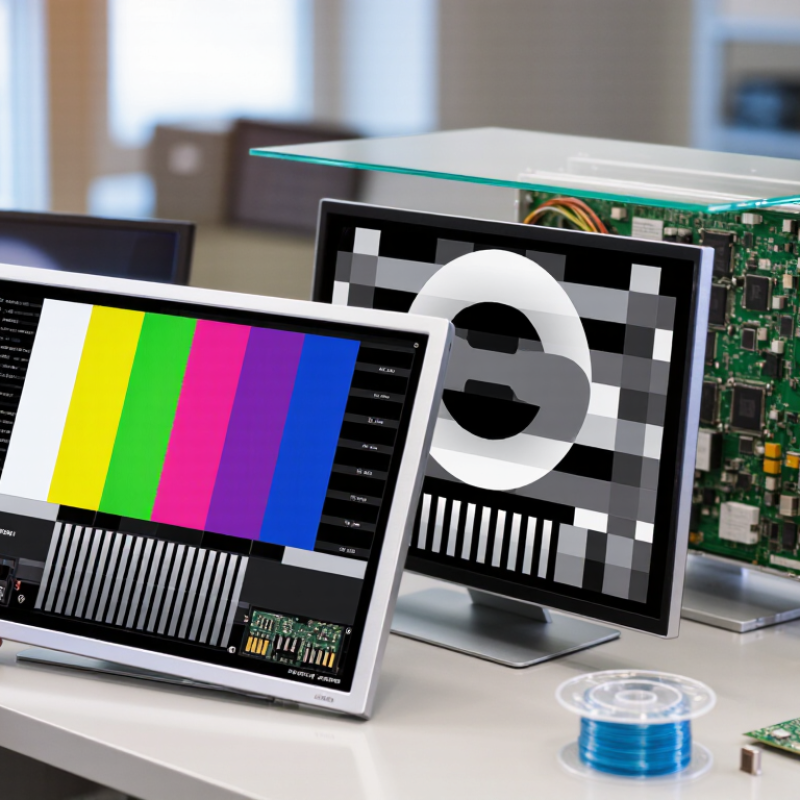
2026 Best IPS LCD Display Manufacturers for Global Buyers

How IPS LCD Technology Works and Where It Is Used

IPS LCD technology controls light through a backlight, polarizers, and liquid-crystal cells. In an IPS panel, electrodes create an electric field that shifts the liquid crystals mainly within the plane of the screen. This changes how much light passes through each red, green, and blue subpixel. A thin-film transistor controls each pixel, helping the display form detailed images.

The design is known for wide viewing angles and stable color when viewed from the side.

That matters. A technician checking a control screen from beside a machine should see fewer color shifts than with some other LCD designs. IPS displays are used in desktop monitors, tablets, vehicle interfaces, and industrial equipment. They can also suit medical viewing tasks, provided the specific panel meets the application’s requirements.

Panel choice still involves trade-offs. IPS screens may use more power than some alternatives, and dark scenes can look gray in a dim room. Backlight brightness, surface treatment, resolution, and temperature range also affect real-world performance.

For example, a factory display facing overhead lights needs suitable brightness and low glare. Specifications help, but they do not tell the whole story. A sample viewed under actual lighting can reveal awkward reflections or color differences that a datasheet misses.

Criteria for Evaluating IPS LCD Display Manufacturers

When evaluating IPS LCD display manufacturers, look beyond a bright product image or a single quoted price. Ask for datasheets that specify viewing angles, brightness, contrast, resolution, and operating temperature. Confirm that figures apply to the exact panel configuration you plan to order. Small details matter.

Request samples and test them under your own lighting conditions. Check color consistency from different viewing angles, then inspect the display for uneven backlighting, dead pixels, and image retention. Ask how the supplier controls changes to materials or production processes. Ask for evidence. Clear inspection records and traceable lot information make quality issues easier to investigate.

Production capability matters as much as sample quality. Discuss minimum order quantities, lead times, forecast changes, and how defects are handled. A useful supplier can explain its inspection steps without making every answer sound perfect. Even a tidy audit can miss a problem that appears only after repeated use, so consider a small pilot run before scaling. No checklist is perfect. Note where evidence is incomplete, and decide whether the remaining uncertainty fits your application’s risk and service expectations.

2026 Best IPS LCD Display Manufacturers for Global Buyers: Resolution Benchmarks

Use resolution capability as one evaluation criterion when comparing IPS LCD suppliers. Values show the total pixel count calculated from each standard resolution; they are benchmarks, not manufacturer performance ratings. Also assess viewing-angle consistency, color performance, defect control, lead times, and production capacity.

Leading IPS LCD Manufacturers and Their Core Capabilities

Leading IPS LCD manufacturers differ less in their brochures than in their process control. Strong suppliers manage cell gaps, alignment layers, polarizers, and backlight modules as one system. This matters when a display shows pale gray across a wide screen: uneven brightness can become obvious. Uniformity matters. Buyers should request measured viewing-angle, contrast, luminance, and color-uniformity results, not just headline specifications. They should also check sample consistency across production lots. A polished prototype proves little if later batches shift in tint.


Manufacturing scale and engineering support matter too. TrendForce’s 2024 LCD TV panel shipment forecast estimated roughly 245 million units worldwide, indicating the scale of the broader LCD supply chain. This figure covers TV panels, not IPS panels alone, so it should not be treated as an IPS market share. Still, it highlights why buyers should assess a supplier’s capacity planning, tooling control, and component sourcing.

For industrial projects, ask about operating temperature, lifetime testing, interface options, and change-notification procedures. Request a pilot run with the intended cover glass and mounting method. Specifications can look excellent on paper. Real-world glare, heat, and assembly pressure may expose weaknesses. A supplier’s response to those findings is part of its capability.

Comparing Product Range, Quality, and Global Support

For global buyers, a broad IPS LCD range should mean more than many listed sizes. Check whether a manufacturer offers the required diagonal, resolution, brightness, interface, and touch options in one product family. A 7-inch module with an LVDS interface may suit one control panel, while a sunlight-readable 10-inch display may need a different backlight and power budget. Ask which specifications are standard and which require custom tooling. Small details matter.

Quality comparisons work best when they use measurable evidence. Request sample units and review pixel-defect criteria, luminance uniformity, viewing-angle data, and operating-temperature limits. Ask how inspection results are recorded across production batches. A clean sample is useful, but it cannot guarantee every shipment will perform identically. Datasheets can also leave practical questions unanswered, so a trial in the actual enclosure is worth the extra time.

Global support is part of product value, not an afterthought. Compare response times, engineering access, sample lead times, export packaging, and the clarity of warranty terms. For long-running projects, ask how the supplier handles component changes and whether replacement units remain available. Support across time zones can be uneven; test it with a detailed technical question before placing a large order.

2026 Best IPS LCD Display Manufacturers for Global Buyers - Comparing Product Range, Quality, and Global Support

Brand-neutral comparison guide. The specifications below are general market reference points, not guarantees for every manufacturer or model. Confirm exact values in the module datasheet and written quotation.

Comparison Dimension Standard Modules Industrial Modules High-Brightness / Outdoor Modules What Global Buyers Should Verify
Product range Commonly available in compact to medium sizes for control panels, instruments, and consumer equipment. Often offered in multiple sizes, touch configurations, and operating-temperature options for equipment used in demanding environments. Designed for applications with strong ambient light; sunlight readability depends on brightness, reflectance, and optical bonding. Request a current product matrix showing diagonal sizes, active areas, resolutions, touch options, and lifecycle status.
Viewing angle IPS technology is commonly selected for wider viewing angles than basic TN LCDs. Some datasheets specify values near 178° horizontally and vertically. Wide-angle performance is available, but the stated value and viewing direction should be checked for each panel. Wide viewing angles are useful outdoors, but brightness and contrast can still vary with viewing direction and lighting. Check the datasheet’s measurement method, contrast-ratio threshold, and viewing-angle definition rather than relying on “wide viewing angle” alone.
Resolution and interface Resolution and interface depend on module size and controller selection; RGB and MIPI DSI are common in embedded designs. RGB, LVDS, and MIPI DSI options may be offered across different modules. Pinouts and timing are model-specific. Interface choices vary by resolution, refresh requirements, and system design. Confirm connector type, pin assignment, logic voltage, timing parameters, touch interface, and compatibility with the host processor.
Brightness Many indoor modules are designed for controlled lighting; the specified luminance varies by product. Brightness options vary. Some models are intended for indoor industrial equipment, while others are configured for brighter environments. High-brightness models are available for strong ambient light; sunlight readability is not determined by luminance alone. Request guaranteed luminance in cd/m², measurement conditions, uniformity data, and any brightness reduction over operating life.
Operating temperature Commercial-temperature modules are generally intended for indoor or controlled environments; the permitted range is model-specific. Extended-temperature versions are available for some products. Common datasheets may specify ranges such as -20°C to 70°C, but this is not universal. Outdoor versions may require extended-temperature components and thermal management; direct sunlight can raise internal temperatures significantly. Separate the LCD operating-temperature range from storage temperature, touch-panel limits, backlight limits, and the enclosure’s thermal conditions.
Image quality and consistency Quality depends on the panel, backlight, optical stack, and production controls, not the IPS label alone. Industrial use may require tighter controls for appearance, brightness uniformity, and lot-to-lot consistency. Optical bonding and anti-reflection treatments may improve readability, but they can affect cost, weight, and repairability. Ask for inspection criteria, brightness-uniformity limits, dead-pixel policy, sample approval process, and production-lot traceability.
Touch and cover glass Touchscreen availability depends on module size and configuration; projected capacitive and resistive solutions serve different use cases. Glove, moisture, and noise performance depend on the touch controller, tuning, cover glass, and system integration. Cover-glass thickness, surface treatment, bonding, and touch performance need to be evaluated together for outdoor use. Test the complete display-and-touch assembly with the intended gloves, water exposure, electromagnetic environment, and mounting method.
Reliability and lifecycle Availability and replacement planning vary by model and supply chain. Some suppliers offer longer-term product planning for industrial programs, but lifecycle commitments must be documented. Backlight life and outdoor exposure depend on operating conditions, thermal design, and specified maintenance assumptions. Obtain the product-change notification policy, last-time-buy terms, expected availability, warranty scope, and approved replacement options.
Quality documentation Documentation depth varies by supplier and product. Industrial projects may require traceability and process documentation in addition to standard datasheets. Environmental suitability depends on the complete assembly and installation, not the display module alone. Request datasheets, control plans where applicable, inspection reports, compliance declarations, and sample test records relevant to the project.
Global support and logistics Sales and technical support channels differ by supplier and region. Regional engineering support can help with integration, but response times and local coverage are not standardized. Outdoor display projects may require additional integration guidance for sealing, thermal design, and optical performance. Confirm supported languages and time zones, named technical contacts, sample lead time, shipping terms, spare-unit policy, and escalation process.
Best-fit applications Indoor instruments, appliances, and embedded user interfaces where the ambient-light conditions are controlled. Factory equipment, transportation systems, and other applications that may require extended temperature or documented lifecycle planning. Outdoor terminals, vehicle equipment, and installations exposed to high ambient light, subject to environmental and thermal validation. Shortlist suppliers based on the application’s operating environment, annual volume, target lifecycle, integration needs, and total landed cost.

How Global Buyers Can Select a Suitable Manufacturer

Choosing an IPS LCD manufacturer starts with the display’s actual working conditions, not a catalog image. Define the diagonal size, resolution, brightness, viewing angle, interface, and operating temperature before requesting quotations. A screen used near a sunny window may need higher brightness than one inside a control cabinet. Small details matter.

Ask manufacturers for datasheets, drawings, and samples that match the proposed production configuration. Check color consistency, backlight uniformity, touch performance if applicable, and connector placement. Test samples in the finished device, with its real enclosure and viewing angle. A clean sample is not proof of stable mass production. Request information about inspection procedures, defect handling, and production capacity, then compare answers with your own test results.

Communication is part of the evaluation. Note how quickly technical questions receive specific answers, and whether changes are documented clearly. Discuss minimum order quantities, tooling costs, lead times, packaging, and forecast flexibility before placing an order. If possible, review a factory audit or quality records, while recognizing that paperwork alone cannot show every production risk. Even experienced buyers can overlook one point: a display that works well on a bench may behave differently after installation. Keep acceptance criteria in writing, and leave enough time for another sample round.

Go to Top