2026 Top Anode Carbon Block Types for Global Buyers
In 2026, global aluminum buyers will examine Anode Carbon Block quality more closely. Smelters need stable electrical performance, predictable consumption, and reliable delivery. A small crack can become a costly operational problem.
The International Aluminium Institute reported approximately 72.8 million tonnes of primary aluminum production in 2024. This scale creates sustained demand for prebaked anodes and their carbon blocks. CRU’s aluminum market analysis indicates that anodes typically consume about 0.4 tonnes per tonne of produced aluminum. The exact figure varies with technology, operating conditions, and anode quality. It is not a universal constant.
Professor Harald Øye, co-author of Cathodes in Aluminium Electrolysis, described the anode as “the most important consumable in the Hall-Héroult process.” His statement remains relevant for procurement teams. Buyers should compare apparent density, electrical resistivity, air reactivity, CO2 reactivity, thermal shock resistance, and mechanical strength. Supplier consistency matters just as much as laboratory results.
The USGS Mineral Commodity Summaries also shows aluminum’s strategic importance across transportation, construction, packaging, and power infrastructure. That demand increases pressure on smelters to reduce waste and maintain stable pot performance. Yet the market is not perfectly transparent. Test methods, sampling practices, and reported specifications can differ between suppliers.
A strong 2026 purchasing decision should examine block size, pitch quality, petroleum coke origin, baking control, trace elements, packaging, and shipment history. Certificates are useful, but they are not proof of long-term field performance. Buyers should request recent test data and independent verification. Sometimes, the cheapest block becomes the most expensive choice.
Definition and Role of Anode Carbon Blocks in Aluminum Production
2026 Top Anode Carbon Block Types for Global Buyers
Definition and Role of Anode Carbon Blocks in Aluminum Production
Anode carbon blocks are consumable electrodes used in aluminum electrolysis cells. They carry electrical current through molten electrolyte and alumina. Their carbon reacts with oxygen released during electrolysis, forming mainly carbon dioxide. Some carbon monoxide also develops.
Most anodes contain calcined petroleum coke, recycled anode material, and coal-tar pitch. Manufacturers mix, press, and bake these materials at high temperatures. Prebaked anodes are widely used because their size and properties can be controlled before installation. Soderberg anodes bake inside the cell, but they require different operating practices and maintenance skills.
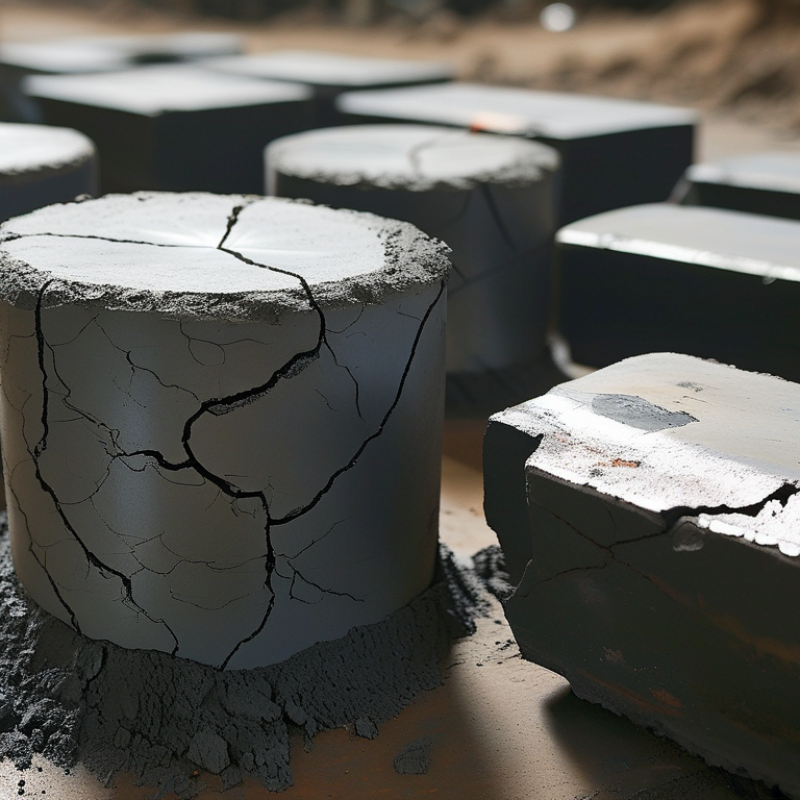
Performance depends on more than carbon purity. Buyers should examine bulk density, electrical resistivity, thermal shock resistance, and mechanical strength. Air reactivity and carbon dioxide reactivity also matter. High reactivity can increase carbon consumption and disturb cell efficiency. Small cracks may appear during transport, especially after repeated loading and unloading.
In practical procurement, dimensions must match the cell design precisely. A few millimeters can affect contact quality and current distribution. Inspection teams often check butt quality, surface defects, and traceability records.
Laboratory data remains essential, but it cannot reveal every handling problem. A technically strong anode may still underperform after poor storage, uneven rodding, or unsuitable operating conditions. That limitation deserves attention.
Main Types of Anode Carbon Blocks and Their Structural Features
2026 Top Anode Carbon Block Types for Global Buyers
Anode carbon blocks mainly differ by forming method, baking condition, and internal structure. Prebaked anode blocks are the common industrial choice. They contain calcined petroleum coke, recycled carbon material, and pitch binder. Their dense matrix supports stable electrical conduction in aluminum reduction cells.
Vibration-formed blocks usually have uniform dimensions and controlled compaction. Their structure often shows balanced porosity, which supports strength and thermal performance. Pressed blocks can achieve higher density when the particle grading and binder ratio are carefully managed. Extruded blocks may offer directional strength, but their internal properties can become less uniform. Soderberg technology uses a continuous paste system, so it should not be treated as a conventional prebaked carbon block. The distinction matters.
Tips: Check apparent density, open porosity, electrical resistivity, compressive strength, and thermal expansion together. Do not judge quality from density alone. Inspect the rod-hole area and corner edges for cracks, weak bonding, or uneven machining. These small defects can grow during transport or cell operation.
Large blocks reduce joint exposure and may improve installation efficiency. However, larger dimensions require reliable baking control. Poor temperature distribution can leave internal pores or weak zones. Block shape also affects current flow, heat transfer, and mechanical stress. In my experience, specifications often look complete, yet testing methods may differ between suppliers. Buyers should request comparable test conditions, traceable inspection records, and samples from actual production lots. No single structure wins. The right choice depends on cell design, operating temperature, and handling conditions.
Raw Materials and Manufacturing Methods for Each Anode Type
2026 Top Anode Carbon Block Types for Global Buyers
Raw Materials and Manufacturing Methods for Each Anode Type
Prebaked anodes use carefully calcined petroleum coke as their main carbon aggregate. Recycled anode butts may replace part of the fresh material. Coal-tar pitch binds the particles during mixing. The blend is heated, kneaded, and formed by vibration or hydraulic pressing. Green blocks then enter a baking furnace, often reaching 1,100–1,200°C. Slow heating reduces cracking. It also improves pitch carbonization. Small cracks still occur.
Söderberg anodes use a continuous paste rather than separately baked blocks. Their paste contains petroleum coke, pitch, and sometimes recycled carbon fines. Heat from the electrolytic cell bakes the paste in place. This design reduces separate baking equipment, but process control becomes more demanding. Paste consistency, volatile release, and electrical contact directly affect performance. Operators must watch these details closely.
High-density prebaked blocks usually deliver better mechanical strength and lower electrical resistance. Their production requires controlled particle sizing, accurate pitch dosing, and uniform compaction. Manufacturers should test apparent density, resistivity, compressive strength, and air reactivity. Results can change with coke source and furnace atmosphere. There is no universal recipe. A formulation that performs well in one smelter may need adjustment elsewhere. Global buyers should request batch records, sampling procedures, and traceable test data before comparing prices.
Performance Factors Global Buyers Should Compare Before Purchasing
2026 Top Anode Carbon Block Types for Global Buyers
Performance Factors Global Buyers Should Compare Before Purchasing
Prebaked anode carbon blocks remain the standard for modern aluminum smelting. They offer controlled geometry, stable current flow, and easier quality inspection. Söderberg anodes may reduce some manufacturing steps, but their in-situ baking creates greater process variation. The choice should match pot design, operating temperature, and maintenance capability. According to the U.S. Geological Survey’s Mineral Commodity Summaries 2025, global primary aluminum output reached about 72 million metric tons in 2024. At this scale, small anode defects can become expensive production losses.
Buyers should compare apparent density, electrical resistivity, compressive strength, and resistance to air and carbon dioxide attack. Lower resistivity supports efficient current transfer. Stronger blocks tolerate transport, rodding, and thermal stress. Not every low-resistivity block performs better. Excessive reactivity can increase carbon consumption and bath contamination. The International Aluminium Institute identifies anode consumption and greenhouse-gas intensity as important smelting performance indicators. Ask suppliers for test methods, not only headline values. ASTM or ISO-based testing improves comparability, although results can still vary between laboratories.
Inspect the details.
Check dimensions, cracks, butt quality, trace elements, and baking uniformity. Petroleum coke source also matters because sulfur, vanadium, nickel, and sodium can influence reactivity. I have seen specifications look excellent while delivery batches behaved unevenly. That gap deserves attention. Buyers should request batch-level certificates, retained samples, and trial data from operating cells before signing long-term contracts.
2026 Top Anode Carbon Block Types for Global Buyers
Relative performance comparison based on the main technical factors buyers typically review before purchasing prebaked carbon anodes.
The index uses a 0–100 scale, where a higher score indicates a more favorable purchasing profile. Density and compressive strength are scored positively, while electrical resistivity, air reactivity, and CO₂ reactivity are scored positively when their values are lower. Actual performance varies with coke quality, pitch content, forming pressure, baking conditions, and operating practices.
| Performance factor | Typical buyer relevance | Preferred direction |
| Apparent density | Indicates compactness and helps reduce open porosity | Higher, within the purchaser’s specification |
| Electrical resistivity | Affects voltage efficiency and electrical losses | Lower |
| Compressive strength | Supports mechanical integrity during handling and operation | Higher |
| Air and CO₂ reactivity | Relates to anode consumption and carbon loss | Lower |
Selection Criteria for Different Smelting Conditions and Applications
2026 Top Anode Carbon Block Types for Global Buyers
Selecting anode carbon blocks starts with the smelting condition, not the lowest quotation. Prebaked blocks remain the standard for modern aluminium electrolysis. The International Aluminium Institute reported global primary aluminium production above 70 million tonnes in 2023. This scale makes anode quality a measurable cost factor. For stable amperage and long operating cycles, buyers often specify high-density blocks with low electrical resistivity. Typical industrial targets stay near 1.5–2.0 μΩ·m, although each smelter should confirm its own limit.
Hot cells need different priorities. High-current lines require strong thermal-shock resistance and controlled expansion. Cells with frequent anode effects may benefit from low-impurity blocks, especially when vanadium, nickel, calcium, or sodium levels threaten metal quality. The U.S. Geological Survey’s Mineral Commodity Summaries identifies aluminium as a major energy-intensive metal, so even small voltage losses deserve attention. A block can look excellent on paper and still crack after installation. That uncomfortable gap needs field testing.
Tips: Match bulk density, apparent porosity, CO₂ reactivity, air reactivity, and flexural strength with the cell design. Request batch-level laboratory results, not only average values. Check dimensions after baking and during transport. A practical trial should track voltage drop, anode consumption, dust, and butt quality for several weeks. I would not accept a “universal” grade without operating evidence. Reports from the International Aluminium Institute and USGS provide useful benchmarks, but plant data remains decisive.