

2026 Top Smoke Alarm Types for Global Buyers

Choosing the right Smoke Alarm is not simply a matter of buying the newest model. Global buyers must compare sensing technology, power options, installation conditions, and regional certification requirements. Photoelectric alarms often respond well to slow, smoldering fires, while ionization models can react quickly to fast-flaming fires. Dual-sensor units combine both approaches. However, performance depends on placement, maintenance, room conditions, and product quality.

John Drengenberg, a long-time consumer safety specialist at UL Solutions, offers a practical reminder: “The best smoke alarm is the one that works when you need it.” That point sounds simple. It is not always easy to achieve. A dusty detector near a kitchen may trigger repeatedly, while a poorly positioned unit may detect smoke too late. Smart interconnected alarms can improve household coverage, especially in multi-story buildings. Combination alarms can also add carbon monoxide protection, but buyers should confirm each device’s sensing capabilities.

This guide examines the leading Smoke Alarm types for international purchasing decisions in 2026. It considers residential homes, apartments, offices, hotels, and light commercial spaces. Battery-powered, sealed-battery, hardwired, and wireless systems each have practical advantages. Local standards still matter. A product accepted in one market may require different testing or documentation elsewhere. Buyers should verify certification marks, warranty support, replacement dates, and installation guidance before ordering. No device is perfect. Even the best alarm needs testing, cleaning, and a realistic emergency plan.
2026 Top Smoke Alarm Types for Global Buyers

Smoke Alarm Types in 2026: Photoelectric, Ionization, Dual-Sensor, and Heat

Smoke alarm selection in 2026 should begin with fire behavior, not marketing language. Photoelectric alarms use a light beam and usually detect slow, smoldering fires earlier. NIST research identifies this response as valuable for fires involving upholstered furniture and bedding. Ionization alarms can respond quickly to fast-flaming fires, but they may react more easily to cooking particles. Dual-sensor alarms combine both methods, offering broader coverage. Still, “dual” does not mean perfect.

The data deserves attention. The NFPA report Smoke Alarms in U.S. Home Fires found that alarms were present in 74% of reported home fires from 2016 to 2020. They operated in only 46% of those fires. Missing or dead batteries contributed to 43% of alarm failures.

That figure changes the buying discussion. Reliable maintenance matters as much as sensor technology. Test buttons, sealed power systems, and clear low-battery alerts can reduce everyday oversight.

Heat alarms detect temperature rise instead of smoke. They suit kitchens, garages, dusty workshops, and areas where smoke alarms may create nuisance alerts. NIST guidance and EN 54-5 classifications also show why temperature response must match the installation environment. Heat alarms should not replace smoke alarms in bedrooms or escape routes. Global buyers should check the required regional certification before purchase. Local conditions differ. My practical concern is simple: a technically advanced alarm still fails when installed too far from sleeping rooms, blocked by furniture, or ignored after repeated false alarms.

NFPA 2017–2021: Smoke Alarms Operated in 54% of Home Fires

2026 Top Smoke Alarm Types for Global Buyers

NFPA data from 2017–2021 shows that smoke alarms operated in only 54% of reported U.S. home fires. This figure deserves attention. The same NFPA analysis found alarms were present in 74% of home fires, while failures often involved missing power, poor maintenance, or unsuitable placement. A working alarm can sound like a small device, yet it may change the first critical minutes of a fire.

Photoelectric alarms generally respond faster to slow, smoldering fires, such as smoke from overheated furniture or wiring. Ionization alarms can detect fast-flaming fires quickly, but they may be more sensitive to cooking-related nuisance alarms. Dual-sensor models combine both detection approaches. Interconnected alarms add another layer, allowing a hallway unit to alert bedrooms across a home. Research from the U.S. Fire Administration also emphasizes alarms inside bedrooms, outside sleeping areas, and on every level.

The 54% operation rate is not a global average. Buyers should not treat it as a universal prediction. Regional building layouts, voltage systems, climate, and certification rules differ. That is where purchasing decisions become less straightforward. Check local compliance requirements, battery life, test controls, and replacement dates. A sophisticated sensor still fails when covered by dust or ignored during testing. Monthly testing is practical, but many households forget it. That uncomfortable gap should shape product selection. Reliable protection depends on both detection technology and everyday human behavior.

Global Compliance: EN 14604, UL 217, and 85 dB at 3 m Alert Standards

For global buyers, smoke alarm selection starts with compliance, not appearance. EN 14604 applies to residential smoke alarms sold across many European markets. It covers essential performance, alarm behavior, and product marking requirements. UL 217 is widely used for residential smoke alarms in the United States. Its testing approach addresses fire scenarios, nuisance alarms, and product reliability. Certification should come from a recognized testing body, with reports matching the exact model and revision.

An alarm should also produce a clear warning in real rooms. An 85 dB alert measured at three meters is a useful benchmark for audibility. However, room layout, closed doors, furniture, and hearing ability can reduce perceived volume. Buyers should review test conditions instead of trusting a number alone. I have found that installation guidance is often overlooked. A compliant alarm can still perform poorly when placed near cooking fumes, ventilation outlets, or dead-air corners. Requirements also change, so local approval should be checked before shipment.

Tips: Request certificates, test reports, labeling photos, and battery details. Confirm EN 14604 or UL 217 scope, not just a general “approved” claim. Test the alarm after installation. The button should be easy to reach. Keep records for every batch. One weakness remains: laboratory results cannot perfectly predict every home, especially older buildings with unusual airflow. That limitation deserves honest review.

2026 Top Smoke Alarm Types for Global Buyers

Global compliance reference: EN 14604, UL 217, and the 85 dB at 3 m alert benchmark.

The chart compares the commonly referenced minimum audible alarm level of 85 dB at 3 m for residential smoke alarm compliance. EN 14604 is used for smoke alarm devices in relevant European markets, while UL 217 applies to residential smoke alarms in the United States and Canada. Photoelectric, ionization, and dual-sensor alarms may be designed for either market, but the final product must be tested and certified to the applicable edition of the required standard.

Power and Connectivity: 10-Year Batteries, Mains Units, and Smart Alarms

2026 Top Smoke Alarm Types for Global Buyers

Power and Connectivity: 10-Year Batteries, Mains Units, and Smart Alarms

Power design strongly affects reliability, maintenance, and installation cost. Sealed 10-year battery alarms reduce yearly battery changes. They suit rental homes, finished ceilings, and locations without wiring. However, the battery is not usually replaceable. The entire alarm may need replacement after its service period. Mains-powered units offer continuous power and often include backup batteries. They work well in new construction or major renovations. Buyers must check voltage, frequency, connector type, and local certification requirements. Installation quality still matters. A poorly connected unit can create false confidence.

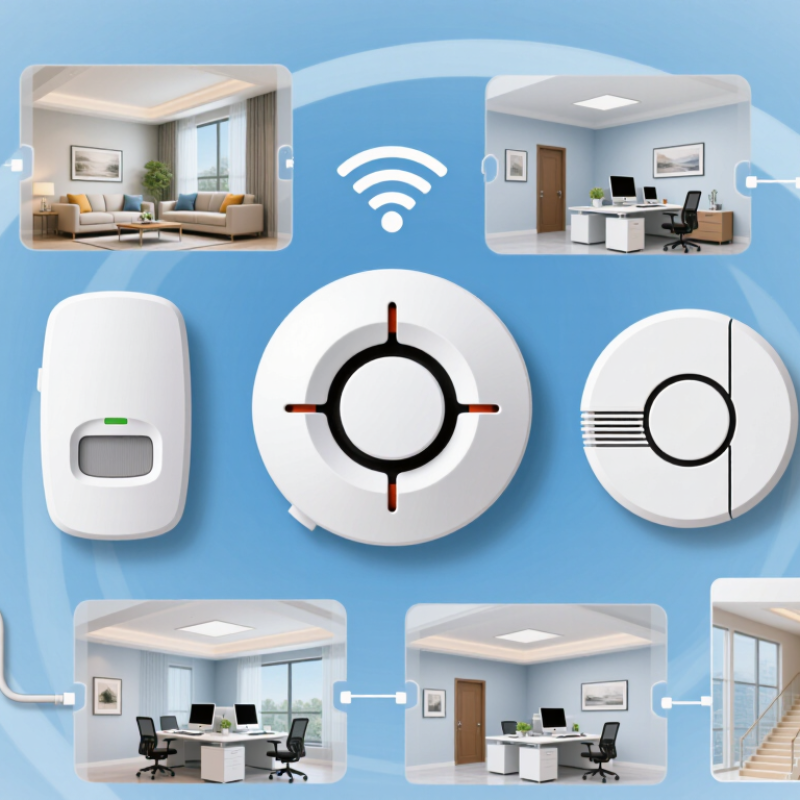
Smart alarms add wireless alerts, phone notifications, and sometimes alarm interconnection. These features help when occupants are away. They also depend on Wi-Fi, hubs, batteries, and software support. Connectivity is useful, not magic. A weak router signal or changed network password may interrupt notifications. Data handling also deserves careful review. Choose clear privacy information and practical offline alarm functions. In my experience, buyers sometimes overvalue app features and undervalue loudness, placement, and testing access.

Tips: Match power type to the building stage. Test every alarm after installation. Keep a written replacement date. For smart models, test alerts from outside the home. Do not assume one specification fits every country. Regional standards, climate, and emergency guidance can differ. A simple alarm may be the more dependable choice in a complex environment.

Buyer Selection Criteria: Fire Scenarios, False Alarms, Placement, and Cost

2026 Top Smoke Alarm Types for Global Buyers

Choosing a smoke alarm starts with the fire scenario, not the lowest price. Photoelectric alarms usually respond earlier to smoldering fires, such as burning mattresses or wiring. Ionization alarms can react quickly to fast-flaming fires, although they may create more nuisance alarms near kitchens. Dual-sensor models offer broader detection, but cost more and still require correct placement. NFPA’s Home Structure Fires report, covering 2018–2022, found smoke alarms were present in 74% of reported home fires. They operated in 71% of fires where status was known.

False alarms deserve serious attention. NFPA reports that cooking caused 53% of reported home fires during this period. Steam, dust, and aerosol sprays can also trigger poorly positioned devices. Place alarms inside bedrooms, outside sleeping areas, and on every level. Keep them away from cooking appliances, bathrooms, vents, and ceiling fans. Interconnected alarms improve warning speed across larger homes. Placement matters. A technically excellent alarm can fail in a hallway blocked by a closed door.

Tips: Compare battery, sealed-battery, and hardwired models by lifetime cost. Check replacement intervals, low-battery warnings, local certification, and performance in humid rooms. For apartments, networked alarms may reduce installation work, but wireless reliability needs testing. Independent laboratory reports and national fire-service guidance are more useful than online star ratings. I would not call one sensor type universally superior; building layout and occupant behavior change the result. A cheaper alarm may become expensive after repeated false alarms or ignored maintenance.

2026 Top Smoke Alarm Types for Global Buyers - Buyer Selection Criteria: Fire Scenarios, False Alarms, Placement, and Cost

A practical comparison of commonly used smoke and fire alarm technologies for residential, commercial, and light-industrial applications

Alarm Type Detection Principle Best Fire Scenarios False-Alarm Considerations Recommended Placement Typical Limitations Indicative Unit Cost
(USD, Retail Range)
Best Fit for Global Buyers
Photoelectric Smoke Alarm Uses a light source and sensor to detect smoke particles entering an optical chamber. Generally well suited to slow, smoldering fires that produce larger smoke particles, such as fires involving upholstered furniture, mattresses, and wiring insulation. Usually less prone than ionization alarms to nuisance alarms from small cooking particles, but steam, dust, insects, and heavy aerosols can still trigger the alarm. Bedrooms, hallways, living rooms, offices, and areas near sleeping rooms. Keep away from bathrooms, kitchens, and direct airflow. May respond more slowly to some rapidly flaming fires than an ionization sensor. Optical chambers require protection from dust and contamination. $8–$35 Strong general-purpose choice for homes, apartments, hotels, and offices.
Ionization Smoke Alarm Uses a small ionization chamber to detect changes caused by smoke particles. Traditionally associated with fast-flaming fires that generate smaller smoke particles, including some fires involving paper, dry wood, and flammable liquids. More susceptible to nuisance alarms from cooking aerosols and combustion particles. It should not be installed close to kitchens or other dusty areas. Low-dust rooms and circulation areas, positioned according to local code and the manufacturer’s spacing instructions. Less suitable for smoldering fires in furnishings. Devices containing radioactive material may face additional shipping, disposal, or regulatory requirements in some countries. $6–$25 Useful where local regulations or risk assessments specifically support this technology; verify import and disposal rules before purchasing.
Dual-Sensor Smoke Alarm Combines photoelectric and ionization sensing in one alarm to monitor different smoke characteristics. Designed to provide broader coverage for both smoldering and fast-flaming fire conditions. Can provide broad protection, but it may still be affected by steam, cooking smoke, dust, and aerosols. Alarm algorithms and certification are important selection factors. Central locations, hallways, bedrooms, and mixed-use areas where one device is expected to cover varied fire risks. Typically costs more and may have higher battery or maintenance requirements. Some jurisdictions may restrict or discourage ionization technology. $18–$60 Balanced option for buyers seeking multi-scenario coverage from one device.
Multi-Criteria Smoke Alarm Combines optical sensing with additional inputs, such as heat-rate, temperature, or advanced signal processing. Suitable for varied fire conditions where improved alarm verification and reduced nuisance alarms are priorities. Advanced algorithms can help distinguish cooking events from dangerous smoke, but performance depends on product design, installation, and certification. Residential developments, hotels, offices, healthcare facilities, and other locations with recurring nuisance-alarm problems. Higher purchase cost and greater dependence on approved system compatibility, maintenance, and configuration. $30–$120 Premium choice for projects prioritizing alarm stability and operational continuity.
Heat Alarm Detects a fixed high temperature or a rapid rise in temperature rather than airborne smoke. Suitable for areas where smoke alarms are likely to produce nuisance alarms, including kitchens, garages, boiler rooms, workshops, and dusty spaces. Generally resistant to cooking smoke, dust, steam, and vehicle exhaust because it does not rely on smoke particles. Kitchens, garages, attics, utility rooms, workshops, and other locations unsuitable for standard smoke alarms. Usually responds later than a smoke alarm because heat must accumulate. It should not replace smoke alarms in bedrooms, sleeping-room corridors, or normal living areas. $10–$45 Supplementary protection for high-nuisance or contaminated environments.
Photoelectric Smoke and Carbon Monoxide Combination Alarm Uses optical smoke detection together with an electrochemical or other approved carbon monoxide sensor. Provides smoke protection and warns of carbon monoxide from fuel-burning appliances, blocked flues, generators, fireplaces, or vehicle exhaust. Smoke sensing can still react to steam or cooking aerosols. Carbon monoxide sensing does not detect smoke or fire by itself. Bedrooms, sleeping areas, hallways, and locations recommended by local carbon monoxide regulations; avoid dead-air spaces and direct ventilation discharge. CO sensor service life is limited and varies by product. It does not replace a dedicated heat alarm where heat detection is required. $25–$80 High-value integrated option for homes and lodging facilities using fuel-burning equipment.
Interconnected Wireless Smoke Alarm Uses radio communication so that activation of one alarm can cause other compatible alarms to sound. Useful for multi-room or multi-floor properties where occupants may not hear a single local alarm. Does not inherently reduce sensor nuisance alarms; all interconnected devices may sound when one unit detects smoke or a fault. Install throughout required rooms, corridors, and floors according to local code, with careful attention to radio range and building materials. Requires compatible devices, battery management, network testing, and protection against radio interference or communication failure. $25–$100 Recommended for larger homes and retrofit projects where hardwiring is difficult.
Addressable or System Smoke Detector Communicates an individual detector identity and status to a compatible fire alarm control panel. Appropriate for commercial buildings, schools, hospitals, warehouses, and other facilities requiring monitored fire protection and location-specific alerts. System programming, verification features, and maintenance procedures can reduce unwanted alarms, but incorrect installation or poor commissioning can still cause problems. Installed throughout the protected area under a designed fire alarm system, with spacing and mounting based on applicable codes and engineering requirements. Not normally a standalone consumer product. Requires compatible control equipment, qualified design, commissioning, inspection, and ongoing maintenance. $40–$180
Detector only
Best for commercial and institutional projects requiring centralized monitoring.

Buyer note: Prices are indicative international retail ranges for the alarm unit only and vary by certification, connectivity, battery type, order volume, taxes, and local distribution. Always verify the applicable national or regional requirements, product certification, replacement interval, and installation instructions before purchase. Smoke alarms and heat alarms should be selected and positioned according to the fire risk assessment and local fire-safety code.

Go to Top