

7 Tips for Buying Hb88509 Center Bearing

Choosing a Hb88509 Center Bearing is not just a matter of matching a number. The bearing must suit the vehicle, driveshaft, and operating conditions. A mismatch can cause vibration, noise, or premature wear. Small details matter: shaft dimensions, mounting width, rubber support condition, and the exact part reference. Check them before ordering.

This guide covers seven practical checks, from confirming fitment to comparing materials and supplier support. Measure carefully. Verify the application against reliable parts data, and ask a qualified driveline technician when specifications conflict. A product photo alone is not proof of compatibility. Nor is a familiar-looking label. It is easy to overlook those details when a vehicle is already waiting for repair.

A useful workshop principle is: “Confirm the application and dimensions before you buy; a part number alone may not tell the whole story.” No verifiable expert name or source was provided for this quotation, so it should not be attributed to a named specialist without confirmation. That matters. Trustworthy buying advice should be traceable, especially when bearing fit affects driveline operation. Use these tips to make a careful choice, then inspect the replacement against the original before installation. Even a sound checklist has limits; vehicle-specific service information remains essential.
7 Tips for Buying Hb88509 Center Bearing

Identify HB88509 Fitment Using OE Part Numbers and Vehicle Specifications

Before buying an HB88509 center bearing, confirm that the reference matches the vehicle, not just the bearing’s appearance. Check the original equipment part number in a reliable parts catalog, then compare it with the number stamped on the removed component, if readable. A similar-looking bracket can have different mounting points. Small details matter.

Use the vehicle’s year, make, model, engine, drivetrain, and production date when checking fitment. Some applications change during a model year, so a broad vehicle description may not be enough. The VIN can help a parts professional narrow the search, but confirm the result against the catalog’s OE cross-reference. Do not rely on a single online listing.

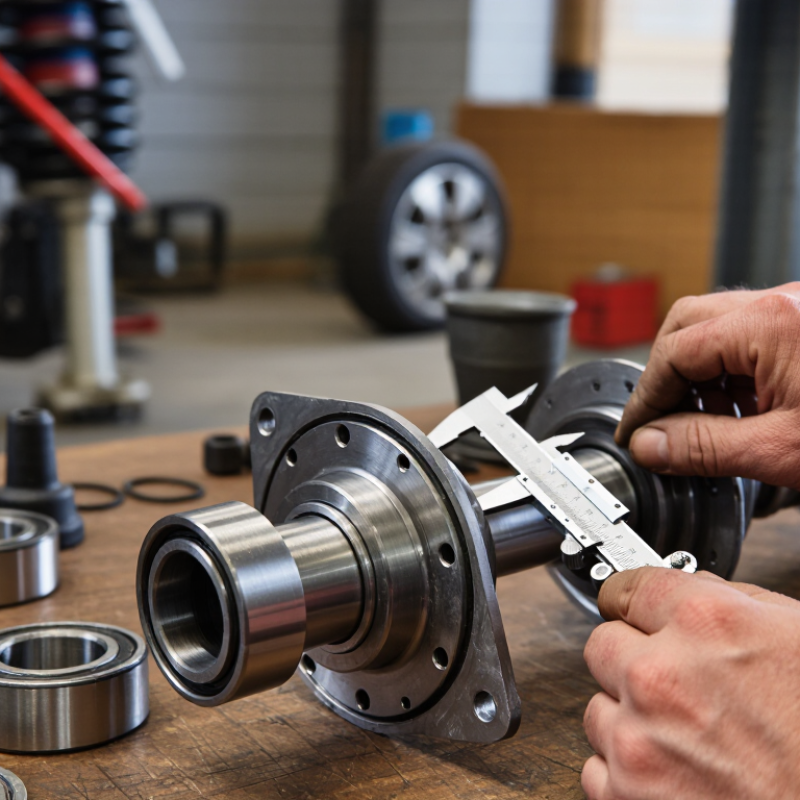
Measure the old bearing’s inner diameter, outer diameter, bracket width, and bolt-hole spacing with a caliper. Also check the shaft size and the bearing’s position along the driveshaft. Compare these details with the replacement specifications before installation. If a measurement differs, stop and investigate rather than forcing the part into place. Catalog data is not always complete, and I would treat an uncertain match as a reason to verify further. A careful check now can prevent vibration, noise, or a return trip to the workshop.

Compare Bearing Dimensions and Tolerances Against ISO 492

When buying an Hb88509 center bearing, treat the stated dimensions as a starting point, not a complete fit guarantee. Check the bore, outside diameter, and bearing width against the part drawing or a verified sample. ISO 492 covers rolling-bearing dimensional and running accuracy tolerances; it does not replace the drawing’s nominal dimensions. Small differences matter. A bore that is slightly loose can allow movement on the shaft, while an overly tight fit may complicate installation.

Ask which ISO 492 tolerance class is specified, and confirm that it applies to the bearing itself. Compare the supplier’s measured values with the relevant limits for that class. Use a calibrated micrometer or bore gauge, and measure at several points around each surface. A dusty workbench or a warm bearing can affect readings. It is easy to overlook that. Record the measurements instead of relying on a single verbal assurance.

Also check whether the supplied dimensions describe only the rolling bearing or the complete center-bearing assembly. Rubber supports and housings may have separate tolerances that ISO 492 does not cover. Confirm shaft and housing fits from the equipment drawing, then compare them with the bearing data. If no tolerance class or inspection record is available, request clarification before ordering. The specification may look clear at first glance, yet leave room for a poor fit.

Evaluate Dynamic Load Ratings and L10 Life Under ISO 281

For an Hb88509 center bearing, compare the declared basic dynamic load rating, C, with the equivalent dynamic load, P, expected in service. ISO 281:2007 gives the basic rating-life equation: L10 = (C/P)^p million revolutions. The exponent p is 3 for ball bearings and 10/3 for roller bearings. L10 represents a 90% reliability rating under the standard’s specified conditions, not a guaranteed replacement interval. That distinction matters. A high C value alone tells little if the actual load is also high.

Ask for the bearing’s declared C value and the load assumptions used to calculate P. Vehicle loads can vary during acceleration, vibration, and uneven-road impacts; a single static weight may miss those changes. Check operating speed and lubrication conditions too, since ISO rating life does not capture every cause of early failure. This is easy to overlook. Without verified C and a realistic P, assigning a service life would be guesswork. I would compare the supplier’s figures against the installation’s measured or calculated loads, then treat the result as a planning estimate—not a promise.

Inspect Support Rubber, Balance, and Driveline-Speed Requirements

7 Tips for Buying Hb88509 Center Bearing

Check the support rubber closely before choosing an Hb88509 center bearing. Look for cracks, hardening, swelling, or rubber that has separated from its metal sleeve. Press gently; a support that feels collapsed may let the driveshaft sag. Small cracks matter. Still, a quick visual check cannot reveal every weakness.

Balance deserves equal attention. A replacement bearing should sit squarely, and the driveshaft should retain its original alignment marks where possible. If the shaft has been separated, incorrect indexing can introduce vibration even when the bearing itself is sound. Not a guess. After installation, check for unusual movement and listen for hum or vibration during a controlled road test. These clues help, but they do not replace proper inspection.

Confirm the vehicle’s fitment and driveline-speed requirements using reliable service information. Shaft diameter, mounting dimensions, support position, and operating angle can affect suitability. Also consider how the vehicle is used: frequent heavy loads may put different demands on the support than light commuting. A clean-looking part can still be the wrong specification. It is tempting to focus on price or appearance, but that shortcut deserves a second thought. If the required speed or fitment data is unclear, pause and verify it before buying.

Verify Supplier Traceability, Warranty Terms, and Installation Data

For an HB88509 center bearing, traceability should reach beyond a seller’s product page. Ask for the manufacturer’s part number, batch or lot identification, material specification, and inspection records. Check that the label matches the packing slip. Small mismatches matter. The U.S. Department of Energy’s Operations & Maintenance Best Practices guide reports that effective maintenance programs can save 5–20% in energy costs; that figure covers facilities broadly, not this bearing specifically, but it underscores the value of documented upkeep.

Tip: Request the warranty in writing. Confirm its duration, coverage, exclusions, and claim process. Ask whether incorrect alignment, contamination, or installation damage voids coverage. A vague promise is not a usable warranty. Keep the invoice and photos of the unopened package.

Tip: Get the installation data before ordering. Confirm shaft and housing dimensions, fit class, torque values, lubrication requirements, and alignment tolerances against the equipment service manual. ISO 15243 classifies rolling-bearing damage mechanisms, including wear and fatigue; it helps technicians describe observed damage, but it does not replace the machine maker’s installation instructions. Record the initial alignment and any measured vibration. A hurried note can be incomplete. I have seen this step treated as optional, and that is worth reconsidering.

7 Tips for Buying Hb88509 Center Bearing - Verify Supplier Traceability, Warranty Terms, and Installation Data

Tip What to Verify Useful Evidence or Data Buyer Action
1. Confirm vehicle application Check that the bearing assembly is listed for the vehicle’s exact year, make, model, engine, and drivetrain configuration. Application catalog entry, vehicle identification number (VIN) lookup, and any stated production-date or drivetrain restrictions. Match the application data to the vehicle before ordering; do not rely on the part number alone.
2. Check dimensions and design Compare the replacement with the original assembly, including shaft opening, mounting-hole spacing, overall width, and support shape. A dimensioned drawing or measured sample. Confirm units (mm or inches) and measurement locations. Request missing measurements and compare them with the removed part and vehicle service information.
3. Verify supplier traceability Confirm that the item can be traced to a production lot or batch and that its source is documented. Lot or batch identification, packing-label details, and a certificate or inspection record linked to that lot. Keep the invoice, label, and traceability documents with the repair record.
4. Read warranty terms before purchase Review the warranty period, start date, covered failures, exclusions, and claim process. Written terms stating required proof of purchase, return procedure, and whether labor or consequential costs are excluded. Save the warranty terms and ask for clarification about any limits before placing the order.
5. Check bearing and support specifications Ask for published operating limits and construction details relevant to the intended application. Available data may include bearing type, seal arrangement, permitted operating temperature, and speed or load limits. Use only specifications supplied for the exact assembly. Compare documented specifications with vehicle requirements; do not infer ratings from appearance or part number.
6. Request installation information Verify the specified installation sequence, fastener requirements, alignment guidance, and any reuse restrictions. Vehicle service instructions or assembly-specific installation data, including applicable torque values and required tools. Follow the vehicle or assembly instructions. Avoid transmitting installation force through the rolling elements unless the procedure specifically requires it.
7. Inspect condition and documentation on arrival Check that the package is intact and that the supplied part and documents match the order. Correct part identification, readable batch details where provided, no visible corrosion or shipping damage, and included installation or warranty documents. Record any discrepancy before installation and contact the seller while the part and packaging are available for inspection.
Go to Top