

What Is the Best Aluminum Tube Evaporator in 2026?

Choosing the best Aluminum Tube Evaporator in 2026 is not just a matter of comparing fin counts or advertised capacity. The right unit must move heat reliably, fit the refrigerant and operating pressures, resist corrosion, and remain serviceable in its actual installation. Small details matter. A blocked fin gap or a poorly matched tube circuit can undermine an otherwise impressive specification.

The International Energy Agency’s The Future of Cooling (2018) reports that air conditioning and fans account for about 20% of electricity used in buildings worldwide. The report also projects that global cooling demand could more than triple by 2050. Those figures make evaporator performance worth careful scrutiny, though they do not prove that aluminum is always the best material. IEA Executive Director Fatih Birol has described energy efficiency as “the first fuel”—a useful principle when comparing complete systems, not just coils. Ask for test conditions, capacity data, pressure-drop figures, and evidence of corrosion testing. Check that the numbers match your intended temperatures and refrigerant. A neat catalog table is not enough.

There is no universal winner. A compact aluminum design may suit one application and disappoint in another. This guide compares construction, thermal performance, durability, and value to help identify the best fit for 2026. It also flags an inconvenient truth: published specifications can be hard to compare when test methods differ. That deserves a second look.
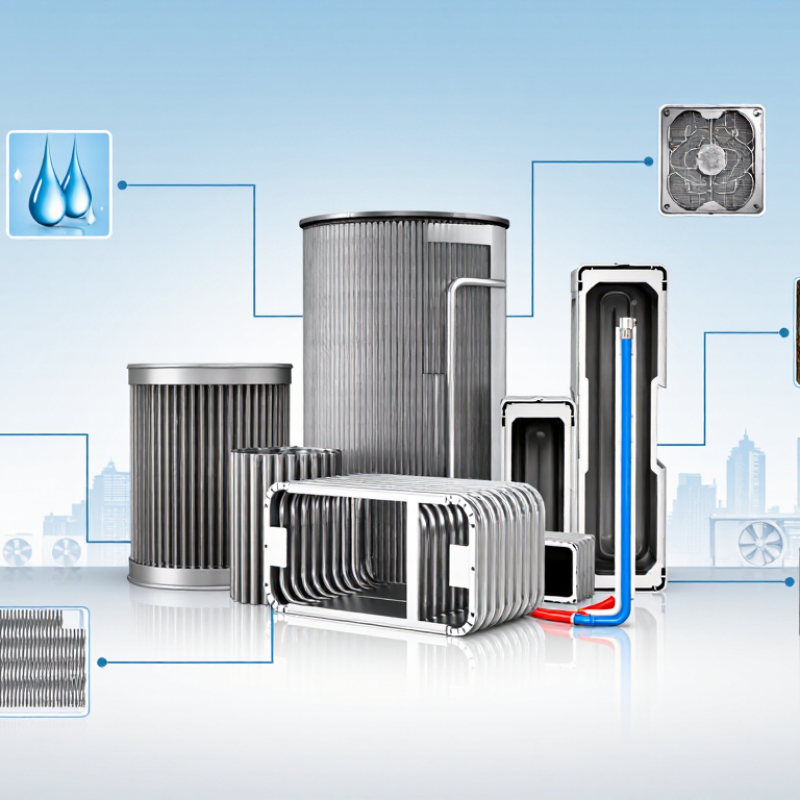
What Is the Best Aluminum Tube Evaporator in 2026?

Define Aluminum Tube Evaporators and Their Main HVAC&R Applications

What Is the Best Aluminum Tube Evaporator in 2026?

Define Aluminum Tube Evaporators and Their Main HVAC&R Applications

An aluminum tube evaporator is a heat exchanger that absorbs heat as refrigerant flows through its tubes and changes from liquid to vapor. Fins attached to the tubes increase the surface area, helping heat move from air or a cooled space into the refrigerant. In a walk-in cooler, for example, fans push warm room air across the finned coil. The refrigerant carries the absorbed heat away.

That matters.

These evaporators are used in commercial refrigeration, including cold rooms, display cases, and food-service equipment. They also appear in some air-conditioning and heat-pump systems, where the coil’s role depends on the system’s operating mode. Aluminum can reduce coil weight and transfer heat effectively. But material alone does not determine performance. Tube dimensions, fin spacing, airflow, refrigerant compatibility, and operating pressure all need to suit the equipment.

Selection takes some care. A tightly spaced coil may offer more surface area, yet collect frost faster in a low-temperature freezer. A coil that is easier to clean may be more practical in a dusty or humid space. Not always the same trade-off. Check the application’s temperature range, defrost method, and maintenance access, then compare verified capacity data under matching conditions. “Best” is therefore specific to the job; a small mismatch can affect cooling, energy use, and service life.

Compare Thermal Conductivity: Aluminum ~205 vs Copper ~400 W/m·K

At room temperature, aluminum conducts heat at roughly 205 W/m·K, while copper reaches about 400 W/m·K. These approximate values, consistent with material-property tables in ASM Handbook, Volume 2, show copper’s clear advantage through the tube wall. But the gap does not mean a copper evaporator will deliver twice the cooling. The refrigerant-side film, air movement, tube thickness, and fin contact all add thermal resistance.

Not quite that simple.

In practice, a thin aluminum tube may transfer heat effectively while keeping the coil lighter. Copper’s higher conductivity can help where wall resistance matters, but it cannot fix weak airflow or a frosted coil. ASHRAE Handbook—Refrigeration guidance on heat exchangers likewise treats performance as a system question, not a conductivity contest. Alloy and operating temperature also shift the numbers; 205 is not universal for every aluminum grade.

That detail is easy to overlook.

Compare tested capacity, pressure drop, corrosion conditions, and service requirements alongside conductivity. I would treat the headline figures as a useful starting point, not a final selection rule.

Evaluate Weight: Aluminum ~2.70 vs Copper ~8.96 g/cm³

Choosing an aluminum tube evaporator in 2026 starts with a simple material comparison: aluminum has a density of about 2.70 g/cm³, while copper is about 8.96 g/cm³. For equal volumes, copper is roughly 3.3 times heavier. That is substantial. In a compact cooling unit, lower tube mass can ease handling, reduce support loads, and help limit shipping weight.

But density alone cannot identify the best evaporator. Tube diameter, wall thickness, fin design, coil size, and refrigerant requirements all affect finished weight and heat transfer. A thinner aluminum tube may save mass, yet the comparison is meaningful only when pressure capability, corrosion conditions, and service life are also checked. Details matter.

Ask for the completed coil’s weight, not just the raw metal’s density. Compare units at the same capacity and operating conditions, and review pressure-drop and durability data. Aluminum’s lower density does not automatically mean a lighter or more efficient system; extra material or different geometry can narrow the gap. I would treat any headline weight claim as a starting point, not proof. Real installations can surprise you.

What Is the Best Aluminum Tube Evaporator in 2026? - Evaluate Weight: Aluminum ~2.70 vs Copper ~8.96 g/cm³

Evaluation dimension Aluminum Copper Practical significance
Density at approximately 20°C About 2.70 g/cm³ About 8.96 g/cm³ Aluminum is about 70% lighter for the same material volume.
Mass of 1 litre of solid material About 2.70 kg About 8.96 kg Illustrates the material-weight difference only; actual tube weight depends on dimensions and construction.
Thermal conductivity of pure metal near room temperature Approximately 237 W/(m·K) Approximately 401 W/(m·K) Copper conducts heat better per unit cross-sectional area; alloy grade and exchanger design affect actual performance.
Specific heat capacity near room temperature Approximately 897 J/(kg·K) Approximately 385 J/(kg·K) Aluminum stores more heat per kilogram for a given temperature change.
Melting point About 660°C for pure aluminum About 1,085°C for pure copper Actual alloys have grade-specific melting ranges; this property is not a direct measure of evaporator operating suitability.
Corrosion considerations Naturally forms a protective oxide layer; performance depends on alloy, refrigerant, moisture, and contact with other metals. Corrosion resistance varies with copper grade and operating environment. Evaluate compatibility with the refrigerant, lubricant, water, coatings, and connected components.
Weight-focused selection Often advantageous when low mass is a priority. Heavier for the same material volume. Compare complete evaporator assemblies, not density alone; tube geometry, wall thickness, fins, headers, and joints all affect total weight.

Note: Property figures are approximate reference values for pure metals near room temperature. Commercial tube alloys can differ, and evaporator performance depends on the complete heat-exchanger design and operating conditions.

Match Refrigerant Safety Class Using ASHRAE Standard 34

Choosing an aluminum tube evaporator in 2026 starts with the refrigerant, not the coil’s appearance. ASHRAE Standard 34 groups refrigerants by toxicity and flammability. The letter A indicates lower toxicity; B indicates higher toxicity. The number describes flammability, with 1 indicating no flame propagation and 2L identifying lower-burning-velocity refrigerants. That matters. A1 and A2L refrigerants do not present identical safety considerations, even when used with similar evaporator designs.

The safety group is a starting point, not an equipment approval. Check the exact refrigerant, system charge, installation space, and applicable equipment requirements before choosing a coil. A compact fin pack may fit the cabinet, yet leave too little room for service or airflow. Aluminum can offer low weight and effective heat transfer, but compatibility with the refrigerant, lubricant, joints, and operating pressure still needs verification. It is easy to focus on tube material and miss the system around it. Ask for documented pressure and compatibility data, then have a qualified refrigeration engineer review the selection against the current edition of Standard 34 and relevant design requirements.

Select by Rated Capacity, Pressure Limits, Corrosion Resistance, and Serviceability

The best 2026 aluminum tube evaporator is not automatically the one with the largest catalog rating. Match its rated capacity to the load at your actual inlet temperature, airflow, and refrigerant conditions. Ask for the rating conditions; capacity can shift when the test setup differs from your installation. Numbers matter. Compare the maximum working pressure with the system’s expected pressure, including startup and defrost peaks. Keep a documented safety margin, and confirm that connected components have suitable pressure ratings.

Corrosion resistance depends on the environment, materials, and maintenance. Moisture, cleaning chemicals, and salty air can affect coil life. Check the tube and fin specifications, protective coating details, and guidance on contact with dissimilar metals. Ask what inspection or cleaning is recommended for your site. Service access matters, too. Look for accessible headers, enough clearance for cleaning, and connections that technicians can reach without dismantling nearby equipment. That detail is easy to miss. Request pressure and material documentation, plus clear maintenance instructions. If the seller cannot explain the test basis or service requirements, pause and verify the details before comparing prices. A technically suitable coil can still be a poor fit when routine inspection is difficult.

Go to Top