
10 Best Battery Storage Systems for Global Buyers
Choosing among the 10 Best Battery Storage Systems for Global Buyers requires more than comparing advertised capacity.
Real projects expose the differences.
A 10 kWh battery may support a small home, but usable capacity can fall during cold nights, high loads, or backup operation. Buyers should examine round-trip efficiency, cycle life, thermal management, inverter compatibility, warranty terms, and replacement support. Installation quality matters too. A well-designed system should manage rooftop solar, evening demand, power outages, and future expansion without wasting valuable energy.
Safety remains central.
Professor Shirley Meng, a leading battery scientist, has emphasized, “The future of batteries must be safer, more sustainable, and more affordable.” Her point reaches beyond laboratory performance. It includes responsible materials, stable software, fire protection, and transparent product testing. These details become especially important when systems operate in hot deserts, humid coastal regions, or freezing rural communities.
This guide compares leading Battery Storage solutions through a global buyer’s lens. It considers residential, commercial, and small industrial applications. It also reviews installation flexibility, monitoring tools, service networks, and long-term operating costs. Some rankings remain debatable. Battery prices change quickly, and local electricity tariffs can reverse a buying decision. That uncertainty deserves honesty.
The strongest system is not always the largest. It is the one that matches daily energy use, climate conditions, grid reliability, and available technical support. Buyers should verify local certification requirements before ordering. A promising specification sheet can still disappoint in the field.
What Battery Storage Systems Are and Why Global Buyers Need Them
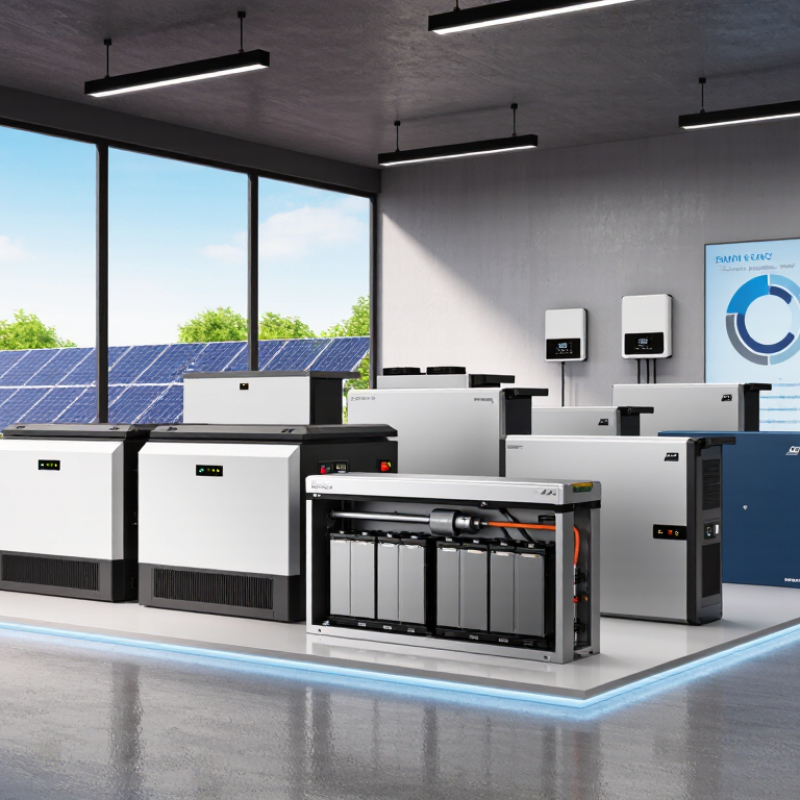
Battery storage systems combine rechargeable cells, a battery management system, power converters, thermal controls, and an energy management platform. Together, these parts store electricity and release it when demand rises or renewable output falls. A complete system may sit inside a weather-resistant container, with fire detection, ventilation, and remote monitoring. It is more than a cabinet of batteries.
The need is expanding quickly. The International Energy Agency reported that global battery storage additions rose by 130% in 2023, reaching about 42 gigawatts. Its Batteries and Secure Energy Transitions report also states that storage capacity must grow substantially this decade to support renewable expansion. Global buyers therefore use storage for peak-demand reduction, backup power, solar shifting, and grid balancing. These benefits matter in regions with unstable grids, high tariffs, or strong daytime solar production.
However, the best system depends on local conditions. A hot coastal site needs stronger corrosion and cooling controls. A remote installation may require simple maintenance and wider spare-parts access. Buyers should verify round-trip efficiency, usable capacity, degradation guarantees, fire-safety testing, cybersecurity, and compliance with local grid codes. The U.S. National Renewable Energy Laboratory identifies these factors as central to storage performance and cost assessment.
Price comparisons can mislead. A cheaper system may lose capacity faster or require expensive cooling. Procurement teams should examine ten-year operating costs, not only the initial quotation. Even strong reports have limits, because project results vary with climate, operating schedules, and maintenance quality. That uncertainty deserves honest modeling.
10 Best Battery Storage Systems for Global Buyers
Battery storage systems help store electricity for renewable-energy integration, backup power, peak shaving and grid balancing. The chart compares representative cycle-life values for ten widely used battery technologies. Higher cycle life generally indicates a longer service life under suitable operating conditions.
Data shown are representative midpoint estimates from commonly reported technology ranges. Actual performance depends on depth of discharge, temperature, charging speed, operating profile, maintenance and system design.
Key Technologies Used in Modern Battery Storage Systems
Modern battery storage systems rely on several connected technologies, not one isolated invention. Lithium iron phosphate cells are widely used because they offer strong thermal stability and long cycle life. Their energy density is lower than some alternatives, but safer operation often matters more. Cell spacing, fire-resistant enclosures, and pressure relief paths add practical protection.
A battery management system monitors voltage, temperature, current, and state of charge. It balances individual cells and can disconnect the pack during abnormal conditions. Accurate sensors matter. Small measurement errors may reduce usable capacity or accelerate degradation. Power conversion systems then change direct current into grid-compatible alternating current. Advanced inverters support frequency response, voltage control, and backup switching.
Thermal management is another key technology. Air cooling suits smaller installations, while liquid cooling handles dense commercial cabinets more evenly. Energy management software forecasts demand, solar production, tariffs, and weather. It decides when to charge or discharge the system. Cybersecurity also deserves attention, especially for remotely monitored assets. Field inspections often reveal loose connections, blocked vents, or outdated firmware. These details are easy to underestimate. No design is perfect. A system rated for ten years may perform differently in a hot, humid market with irregular maintenance. Buyers should compare round-trip efficiency, warranty conditions, degradation assumptions, service access, and recycling plans before selecting among the ten best battery storage systems for global projects.
10 Best Battery Storage Systems for Global Buyers - Key Technologies Used in Modern Battery Storage Systems
| Rank | System Configuration | Primary Battery Chemistry | Typical Power Range | Typical Duration | Round-Trip Efficiency | Typical Cycle Life | Key Technologies | Best-Fit Applications | Main Advantages | Important Considerations |
|---|---|---|---|---|---|---|---|---|---|---|
| 1 | Utility-Scale LFP Container System | Lithium iron phosphate (LFP) | 1–5 MW per block | 2–4 hours | 85–92% | 4,000–8,000 cycles | Liquid or forced-air thermal management, battery management system, bidirectional power conversion, containerized fire detection and suppression | Renewable shifting, grid balancing, capacity support, peak shaving | Strong safety profile, long service life, scalable modular architecture | Requires site permits, thermal design, auxiliary power and grid interconnection studies |
| 2 | Residential DC-Coupled Solar Storage | LFP | 3–15 kW | 2–6 hours | 88–95% | 4,000–7,000 cycles | Hybrid inverter, DC coupling, smart energy management, state-of-charge estimation, islanding protection | Home backup, solar self-consumption, time-of-use energy shifting | Compact installation, reduced conversion losses, easy solar integration | Usable capacity depends on reserve settings, inverter limits and local electrical codes |
| 3 | Commercial AC-Coupled Storage Cabinet | LFP | 50–500 kW | 2–4 hours | 84–91% | 4,000–8,000 cycles | AC-coupled inverter, modular battery racks, peak-demand controller, remote monitoring and HVAC | Factories, retail facilities, offices, demand-charge reduction | Can be added to existing solar or electrical infrastructure with limited redesign | Additional conversion equipment may reduce efficiency compared with DC coupling |
| 4 | High-Power NMC Fast-Response System | Nickel manganese cobalt oxide (NMC) | 1–20 MW | 0.5–2 hours | 86–94% | 2,000–5,000 cycles | High-power cells, advanced thermal monitoring, rapid-response inverter, cell-level sensing | Frequency regulation, ancillary services, fast power support | High power density and rapid response | Higher thermal-management requirements and generally shorter cycle life than LFP |
| 5 | Long-Duration Flow Battery System | Vanadium redox flow battery | 1–100 MW | 4–12+ hours | 65–85% | 10,000–20,000+ cycles | Electrolyte tanks, membrane stack, pumps, flow controllers and independent power-to-energy sizing | Daily renewable shifting, microgrids, long-duration grid storage | Very high cycle durability, low fire risk and flexible duration design | Lower energy density, larger footprint and higher balance-of-plant complexity |
| 6 | Second-Life Battery Modular System | Reused lithium-ion cells, commonly NMC or LFP | 50 kW–5 MW | 1–4 hours | 75–90% | 1,000–4,000 additional cycles, depending on cell history | Cell grading, reconfigured battery management system, rack-level balancing and enhanced diagnostics | Behind-the-meter storage, low-cost backup, non-critical microgrid loads | Potentially lower initial material cost and improved resource utilization | Performance consistency, warranty terms, traceability and safety validation require careful review |
| 7 | Sodium-Ion Stationary Storage System | Sodium-ion | 10 kW–5 MW | 2–6 hours | 80–92% | 3,000–6,000 cycles | Sodium-ion cells, battery management system, modular racks and low-temperature charging controls | Cold-climate backup, distributed storage, renewable integration | Uses more widely available sodium resources and can offer strong low-temperature performance | Lower energy density and a less mature supply chain than mainstream lithium-ion systems |
| 8 | Hybrid Battery and Supercapacitor System | LFP battery plus ultracapacitor bank | 100 kW–10 MW | Seconds to 2 hours | 80–93% | Battery: 4,000–8,000 cycles; ultracapacitor: 100,000+ cycles | Dual-port power electronics, power-sharing controls, high-frequency monitoring and ramp-rate management | Regenerative braking, power-quality support, industrial pulse loads and frequency response | Handles rapid transients while reducing stress on the main battery | More complex controls, higher integration cost and limited energy duration |
| 9 | Solar-plus-Storage Microgrid System | LFP, with optional flow battery for extended duration | 50 kW–20 MW | 4–24 hours | 75–92% | 3,000–10,000 cycles, depending on chemistry and operating profile | Microgrid controller, black-start capability, islanding controls, solar forecasting and load prioritization | Remote communities, critical infrastructure, islands and disaster resilience | Can maintain essential loads during grid outages and reduce diesel-generator use | Requires detailed load studies, protection coordination and fuel or renewable backup planning |
| 10 | High-Voltage DC Battery Storage Plant | LFP or high-voltage NMC | 10–100+ MW | 2–8 hours | 86–94% | 3,000–8,000 cycles | High-voltage battery racks, centralized or modular power conversion, energy management system and digital diagnostics | Transmission support, renewable firming, wholesale arbitrage and grid congestion management | Efficient large-scale architecture with strong automation and centralized dispatch | High-voltage safety, fire protection, transformer design and grid-code compliance are essential |
Note: Figures are representative industry ranges for system-level designs. Actual performance varies with operating temperature, depth of discharge, power rating, installation design, battery age, control strategy and applicable local standards.
How to Compare the 10 Best Battery Storage Systems
10 Best Battery Storage Systems for Global Buyers
How to Compare the 10 Best Battery Storage Systems
Comparing ten storage systems requires more than checking nameplate capacity. Start with usable energy, continuous power, round-trip efficiency, and degradation limits. A 10 kWh unit may deliver less after reserve settings and conversion losses. Ask for measured performance, not only laboratory claims.
The International Energy Agency’s 2024 Batteries and Secure Energy Transitions report estimates that global energy storage capacity must increase sixfold by 2030. This outlook makes long-term reliability essential. Compare warranty years, throughput limits, temperature ranges, and service response times. A system operating in a cold garage may need heating before charging. That detail can change real savings.
Cost comparisons also need discipline. BloombergNEF reported an average lithium-ion battery pack price of 115 dollars per kWh in 2024, after a 20% annual decline. Pack price is not the installed price. Include the inverter, installation, monitoring software, permits, grid equipment, and replacement parts. Check safety evidence, including thermal propagation testing and relevant IEC or UL standards. Then model daily use with local tariffs and solar output. A four-hour evening load may suit one system, while short backup events favor another. My own scoring would reserve points for repairability and data transparency. Those factors are easy to overlook. A polished dashboard cannot compensate for weak after-sales support.
Top Battery Storage Systems for Homes, Businesses, and Utilities
10 Best Battery Storage Systems for Global Buyers
Top Battery Storage Systems for Homes, Businesses, and Utilities
Battery storage is becoming essential across homes, businesses, and power networks. The International Energy Agency reported that global battery storage additions increased by nearly 130% in 2023, adding about 42 GW. For households, the best systems combine safe chemistry, clear monitoring, and backup power during outages. A compact unit beside a garage can store daytime solar energy for evening cooking, lighting, and device charging. However, buyers should check usable capacity, not only the advertised capacity.
Commercial systems need different priorities. They must manage demand charges, solar self-consumption, and frequent cycling. The U.S. Department of Energy notes that battery performance depends heavily on temperature, installation quality, and control software. A warehouse may need several hours of storage, while a small office may benefit more from peak-load reduction. This distinction is often missed. It can make a costly system underperform.
Utility-scale projects require grid services, long warranties, fire-safety planning, and reliable replacement support. Lazard’s Levelized Cost of Storage Analysis shows that costs vary widely by duration, operating conditions, and financing assumptions. Lithium-based systems remain widely used, but longer-duration technologies deserve attention for renewable-heavy grids. The IEA projects that global energy storage capacity must expand sharply by 2030 to support renewable growth. Still, forecasts are not guarantees. Buyers should compare round-trip efficiency, degradation rates, warranty limits, local codes, and service capacity before choosing among the ten strongest system types.
Global Buying Factors: Safety, Standards, Costs, and Support
Choosing among the 10 best battery storage systems requires more than comparing capacity and price. Safety should guide every purchase. Check cell chemistry, thermal management, fire detection, isolation controls, and emergency shutdown procedures. Ask for test reports, not broad marketing claims. Standards such as IEC 62619, UL 9540, UL 9540A, and UN 38.3 may apply, depending on the market and system type. Local certification still matters.
Costs include far more than the battery cabinet. Buyers should calculate installation, inverters, permits, transport, insurance, monitoring, maintenance, and end-of-life handling. A lower purchase price can become expensive when replacement modules are difficult to import. Request cycle-life data under realistic temperatures and operating ranges. A system tested at 25°C may perform differently in a hot warehouse or a cold rural site. Small details matter.
Support is often the weakest buying factor. Confirm response times, remote diagnostics, spare-part locations, training, and warranty exclusions. Ask who handles failures after the installer leaves. I would also request references from projects with similar grid conditions. Paperwork can look complete while practical support remains vague. That risk deserves attention. Compare total ownership cost over ten years, but keep assumptions visible. Forecasts are useful, yet battery degradation and policy changes can make them imperfect.
Related Posts
-
Why Choose Lithium Iron Batteries for Your Energy Needs?
-
Chinese Innovation in Best Battery Storage for a Reliable Global Future
-
How to Choose the Best Solar Lithium Battery?
-
10 Game-Changing Battery Energy Storage System Innovations Transforming Global Procurement
-
Your Essential Guide to the Latest Innovations in Battery Technology
-
Connecting Solar Battery Innovations with Global Buyers at the Record-Breaking 137th Canton Fair