What Are the Best French Patio Doors?
French Doors Patio Doors can brighten a room, frame a garden view, and make a patio feel closer. But the prettiest pair may still feel drafty on a cold morning. Choosing well means weighing appearance against performance, daily use, and installation quality.
The U.S. Department of Energy’s Energy Saver guidance estimates that heat gain and loss through windows account for about 25%–30% of home heating and cooling energy use. That figure is a useful warning, not a promise of savings from replacing patio doors. The National Fenestration Rating Council’s labels help shoppers compare tested U-factor and solar heat gain values across products. Look closely at those numbers. A low U-factor can matter in a cold climate, while solar heat gain deserves attention in sunny rooms.
Building-science researcher John Carmody’s work on windows and building performance offers a practical lesson: evaluate the whole opening, not just the glass. In other words, check the frame, seals, threshold, and installation details too. Real homes are less tidy than product brochures suggest. A beautiful door can still stick if the opening is out of square.
This guide compares French patio door styles, materials, glass options, security features, and costs. It also considers what photographs rarely show: handle clearance, screen durability, and the small gap that lets winter air slip in. There is no universal best choice. The right one fits your climate, room, and budget.
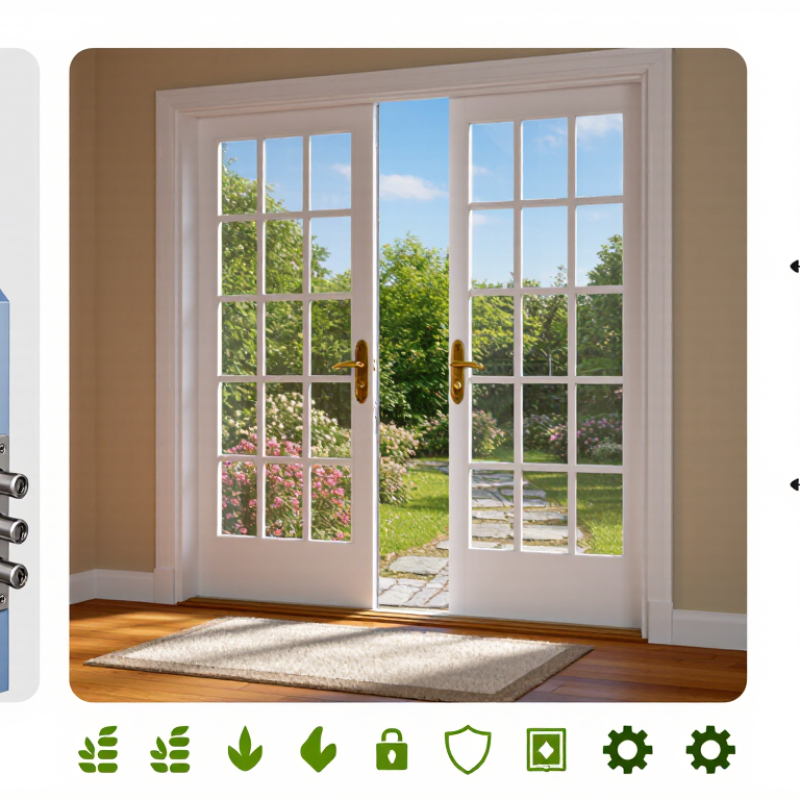
Identify French Patio Door Types: Single, Double, and Multi-Panel Designs
French patio doors bring daylight into a room while creating a clear path to a patio or garden. A single-panel design suits a narrow opening and usually needs less wall space. Check the swing direction, though. An inward-opening door can compete with a table or nearby cabinets. Double-panel doors create a wider opening and a more balanced view. They work well for moving chairs or serving trays outside, but both panels need clearance.
Multi-panel designs use several sections that slide or fold, making them useful for broad openings and open-plan rooms. Sliding panels do not need swing space, while folding panels can open more of the doorway. The trade-off is practical: more panels may mean more tracks, hardware, and cleaning. Measure the finished opening, not just the rough frame. Small differences matter. I used to focus too much on glass area; daily access and furniture placement deserve equal attention.
Tips: Sketch the doorway and nearby furniture before choosing. Note the threshold height, handle position, and how much opening you actually need. Ask an installer to check the opening and drainage conditions. A dramatic layout can look appealing, but it may not suit everyday traffic.
Compare Frame Materials, Glass Options, and Maintenance Needs
French patio doors can be made with wood, vinyl, fiberglass, or aluminum frames, and each handles weather differently. Wood offers a warm, traditional look, but its paint or finish may need regular attention, especially near damp gardens. Vinyl is usually easier to maintain, though frame colors and profiles can be more limited. Fiberglass resists swelling and can imitate painted wood; aluminum is slim and strong, but may transfer heat unless it has a thermal break. No frame is perfect.
Glass choice affects comfort as much as appearance. Double-pane glass is a practical starting point for many homes, while low-emissivity coatings can reduce unwanted heat gain or loss. The best coating depends on your climate and which direction the doors face. For example, west-facing glass may need more help with late-afternoon sun. Triple glazing can improve insulation, but it adds weight and cost. Ask how the complete door performs, not just what glass it contains.
Maintenance is easy to underestimate. Hinged panels need enough clearance, and hinges may require adjustment if a door begins rubbing the sill. Check weatherstripping for gaps, wipe tracks or thresholds clean, and clear drainage openings of leaves. Wood frames deserve more frequent finish checks; other materials still need washing and hardware inspections. I would inspect the seals before the first cold spell—small gaps are easy to miss.
Assess Energy Performance Using NFRC U-Factor and SHGC Ratings
For French patio doors, a wide glass area can brighten a room, but it may also increase heat loss or summer glare. NFRC ratings help compare the complete door assembly under consistent testing conditions. Check the label for the specific size and configuration you plan to buy; glass options can change the numbers.
U-factor measures how readily heat passes through a door. Lower is generally better for limiting heat loss, especially in cold weather. SHGC measures how much solar heat enters through the product. A lower SHGC can help reduce overheating on a sunlit wall, while a higher value may be useful where winter sun is welcome. It depends on orientation, shading, and climate. There is no single ideal pair of ratings for every home.
Look at both figures together. A door with a low U-factor but high SHGC may still let in substantial summer heat. Conversely, very low solar gain can reduce useful daylight warmth in some settings. Compare NFRC-certified labels, then consider exterior shade, nearby trees, and how the room feels at different times of day. Ratings cannot predict every installation detail. A poor fit or uneven sealing can undermine good performance, and that part deserves careful attention.
Check AAMA/WDMA/CSA Performance Grades: PG 30 Equals 30-psf Design Pressure
For French patio doors, compare the Performance Grade (PG), not just the glass or frame. Under the 2022 NAFS standard, AAMA/WDMA/CSA 101/I.S.2/A440-22, PG 30 indicates a design pressure of 30 pounds per square foot. In practical terms, it describes the pressure the tested door assembly is designed to withstand under specified conditions. It is not a wind-speed rating. Small distinction. Big consequences.
ASTM E330 structural testing applies pressure to a window or door assembly; NAFS uses a structural test pressure 1.5 times the design pressure. So a PG 30 unit is tested structurally at 45 psf. That figure does not promise the same performance in every home. Door size, installation, building height, and local wind exposure matter. A pair of doors facing an open coast may need a higher grade than one sheltered by a porch. Check the product’s certified label and verify that its tested configuration matches your opening. I would also ask the installer to confirm the required grade for the site, rather than treating PG 30 as universally sufficient. That extra check is easy to skip.
Choose the Best Fit by Climate, Security, Installation, and Warranty
The best French patio doors depend on the weather they must handle, not just their glass area. In cold regions, insulated frames and low-emissivity glass can reduce heat loss and chilly drafts. Check the stated air-leakage and water-resistance ratings, where available. In hot, sunny climates, consider solar-control glass and exterior shading to limit afternoon heat. More glass is not always better.
Security starts with a rigid frame, strong hinges, and a multipoint lock that engages along the door edge. Look for laminated or impact-resistant glazing if breakage is a concern. A lock cannot compensate for a weak frame or poor installation. The rough opening should be measured carefully, and the sill must be flashed and sealed to direct water outward. Even a small gap can invite rain or insects.
Installation quality often matters as much as the door itself. Ask who will remove the old unit, repair hidden rot, and verify that the panels move smoothly after fitting. French doors can settle; that detail is easy to underestimate. Before buying, read the warranty for coverage on glass seals, hardware, finish, and labor. Note exclusions for coastal exposure, moisture, or improper maintenance. Keep the paperwork and care instructions, even if the fine print feels tedious. A local installer’s written scope and references can help you compare bids without relying on sales claims alone.