

2026 Best Heat Exchanger Plates for Global Buyers
Global buyers comparing Heat Exchanger Plates in 2026 face a practical challenge: a plate that performs well on a datasheet may behave differently with real fluids, fouling, and changing loads. The stakes are substantial. The International Energy Agency’s Industry tracking report puts industry’s share at about 37% of global energy use. Better heat transfer can support efficiency, but performance depends on the whole system—not one plate specification.
As IEA Executive Director Fatih Birol has said, “Energy efficiency is the first fuel.” It is a useful buying principle, not a guarantee that any particular plate will save energy. Buyers should compare material compatibility, pressure and temperature limits, gasket options, channel geometry, and documented test conditions. Look closely at the fine print. A stainless-steel plate, for example, may suit one process but not another with aggressive fluids or frequent cleaning. Small details matter.
This guide examines plate types, materials, performance claims, supplier evidence, and lifecycle considerations for global procurement teams. It also asks what product pages often leave unclear: how were the figures measured, and under what operating conditions? That question deserves more attention. Specifications can still hide trade-offs, and this comparison is not a substitute for process engineering review. Use it as a starting point, then verify selections against your duty data, maintenance needs, and site conditions.
What Heat Exchanger Plates Are and How They Transfer Heat
2026 Best Heat Exchanger Plates for Global Buyers
What Heat Exchanger Plates Are and How They Transfer Heat
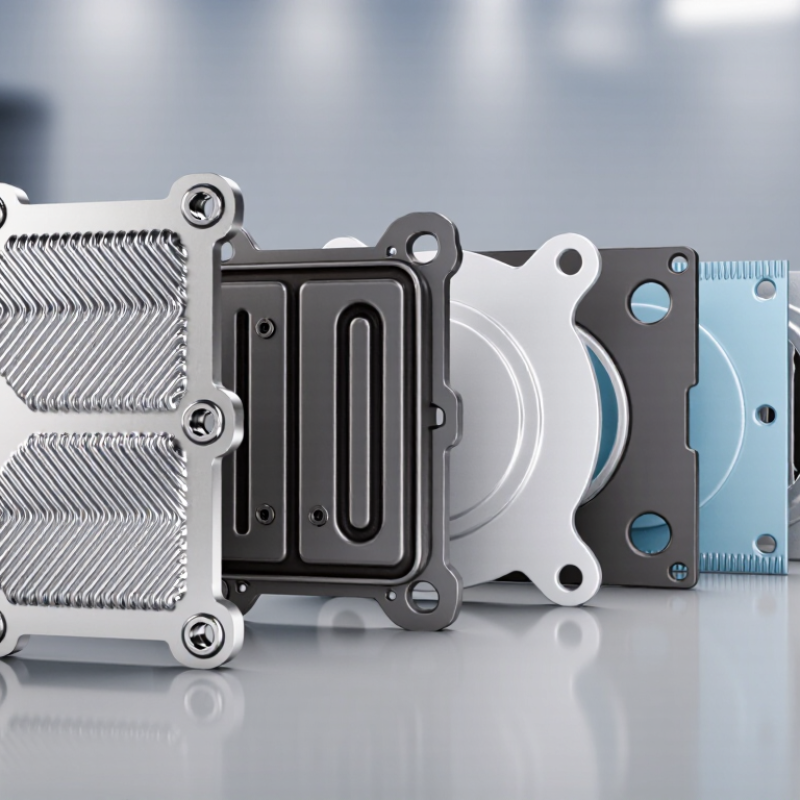
Heat exchanger plates are thin metal sheets arranged in a compact stack. Their pressed, wave-like channels guide two fluids through alternating passages. The fluids stay separate, but heat moves through the metal from the warmer side to the cooler one. In many designs, the fluids flow in opposite directions. This counterflow arrangement can maintain useful temperature differences across much of the plate pack. Small details matter.
Plate shape affects turbulence, pressure drop, and heat transfer. A more aggressive pattern may improve mixing, but it can also require more pumping power. Material choice depends on fluid chemistry, temperature, and cleaning conditions; stainless steel suits many services, while other alloys may be needed for corrosive fluids. Gaskets, brazing, or welding hold the assembly together, depending on its design. No plate is best for every duty. Real operating data is sometimes incomplete, so sizing assumptions should be checked against measured flow rates and inlet temperatures.
Tips: Share fluid composition, flow rates, operating temperatures, and pressure limits with your supplier. Ask how fouling and maintenance affect performance. A plate that looks efficient on paper may need frequent cleaning in a dirty process.
Plate Materials, Patterns, and Manufacturing Methods
2026 Best Heat Exchanger Plates for Global Buyers
Plate Materials, Patterns, and Manufacturing Methods
Plate material should match the fluid, temperature, pressure, and cleaning method—not just the purchase price. Stainless steel 316L suits many clean-water and mildly corrosive duties; titanium is often considered for chloride-rich seawater. More aggressive chemistry may require a nickel alloy, but compatibility must be checked against actual fluid concentrations. The World Stainless Association reported 58.4 million tonnes of global stainless-steel crude production in 2023 in Stainless Steel in Figures 2024. That signals broad supply, not guaranteed availability of every plate grade or thickness.
Corrugation shapes the flow. A steep chevron can increase turbulence and heat transfer, but may also raise pressure drop. A gentler pattern can reduce resistance, though the required plate area may grow. Gasketed plates allow inspection and capacity changes; brazed or laser-welded constructions reduce gasket exposure but can limit repair options. Press-forming consistency matters: uneven channels can create poor flow distribution. Small details matter. Buyers should request material certificates, dimensional checks, weld inspection records, and pressure-test results.
Tips: Share fluid chemistry, design temperatures, and allowable pressure drop with the manufacturer. Ask for test conditions behind quoted thermal performance. Confirm that plates fit the existing frame before ordering replacements. In practice, I would still leave a margin for fouling; it is easy to underestimate.
2026 Best Heat Exchanger Plates for Global Buyers
Representative thermal conductivity of selected plate materials
Values are approximate thermal conductivity in W/(m·K) near room temperature; actual values vary by alloy and condition. Higher conductivity can improve heat transfer, but material selection also depends on corrosion resistance, operating pressure, temperature, and fabrication requirements.
Key Performance Factors for Comparing Heat Exchanger Plates
Compare plates against the actual operating duty, not a catalog headline. Record the fluids, inlet temperatures, flow rates, design pressure, and likely fouling level. A plate that transfers heat quickly may also create excessive pressure drop. Small details matter. Check plate material against both fluids, including cleaning chemicals and occasional process upsets. Stainless steel is common, but compatibility depends on the specific chemistry and temperature.
Plate geometry also affects heat transfer and pressure loss. A steeper chevron pattern can improve turbulence, yet it may require more pumping energy. Port size and channel layout should suit the required flow without creating uneven distribution. Ask for pressure-drop data at your operating conditions, not just a best-case figure. This detail is easy to overlook.
Verify maximum temperature and pressure ratings, gasket compatibility, and the availability of replacement plates. Compare test data with technical sheets, and confirm how performance was measured. Real service is messier than a neat calculation; fouling and flow changes can shift results. If duty conditions are uncertain, leave room for review rather than choosing by surface area alone. No plate is perfect. Practical maintenance access matters, too.
How to Select Plates for Different Industrial Applications
Choosing heat exchanger plates starts with process conditions, not catalog dimensions. Record fluid composition, operating temperature, pressure, flow rate, and cleaning method. A plate suited to clean water may foul quickly in a syrup line or slurry service. Match the plate pattern and channel depth to viscosity and solids, then check pressure drop against pump capacity. More turbulence can improve heat transfer, but it may also increase pumping costs. Trade-offs matter.
Material selection depends on chemistry and temperature together. Chloride-bearing water, acidic cleaning cycles, and process upsets can change corrosion risks. Request compatibility data for actual concentrations, not just generic descriptions. For food or pharmaceutical applications, consider cleanability, gasket suitability, drainage, and material traceability. In cooling tower or seawater systems, deposits and corrosion deserve close attention. Small details matter. Operating history is useful, but seasonal changes may reveal problems that a short test misses.
For compact HVAC duties, prioritize predictable pressure loss and easy service access. For chemical processing, review temperature limits, corrosion allowances, and inspection intervals with a qualified engineer. High-viscosity products may need wider channels, though this can reduce heat-transfer intensity. Compare expected duty, cleaning downtime, spare-plate availability, and lifecycle cost. A pilot run can reveal uneven flow or fouling before full installation. Leave some margin; real plants rarely behave exactly like the design sheet.
2026 Best Heat Exchanger Plates for Global Buyers – How to Select Plates for Different Industrial Applications
| Industrial Application | Typical Service | Common Plate Material | Typical Gasket Material | Plate Design Considerations | Key Selection Checks |
|---|---|---|---|---|---|
| Food and beverage processing | Milk, juice, process water, and cleaning-in-place (CIP) circuits | 316L stainless steel; titanium may be considered for chloride-rich service | EPDM for suitable hot-water and CIP duties; select only after checking the fluid and cleaning chemicals | Hygienic, cleanable passages; confirm plate finish and channel arrangement meet process and sanitation requirements | Check product compatibility, cleaning temperatures, chloride levels, drainage, and applicable food-contact requirements |
| District heating and building services | Hot water, heating-water loops, and domestic hot-water circuits | 316L stainless steel for many closed-water duties; titanium where water chemistry warrants it | EPDM is commonly considered for hot-water service, subject to the actual temperature and water treatment | Choose channel geometry to balance heat-transfer performance, pressure drop, and resistance to fouling | Check design pressure and temperature, water chemistry, flow variation, and the required approach temperature |
| Seawater cooling | Seawater on one side and fresh water or process fluid on the other | Titanium is widely used for seawater-wetted plates; higher-alloy stainless steels require careful chloride assessment | EPDM or another qualified elastomer, selected for the full temperature and fluid exposure | Consider fouling, service access, and channel velocity within the equipment maker’s allowable limits | Check seawater temperature, chlorination, deposits, crevice-corrosion risk, and the material of all wetted parts |
| Chemical processing | Acids, alkalis, solvents, and mixed process streams | 316L, titanium, 254 SMO (UNS S31254), or nickel-chromium-molybdenum alloy (UNS N10276), depending on chemistry | EPDM, NBR, or FKM, chosen only after compatibility review for the specific chemical mixture | Use a plate and gasket combination matched to both streams; consider a double-wall arrangement where cross-contamination risk matters | Verify concentration, temperature, impurities, oxidizing conditions, pressure, and gasket compatibility using corrosion data |
| Oil and gas processing | Produced water, utility cooling, and selected hydrocarbon duties | 316L or higher-alloy stainless steel; titanium or nickel alloys may be required for specific corrosive streams | NBR may suit some oil services; FKM or other qualified elastomers may be considered for particular fluids and temperatures | Assess fouling and solids, cleanability, flow distribution, and whether a plate-and-frame design is suitable for the duty | Check hydrocarbons, sour-service conditions, chlorides, solids, pressure cycling, and all applicable project specifications |
| Pulp and paper | Process water, white water, and selected chemical or utility streams | 316L stainless steel for compatible streams; higher-alloy materials may be needed for corrosive chemicals | EPDM or another material selected for the process fluid and cleaning regime | Allow for suspended fibers and deposits; evaluate channel spacing and access for cleaning | Check solids loading, fiber content, scaling tendency, chemical exposure, and cleaning frequency |
| Power generation and utility cooling | Closed-loop cooling water, condensate, and auxiliary heat-recovery duties | 316L stainless steel for suitable treated-water service; titanium for seawater or other compatible aggressive cooling media | EPDM is often considered for water service; confirm its temperature and chemical limits for the duty | Match thermal performance with allowable pressure drop and operating turndown; plan for inspection and maintenance | Review water treatment, dissolved oxygen, chlorides, scaling, design conditions, and applicable pressure-vessel rules |
| Refrigeration and heat pumps | Water, brine, glycol mixtures, and refrigerant-related duties in suitable exchanger configurations | 316L stainless steel is common for compatible aqueous circuits; material choice for refrigerant service depends on design and fluid | EPDM or another refrigerant- and fluid-compatible gasket, where a gasketed design is applicable | Confirm suitability for the specific exchanger configuration, low-temperature operation, and required pressure rating | Check refrigerant or brine compatibility, freeze protection, pressure, temperature range, and local code requirements |
Selection note: Materials and gasket types shown are common starting points, not universal recommendations. Confirm corrosion resistance, gasket compatibility, pressure and temperature ratings, and applicable regulations against the exact fluid composition and operating conditions.
Global Sourcing, Standards, and Supplier Checks for 2026
Choosing plates starts with the operating conditions, not a catalogue ranking. Record fluid chemistry, design pressure, temperature, flow rate, and cleaning method. Stainless steel may suit many water duties, while chloride-rich service can require a different alloy. Gasket compatibility matters just as much. A small mismatch can cause leaks or frequent maintenance.
For global sourcing, compare drawings, plate dimensions, port locations, and corrugation patterns against the existing unit. Request material certificates, pressure-test records, and clear confirmation of applicable codes. Requirements vary by destination and installation; standards such as ASME or EN rules may apply, but neither should be assumed universal. Ask suppliers how they verify traceability and manage dimensional tolerances. Check sample plates when possible. Small details matter.
Tips: Send suppliers the same operating data and a marked-up drawing. Confirm lead times, replacement-plate availability, packaging, and after-sales support in writing. Inspect the first shipment for edge damage and inconsistent stamping. A polished report is useful, but it cannot replace a practical fit check. Sourcing decisions can still involve uncertainty, especially when service conditions are incomplete.