

7 Best Lithium Iron Batteries for Global Buyers?
Lithium Iron Batteries are now considered by buyers seeking dependable energy storage, from home backup systems to commercial equipment. Their appeal often includes long cycle life, stable performance, and strong thermal characteristics. Yet a chemistry label alone cannot predict how a battery will perform in your installation. Cell quality, battery management systems, operating temperature, and warranty terms all matter.
Tesla CEO Elon Musk has described a useful battery principle: “The cell is the fundamental unit of energy storage.” That statement is not an endorsement of every lithium iron phosphate product. It is a reminder to look beyond a glossy case or a large capacity number. Ask how usable capacity is measured, what conditions support the stated cycle life, and whether the manufacturer provides clear technical documentation. Details matter.
This guide compares seven options for global buyers, focusing on practical factors such as safety features, rated capacity, charging limits, certifications, and supplier support. Cold-weather charging deserves particular attention; some batteries need temperature controls to avoid damage. Not always obvious. Product availability, service networks, and warranty coverage can also vary by market, so a popular model may not be the best fit locally. No ranking is perfect. Specifications can change, and real-world performance depends on installation and use. Treat the comparison as a starting point, then verify current datasheets and warranty conditions with the supplier before choosing.
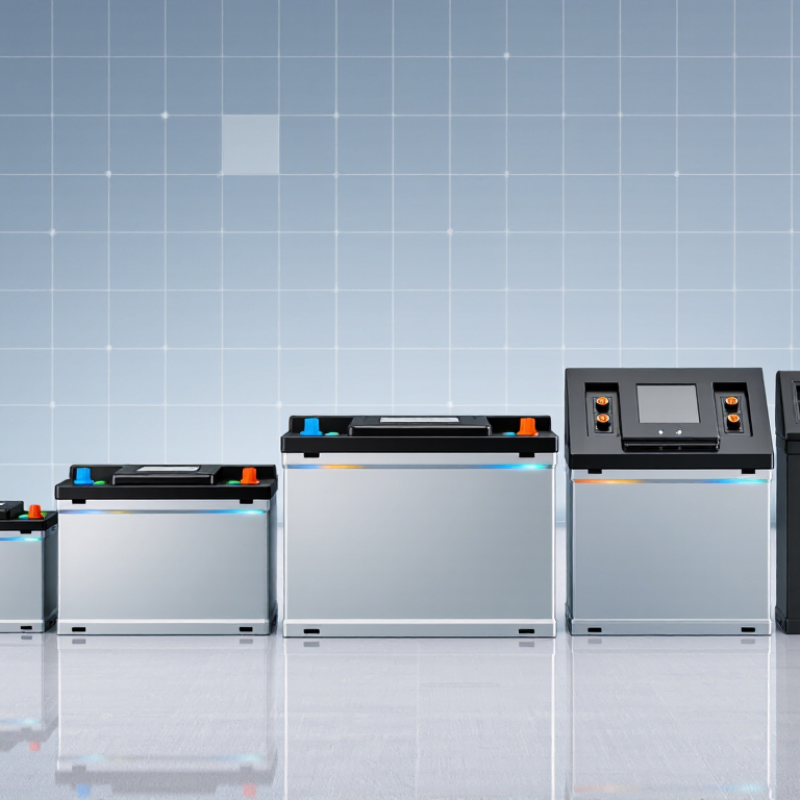
What Lithium Iron Batteries Are and How They Work
Lithium iron batteries, commonly called lithium iron phosphate or LFP batteries, use lithium iron phosphate as the cathode and usually graphite as the anode. A porous separator keeps the electrodes apart while allowing lithium ions to pass through the electrolyte. It is a small, carefully engineered gap.
During discharge, lithium ions travel from the graphite anode toward the cathode. Electrons take a separate route through the connected device, creating usable electrical current. Charging reverses that movement. The phosphate-based cathode structure is relatively stable under heat, which can reduce thermal-runaway risk compared with some nickel-rich chemistries. It does not make a battery risk-free. Cell design, temperature, and charging controls still matter.
The International Energy Agency’s Global EV Outlook 2024 reports that LFP’s share of the global electric-car battery market rose from under 10% in 2020 to nearly 40% in 2023. That figure describes electric-car batteries, not every lithium battery used worldwide. LFP cells generally offer long cycle life and avoid nickel and cobalt in the cathode, but they typically store less energy per kilogram than high-nickel alternatives. For buyers, that trade-off affects pack weight and available runtime. The chemistry explains a lot, but not everything; pack quality and operating conditions can shift real-world performance.
7 Best Lithium Iron Batteries for Global Buyers? – What Lithium Iron Batteries Are and How They Work
What they are: Lithium iron batteries commonly refers to lithium iron phosphate (LiFePO₄ or LFP) batteries. Their cathode uses lithium iron phosphate. During discharge, lithium ions move from the anode through the electrolyte toward the cathode, while electrons flow through the external circuit to power a device. Charging reverses this process.
| Battery type or format | Typical nominal voltage | Common applications | Why buyers consider it | Key purchasing checks | Typical cycle-life context |
|---|---|---|---|---|---|
| Compact LFP battery pack | 12.8 V (4 cells in series) | Portable power, small backup systems, low-power equipment | Compact systems can benefit from LFP’s stable chemistry and ability to support repeated cycling. | Check usable capacity, continuous discharge rating, protection against overcharge and over-discharge, and connector compatibility. | Many LFP products are rated for thousands of cycles; the actual rating depends on depth of discharge, temperature, and product design. |
| 12 V-class deep-cycle pack | 12.8 V | Caravans, boats, off-grid lighting, and small solar installations | Often used as a rechargeable alternative to a 12 V lead-acid battery in compatible systems. | Confirm charging-voltage compatibility, battery-management-system (BMS) limits, cold-weather charging protection, and available capacity in watt-hours. | Cycle-life claims vary widely. Compare ratings at the same depth of discharge and test conditions. |
| 24 V-class battery pack | 25.6 V (8 cells in series) | Medium-sized solar systems, mobility equipment, and commercial equipment | Higher system voltage can reduce current for a given power level compared with a 12.8 V system. | Check inverter or charger voltage limits, peak-current requirements, BMS communication, and whether series connection is permitted. | Service life depends on cell quality, operating conditions, and the manufacturer’s defined cycle-test method. |
| 24 V-class marine or recreational-vehicle pack | 25.6 V | Marine house loads, recreational vehicles, and mobile power systems | LFP packs can provide rechargeable energy storage in applications where weight, usable capacity, and frequent cycling matter. | Verify vibration and environmental ratings, installation orientation, BMS cut-off behavior, and charging requirements for the vehicle or vessel. | Use the product’s tested cycle-life figure rather than assuming a fixed lifespan from chemistry alone. |
| 48 V-class residential storage battery | Commonly 51.2 V (16 cells in series); some systems use other nominal voltages | Home solar storage, backup power, and small commercial energy storage | A common system class for pairing with compatible inverters and expanding stored solar energy. | Check inverter compatibility, operating-voltage range, power rating, communications protocol, installation requirements, and local electrical codes. | Published cycle life is product-specific and should be checked at the stated temperature, charge rate, and depth of discharge. |
| High-voltage LFP energy-storage system | Varies by system; assembled from multiple cells or modules | Commercial and industrial storage, larger buildings, and grid-support installations | Modular systems can be designed for higher power and energy needs than a single low-voltage pack. | Assess system-level safety design, certification for the destination market, thermal management, service access, and grid or inverter requirements. | System life depends on cell selection, controls, thermal management, and operating profile; request independently verifiable test conditions. |
| Individual prismatic LFP cells | About 3.2 V per cell nominally | Battery assembly, engineering prototypes, and custom storage systems | Cells can be configured in series and parallel to meet a project’s voltage and capacity requirements. | Check cell grading, dimensions, terminal design, allowable current, data sheet consistency, and the need for a correctly designed BMS. | Cell cycle-life figures do not automatically represent the life of a completed battery pack. |
Buyer note: These are representative battery categories, not rankings of specific products. Voltage, capacity, cycle life, temperature limits, certifications, and compatibility vary by model and manufacturer. For international purchases, confirm applicable transport documentation and destination-market safety and electrical requirements. LFP batteries are generally considered more thermally stable than some other lithium-ion chemistries, but they still require appropriate protection, installation, and charging equipment.
Related Posts
-
Why Choose Lithium Iron Batteries for Your Business?
-
Top 10 Solar System Batteries for Global Buyers in 2026?
-
Connecting Solar Battery Innovations with Global Buyers at the Record-Breaking 137th Canton Fair
-

7 Essential Features to Consider for the Best Solar System Batteries in 2023
-
Navigating Import Export Certifications for the Leading Battery Manufacturers
-

Innovative Solutions for Battery Factory Efficiency and Sustainability