

What Is the Best Silicone Mat Roll for 2026?
Choosing the best Silicone Mat Roll for 2026 depends on what you cook, where you work, and how much surface you need to cover. A roll can be trimmed to fit a countertop, baking tray, or craft table. But flexibility alone does not make it a good buy. Check the material, thickness, dimensions, heat guidance, and care instructions before comparing prices.
In everyday use, a mat should lie flat, resist shifting, and clean without trapping crumbs around its edges. A clear size guide matters, too; a roll that looks generous online may leave your work area short. Look for specific product details from the manufacturer, including temperature limits and whether the mat is suitable for food contact. Vague claims are not a substitute for instructions. Small details count.
No single roll suits every kitchen, and it is easy to forget that when listings highlight one feature. A thin mat may store neatly but feel less stable under a rolling pin. A thicker one may take up more drawer space. There is no perfect trade-off. This guide will compare practical features, common drawbacks, and questions worth asking before purchase, so you can match a Silicone Mat Roll to your routine rather than rely on a bold product claim. One honest caveat: specifications do not reveal how a mat will feel on your own counter, so check return terms and reviews that describe real use.
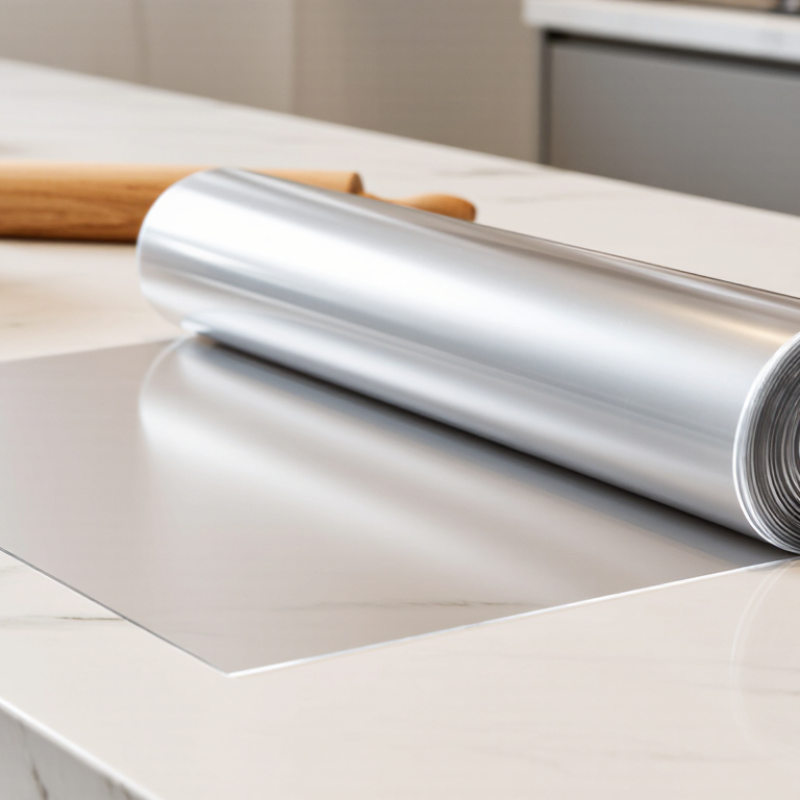
What a Silicone Mat Roll Is: Silicone Elastomer, Format, and Intended Use
What Is the Best Silicone Mat Roll for 2026?
What a Silicone Mat Roll Is: Silicone Elastomer, Format, and Intended Use
A silicone mat roll is a flexible sheet made from silicone elastomer, a rubber-like material that bends without cracking under ordinary handling. Its performance depends on its thickness, surface finish, and stated temperature range. A roll format lets you cut a piece to fit a drawer, workbench, or baking tray. It also takes up less storage space than several separate mats. But a roll is not automatically better; it may curl at the edges after storage.
The right mat starts with its intended use. For food preparation, check that the product is explicitly labeled for food contact and follow its care instructions. For craft or workshop surfaces, consider grip, cleanability, and whether the mat can be trimmed safely. A smooth surface wipes clean easily, while texture may help hold small items in place. Heat resistance varies, so do not assume every silicone mat belongs in an oven. Details matter.
Tips: Measure the surface before buying, and leave room for trimming. Unroll the mat on a flat counter and let it settle. If the edges still lift, that is worth considering before using it near heat or liquids. Check the specifications, not just the word “silicone.”
Food-Contact Compliance: FDA 21 CFR 177.2600 Extraction Limits
What Is the Best Silicone Mat Roll for 2026?
Food-Contact Compliance: FDA 21 CFR 177.2600 Extraction Limits
A reliable silicone mat roll should have documented food-contact testing, not just a “food-grade” label. FDA regulation 21 CFR 177.2600 sets extraction limits for rubber articles intended for repeated use. In water, the limit is 20 mg per square inch during the first seven hours, then 1 mg per square inch during the next two hours. For n-hexane extraction, the limits are 175 mg and 4 mg per square inch, respectively. These figures are useful benchmarks, but the right test depends on the mat’s intended food and use conditions.
Check that the report identifies the tested material, extraction medium, duration, and exposed surface area. A report for raw silicone may not represent the finished roll, especially its edges or any surface treatment. Small details matter. A neat certificate alone can leave questions unanswered.
Tips: Request the full laboratory report and confirm it covers the finished mat under relevant conditions of use. Compare the results with the FDA limits in 21 CFR 177.2600, and ask the supplier to explain any test conditions that differ. Keep batch records with the report; traceability is easy to overlook.
What Is the Best Silicone Mat Roll for 2026?
FDA 21 CFR 177.2600 extraction limits for repeated-use rubber articles
Limits are maximum total extractives from the finished article: water, 20 mg/in² in the first 7 hours and 1 mg/in² in the succeeding 2 hours; n-hexane, 175 mg/in² in the first 7 hours and 4 mg/in² in the succeeding 2 hours. These are regulatory limits, not test results for a specific mat roll. Check that the finished product has been tested for its intended food-contact conditions. Source: 21 CFR §177.2600(e).
FDA Water-Extractive Limits: 20 mg/in² in 7 Hours, Then 1 mg/in² in 2 Hours
What Is the Best Silicone Mat Roll for 2026?
A good silicone mat roll should stay flat, resist tearing, and suit repeated food contact. But “FDA compliant” is not a complete performance rating. For covered repeated-use rubber articles, FDA regulation 21 CFR 177.2600 sets water-extractives limits: no more than 20 mg per square inch after seven hours, followed by no more than 1 mg per square inch during the next two hours. These figures describe test results, not a promise that every mat bearing a compliance claim has been tested as a finished product. Ask for documentation identifying the material and test conditions.
Look closely at the roll’s thickness, width, and surface finish. A thin edge that curls beside a hot tray can be more annoying than a slightly heavier roll. FDA’s limit is about extractable substances; it does not measure grip, heat resistance, or ease of cleaning. Small distinction. It matters. A supplier’s test report should specify the tested article and relevant extraction conditions, rather than making a broad claim without supporting details.
Tips: Request the actual test report, then compare its sample description with the mat you plan to buy. Check the stated temperature range and care instructions, too. If the roll has a strong odor after washing, pause and contact the seller; odor alone does not prove a safety failure, but it deserves a question.
| Evaluation Dimension | Factual Benchmark or Requirement | What to Check When Comparing Rolls |
|---|---|---|
| Regulatory reference | 21 CFR § 177.2600 covers rubber articles intended for repeated use in contact with food, subject to the regulation’s conditions. | Check that any compliance claim identifies the applicable regulation and applies to the finished article, not merely to a raw-material description. |
| Water extraction — first period | For the specified water-extraction test, extractives must not exceed 20 mg per square inch during the first 7 hours of refluxing with water. | Look for test documentation that states the test method, extraction medium, duration, and result. |
| Water extraction — second period | After the first extraction, extractives must not exceed 1 mg per square inch during a further 2 hours of refluxing with water. | Confirm that documentation reports the second extraction period as well as the first; the two limits apply to separate periods. |
| Fatty-food extraction benchmark | Under the regulation’s specified n-hexane extraction test, the limits are 175 mg per square inch for the first 7 hours and 4 mg per square inch for the following 2 hours. | Do not treat the water-extraction figures as the only relevant test when the intended food-contact conditions involve fatty foods. |
| Roll width and length | These are product dimensions, not FDA-set food-contact limits. There is no single FDA-required width or length for a silicone mat roll. | Compare the listed width and roll length with your work surface, storage space, and intended cutting needs. |
| Thickness and surface construction | 21 CFR § 177.2600 does not establish a universal preferred mat thickness or surface pattern. | Use the product’s published specifications; do not infer food-contact compliance from thickness, appearance, or texture alone. |
| Temperature range | The regulation’s extraction limits do not specify a universal oven-temperature rating for every silicone mat. | Check the stated temperature range and use instructions for the specific finished mat, including any limits on direct flame or broiler use. |
| Evidence and traceability | The extraction limits are test criteria; meeting them does not by itself establish every aspect of a product’s suitability for every food, use, or temperature. | Prefer product-specific documentation that identifies the material, intended repeated-use conditions, and relevant test results. |
| How to interpret the headline limits | The 20 mg/in² and 1 mg/in² figures are conditional water-extraction limits in 21 CFR § 177.2600. They are not a universal product rating, a guaranteed result for every silicone mat, or an FDA endorsement of a particular item. | |
Thermal and Mechanical Ratings: Compare Tested Specifications, Not Marketing Claims
For a silicone mat roll, compare measured limits, not a bold temperature printed on packaging. A maximum temperature alone does not show how long the mat can withstand heat or whether repeated cycles cause hardening. ASTM D573 evaluates rubber aging in hot air, while ASTM D412 measures tensile properties. Ask for test temperature, exposure time, and property retention after aging. Details matter.
Mechanical numbers need context, too. MatWeb’s compiled silicone-rubber data show tensile strength can vary by formulation, with representative entries around 3–12 MPa. That range is a screening reference, not a pass mark for every mat. Check whether the supplier reports tensile strength under ASTM D412 and hardness under ASTM D2240, including the Shore scale. A Shore A value near 60 may feel firm, but hardness alone says little about tearing or edge wear. Look for tear strength, thickness, and test conditions. Small gaps in a data sheet matter. A glossy claim is not evidence; still, even a complete lab report may not predict wear from your exact tools, cleaning routine, or storage conditions.
Choosing a 2026 Roll: Match Width, Thickness, Length, and Food-Contact Certification
Choosing a silicone mat roll starts with the space where you will use it. Measure the counter, tray, or workbench before ordering. Leave room for the mat to lie flat without curling over an edge. Measure your counter. Roll width matters most when you bake several trays or cover a long work surface.
Thickness affects handling: thinner mats bend and store easily, while thicker ones can feel steadier under dough or tools. Check the stated thickness rather than judging from a product photo. Too much thickness can make a roll awkward to cut or store.
I have found that storage space is easy to overlook.
Length determines how many pieces you can cut, but extra material is only useful if you can keep it clean and flat. Read the food-contact documentation carefully. Look for written information identifying the material and its intended food-use conditions, including any stated temperature limits.
A general “food-safe” claim alone gives little detail. Check cleaning instructions, too; a mat that traps flour in its texture may be frustrating in daily use. Certification names and requirements can vary by market, so verify the documents against your intended use.
Smell is not a test. If details are missing or unclear, ask the seller before choosing.