China Top Binder Mechanism Exporters for Global Buyers?
Choosing a binder mechanism supplier in China involves more than comparing unit prices. Global buyers need products that fit their covers, production lines, and expected use. A small mismatch in ring diameter or mounting-hole spacing can slow assembly and create costly rework. Details matter.
This guide explores China’s binder mechanism exporters and the factors buyers can assess before placing an order. These include material options, ring shapes, opening force, surface finish, packaging, and the supplier’s ability to meet agreed specifications. Ask for drawings and physical samples where practical. A polished catalog helps, but it cannot show how a mechanism feels after repeated opening and closing. Nor does a low quotation guarantee consistent batches.
Reliable sourcing depends on clear communication and verifiable information. Buyers can compare sample quality, production capacity, quality-control procedures, lead-time estimates, and export documentation. Confirm measurements and tolerances in writing, especially for customized mechanisms. If a supplier gives vague answers, pause and ask more questions. That may seem cautious, but it can prevent avoidable surprises.
Binder Mechanism Export decisions also involve trade-offs. A standard design may suit a tight schedule, while a custom finish or specification may need extra sampling time. Supplier claims should be checked against samples and records, not accepted at face value. This overview offers a practical starting point, not a substitute for buyer-side verification. The best partner is one whose product, process, and communication remain dependable from quotation through shipment.
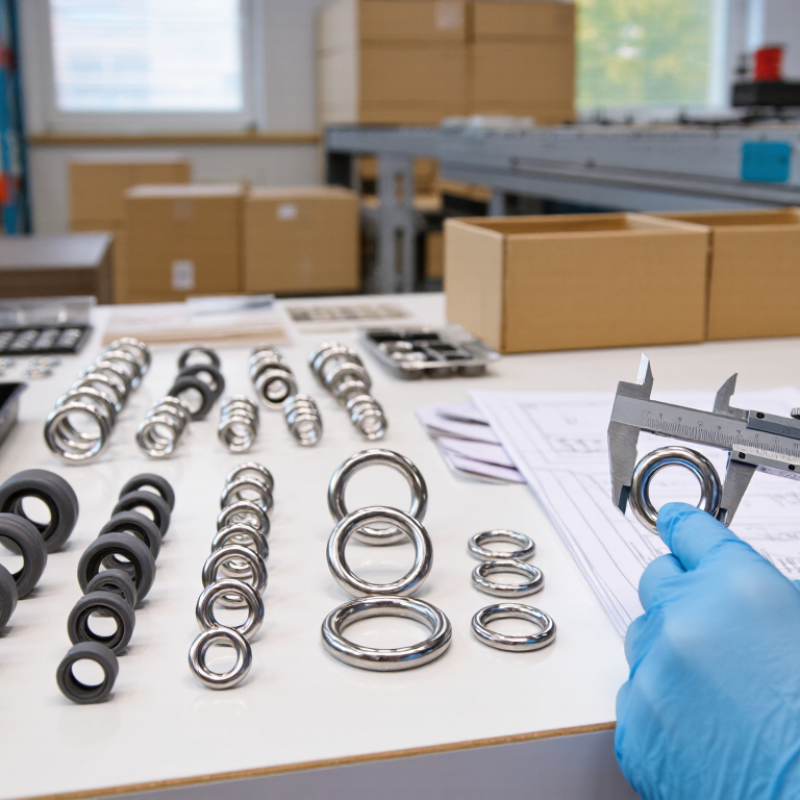
What Binder Mechanisms Are and How They Function
A binder mechanism is the metal assembly inside a ring binder. It usually combines a spine, hinged ring halves, and a locking lever. Pressing the lever opens the rings; punched sheets slide onto them, and closing the lever brings the ring ends together. The closed rings hold pages in place while allowing them to turn. Simple, but sensitive. Ring count, diameter, metal thickness, and alignment affect capacity and ease of use.
The material behind filing products remains substantial: FAO’s 2022 forest products statistics reported about 401 million tonnes of global paper and paperboard production that year. This figure does not measure binder mechanisms, but it indicates the scale of paper-based products they are designed to organize. For buyers, useful checks include smooth lever movement, even ring closure, and whether the stated sheet capacity matches the paper weight being used. Fit matters. A mechanism can look sturdy yet leave a small gap where the rings meet; pages may catch there. Cycle testing and inspection of samples can reveal issues, though they cannot predict every condition in daily use.
China Top Binder Mechanism Exporters for Global Buyers? — What Binder Mechanisms Are and How They Function
Binder mechanisms are metal assemblies fixed inside a binder or file. When opened, their rings separate so punched sheets can be added or removed; closing the mechanism brings the rings together to hold the pages. Common loose-leaf formats include two-, three-, and four-ring configurations. Ring count alone does not determine sheet capacity, which also depends on ring shape, size, and the paper format.
Chart note: This compares ring counts, not exporter rankings, market share, or product capacity.
China’s Role in the Global Binder Mechanism Supply Chain
China’s role in the binder mechanism supply chain rests on a broad manufacturing base, not just final assembly. The WTO’s World Trade Statistics 2024 reports that China exported US$3.38 trillion in merchandise in 2023, equal to 14.2% of global exports. That figure covers all goods, not binder mechanisms specifically, but it helps explain the depth of China’s export logistics and supplier networks.
For buyers, the chain may run from steel strip and wire to stamping, riveting, surface finishing, inspection, and packing. A mechanism’s feel depends on small details: aligned rings, smooth lever action, and consistent rivet placement. Small parts matter. China’s dense network of metalworking and packaging suppliers can support repeat production and mixed component sourcing. Yet capacity alone does not guarantee consistency; buyers should check material specifications, sample performance, and batch-level inspection records.
Trade data needs careful reading. UN Comtrade tracks “fittings for loose-leaf binders or files” under HS 8305.10, offering a useful starting point for comparing shipment patterns. The code does not reveal factory-level quality or distinguish every design variation. That is a real limitation. Buyers should verify product descriptions, shipment origins, lead times, and defect procedures directly with suppliers, then compare those details against their own samples and purchase records.
Key Types and Specifications Offered by Chinese Exporters
Chinese exporters commonly offer O-ring and D-ring mechanisms, plus two-, three-, and four-ring layouts. O-rings suit compact folders; D-rings often hold more pages because their straight spine uses space efficiently. Catalogues may list ring diameters from about 15 to 80 mm, but capacity varies with paper weight and ring shape. Ask for the actual sheet capacity, not diameter alone.
Specifications typically cover base-plate length, mounting-hole spacing, steel thickness, surface finish, and lever or spring action. ISO 216 defines A4 paper as 210 × 297 mm, a useful reference when checking folder fit. The FAO’s 2023 forest-products review reports about 401 million tonnes of global paper and paperboard production in 2022. That scale helps explain why compatible filing hardware still matters.
Fit matters. Yet catalogue dimensions do not always predict smooth page turning.
Tips: Request a dimensioned drawing and sample. Test it with your intended paper stack; also check rivet positions and plating consistency. A small mismatch can make installation frustrating. Suppliers’ capacity claims may need independent verification.
How Global Buyers Can Evaluate Chinese Exporters
Global buyers should compare Chinese binder-mechanism exporters by measurable controls, not catalog breadth. Request dimensioned drawings showing ring diameter, pitch, base width, rivet spacing, and plating thickness. Test samples from multiple production lots. Check opening force, ring alignment, burrs, and repeated cycling with a consistent paper stack. Small details matter. Ask for inspection records, material specifications, defect limits, and corrective-action examples. A certificate alone cannot show how a factory handles a failed batch.
Logistics deserve equal scrutiny. The World Bank’s 2023 Logistics Performance Index reports an average of 44 days for goods to move through the international supply chain, based on shipment data across 139 economies. UNCTAD reported that maritime trade grew 2.4% in 2023. These figures make clear why buyers should confirm production lead times, port schedules, carton protection, and shipment tracking before placing large orders. Request packaging photos and a clear process for reporting transit damage. I would not rely on a polished factory video alone. Compare the supplier’s sample against the approved drawing, then record any mismatch before confirming production.