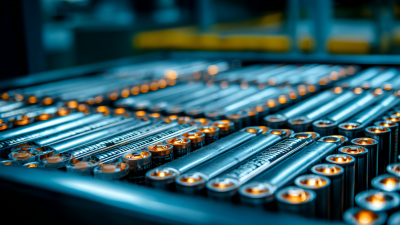

China Best New Battery Technology Suppliers for Global Buyers
China’s battery sector is evolving beyond low-cost cells. Buyers now compare energy density, cycle life, charging performance, and production consistency. New Battery Technology can mean improved lithium-ion designs, sodium-ion cells, solid-state research, or smarter battery-management systems. Each option serves different applications. A warehouse forklift, an electric vehicle, and a home storage unit do not need identical batteries.
Battery researcher Jeff Dahn is widely associated with the observation, “The lithium-ion battery is the most important technology of the 21st century.” That perspective helps explain why supplier selection deserves more than a price comparison. A polished specification sheet is useful, but it cannot replace test data. Ask how performance changes after repeated charging, in cold conditions, or under sustained high loads. Request details on cell chemistry, thermal controls, quality checks, and warranty support. Small details matter.
This guide examines Chinese suppliers through a buyer’s lens. It considers technical capability, manufacturing scale, documentation, communication, and after-sales service. A supplier’s impressive factory tour may still leave questions about batch consistency. That is worth admitting. Public information can be incomplete, and product claims should be verified against current technical documents and independent testing. The right partner is not always the largest or cheapest. It is the one that can explain its limits, provide evidence, and support the battery throughout its intended service life.

What Qualifies as New Battery Technology in China
New battery technology in China is not defined by a new chemistry name alone. It can include advances in cell materials, electrode design, manufacturing controls, thermal management, or battery-pack integration. Some improvements are incremental. That still matters. A change is meaningful when test data show better usable energy, faster charging, longer cycle life, or improved safety under stated conditions.
Global buyers should ask what changed and how it was measured. Request cell-level and pack-level results, including temperature, charge rate, depth of discharge, and test duration. Numbers matter. A high energy-density figure may exclude the casing or control system, while a fast-charge claim may apply only within a narrow temperature range. Independent testing and traceable production records help distinguish repeatable engineering from a promising laboratory sample.
Newness also includes how reliably a design can be made at scale. Review batch consistency, quality checks, repair options, recycling pathways, and supplier disclosure of material origin. These details can be less exciting than a chemistry headline, but they affect real projects. Evidence is not always complete, especially for recently introduced designs. Buyers should treat early results as provisional and verify them through pilot shipments and ongoing monitoring. The label “new” should invite questions, not replace them.
Major Battery Types and Their Industrial Applications
Industrial battery selection starts with the job, not a headline capacity figure. Lead-acid batteries remain common in backup power and forklifts, where established maintenance practices matter. They are heavy, and frequent deep discharges can shorten service life. Heat matters.
Lithium-ion batteries serve electric vehicles, warehouse equipment, and stationary storage. Lithium iron phosphate chemistry is often chosen for cycle life and thermal stability; nickel-rich chemistries can offer higher energy density where space and weight are priorities. Actual performance depends on cell design, battery management, temperature, and charging limits. A datasheet alone cannot predict results at a busy loading dock.
Sodium-ion batteries are emerging for applications where cost and resource availability may outweigh compact size. They may suit some stationary systems, but buyers should verify commercial availability and operating data. Flow batteries store energy in liquid electrolytes and can fit longer-duration grid or industrial storage needs; pumps and system complexity require attention. Not every site needs them.
Compare usable capacity, power output, cycle life, service support, and safety controls under real operating conditions. A pilot installation can expose issues that a polished specification may miss.
Leading Chinese Battery Suppliers and Their Specialties
China’s battery supply base serves distinct needs, and a supplier’s specialty matters more than a broad catalog. Some manufacturers focus on lithium-ion cells for electric vehicles, balancing energy density, cycle life, and thermal stability. Others build lithium iron phosphate systems for buses, forklifts, and stationary storage, where long service life may matter more than compact size. These are different engineering priorities.
Cell makers are only one part of the picture. Pack integrators combine cells with busbars, cooling channels, enclosures, and battery management systems. Industrial suppliers may tailor packs for cold warehouses or equipment with frequent start-stop cycles. Storage specialists design cabinets around inverters, fire detection, and site monitoring. Details matter. Buyers should request test reports, warranty terms, traceability, and performance data at realistic operating temperatures.
Newer chemistries, including sodium-ion, are attracting interest for selected applications, but availability and field history vary. A polished sample is not the same as a stable production line. It is not trivial. Compare independent test results, production capacity, and after-sales support, then assess samples under realistic duty cycles. No supplier excels at every chemistry or use case, and specifications can look better on paper than in a cold, dusty installation. That deserves a second look.
How Global Buyers Compare Battery Suppliers
Global buyers compare battery suppliers on more than quoted price. They examine cell chemistry, usable capacity, cycle-life test conditions, safety documentation, and production consistency. These details matter in practice. A low-cost sample means little if capacity varies across delivered batches. Buyers should request test reports with temperatures, charge rates, and end-of-life criteria clearly stated.
Scale also changes the comparison. The International Energy Agency’s Global EV Outlook 2024 reports that battery demand in the energy sector reached about 750 GWh in 2023, up 40% from 2022. That growth makes delivery capacity and quality controls essential questions. BloombergNEF reported average lithium-ion battery pack prices of US$115 per kWh in 2024, but a market average cannot predict a project’s total cost. Shipping, warranty terms, and usable energy can shift the calculation.
Ask suppliers for traceable material records, independent test results, defect-rate data, and a clear warranty process. Check whether stated cycle life matches your operating temperature and daily charge pattern. Compare carefully. A spreadsheet can still miss the practical difference between laboratory performance and field results; that gap deserves more scrutiny than a polished brochure.
China Best New Battery Technology Suppliers for Global Buyers - How Global Buyers Compare Battery Suppliers
| Battery Technology | Typical Cell-Level Energy Density | Typical Cycle-Life Range | Charging Characteristics | Key Strengths | Buyer Considerations |
|---|---|---|---|---|---|
| Lithium Iron Phosphate (LFP) | Approximately 90–180 Wh/kg | Approximately 2,000–6,000 cycles | Fast charging is possible with compatible cells and thermal management; charging time depends on the cell specification and operating conditions. | Long service life, strong thermal stability relative to many nickel-rich lithium-ion chemistries, and broad use in stationary storage and electric vehicles. | Compare usable energy, low-temperature performance, warranty conditions, cell consistency, and tested pack-level safety—not just cell-level figures. |
| Nickel Manganese Cobalt (NMC) | Approximately 150–300 Wh/kg | Approximately 1,000–3,000 cycles | Charging capability varies by cell design; high-power charging requires compatible controls and thermal management. | Higher energy density can support applications where weight and space are important, including many electric-vehicle designs. | Check the specific cathode formulation, operating limits, thermal-protection design, warranty, and responsible sourcing documentation. |
| Sodium-Ion | Approximately 100–160 Wh/kg for many current cell designs | Often reported in the range of approximately 2,000–6,000 cycles, depending on design and test conditions | Charging performance is product-specific; confirm charge rate and temperature limits in the cell datasheet. | Uses sodium-based chemistry and may suit cost-sensitive stationary storage or applications where supply-chain diversity is valued. | Compare commercial production maturity, independently verified performance, operating-temperature range, and long-term supply capacity. |
| Lithium Titanate (LTO) | Approximately 70–110 Wh/kg | Approximately 10,000–20,000 cycles for some designs | Can support very high charge rates in suitably designed cells; actual charging time depends on the cell, charger, and temperature. | Very long cycle life and high-power capability can be useful for frequent cycling, rapid charging, and demanding duty cycles. | Assess the trade-off between lower energy density and lifetime value; verify the supplier’s cycle-life test conditions and warranty. |
| Solid-State Lithium Batteries | No broadly comparable commercial range; values depend on cell design and development stage. | No consistent, independently comparable market-wide range. | Charging performance remains design-specific; request validated data from production-representative cells. | Potential for different safety and energy-density characteristics, but performance depends on the specific solid electrolyte and cell architecture. | Distinguish laboratory results from production-ready products; confirm manufacturing scale, third-party testing, delivery schedule, and warranty terms. |
Figures are indicative technology-level ranges, not guarantees for any particular product. Results vary with cell design, test method, temperature, charge rate, depth of discharge, and end-of-life criteria. For supplier qualification, compare current datasheets and independent test reports, and verify applicable certifications and transport documentation for the exact cell or battery pack.
Certifications, Sourcing, and Supply Chain Considerations
For global buyers, a supplier’s certificate is only useful when its scope matches the product and factory being evaluated. Check the issuing body, validity dates, and model coverage. Paperwork matters. Quality systems such as ISO 9001 can indicate process controls, but they do not prove that a specific battery meets every market requirement. Ask for relevant test reports and confirm applicable transport documentation, including the UN 38.3 test summary where required. Check the scope. Requirements vary by battery chemistry, end use, and destination, so independent review can prevent costly assumptions.
Sourcing decisions should also account for production capacity, component traceability, and realistic lead times. Request a sample, review its test records, and compare key specifications against the eventual production order. Small gaps matter. A cell specification may change between sample approval and shipment unless change-control terms are clear. Ask how suppliers handle raw-material delays, quality holds, and peak-season demand. Keep a second-source plan for critical components, but verify that alternatives have been tested in the finished pack. This takes time. It is tempting to prioritize unit price, yet a low quote can hide longer payment terms, minimum order quantities, or inconsistent documentation. Record open questions and revisit them before placing a deposit.
Related Posts
-
Top 15 Battery Suppliers with Industry Certification for Import Export Success
-
How to Harness the Advantages of Best New Battery Technology for Your Business
-
The Ultimate Guide to Choosing the Right Storage Battery for Your Needs
-

Unmatched Quality in Global Lithium Pro Batteries from China's Premier Manufacturer
-
Explore the Top Choices for Best Solar System Batteries in 2023
-
Innovative Solutions for Efficient Energy Storage with Ionic Battery Technology