

China Best Solar System Batteries Suppliers for Global Buyers
China has become a major sourcing destination for Solar System Batteries, serving residential, commercial, and off-grid projects worldwide. Global buyers can find lithium iron phosphate, lead-acid, and high-voltage battery systems from experienced Chinese manufacturers. The real challenge is choosing dependable quality, not simply finding a low factory price.
Dr. Imre Gyuk, a respected energy-storage specialist, has said, “Energy storage is the key to a resilient, reliable, and affordable power grid.” His statement reflects the practical role of batteries in modern solar systems. A suitable battery stores midday electricity and releases it after sunset. It can also support essential loads during grid interruptions. However, performance depends on more than cell chemistry. Buyers should examine usable capacity, cycle life, battery management systems, operating temperature, warranty terms, and safety certifications.
Details matter. A serious supplier should provide test reports, installation guidance, communication protocols, and traceable production information. Ask how the battery performs at 5°C, not only under laboratory conditions. Check whether after-sales support covers firmware updates and replacement parts. A polished brochure is not proof.
No supplier is perfect. Even strong manufacturers may have inconsistent documentation or slow technical responses. This guide compares China’s leading Solar System Batteries suppliers through product quality, manufacturing experience, export capability, safety practices, and customer support. It also considers the less visible risks, including unclear warranty language and unsuitable inverter compatibility. Careful buyers should verify every important claim before placing an order. That extra step may feel slow, but it can prevent expensive failures later.
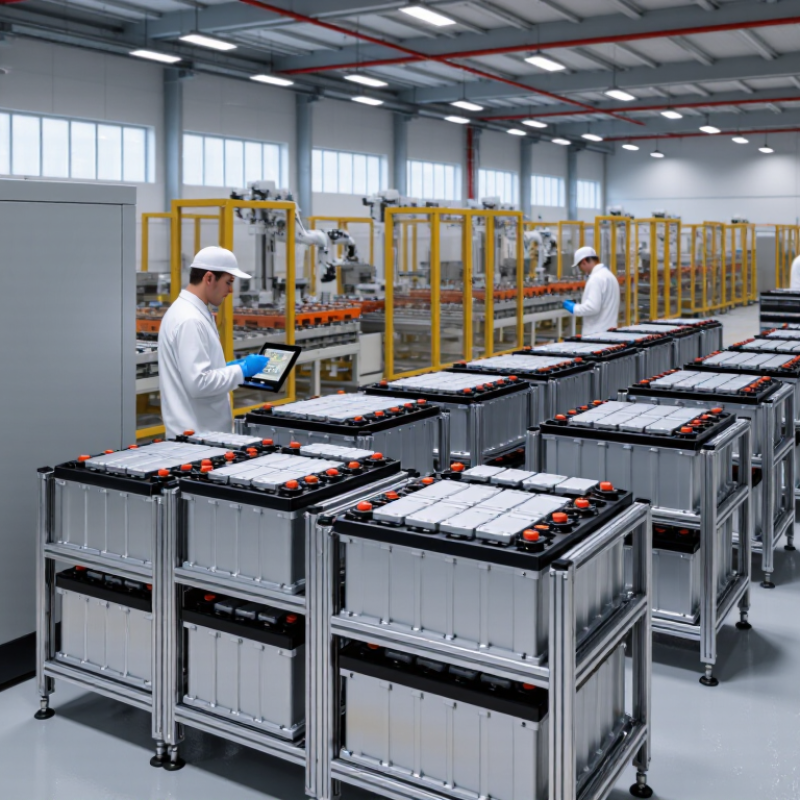
Solar System Battery Types and Key Performance Features
China Best Solar System Batteries Suppliers for Global Buyers
Solar system batteries differ in chemistry, cost, lifespan, and operating behavior. Lead-acid batteries remain practical for small off-grid projects. They cost less initially, but require ventilation and tolerate fewer deep cycles. Lithium iron phosphate batteries offer higher usable capacity, stronger cycle performance, and stable thermal behavior. They usually need a battery management system.
Sodium-ion batteries are emerging in stationary storage. Their cold-weather performance can be useful, although commercial data remains less extensive. Nickel-based lithium batteries provide high energy density, but heat management deserves close attention. Do not compare batteries by nominal capacity alone. A 10 kWh battery may provide only 8 kWh after depth-of-discharge limits and conversion losses.
Real projects expose details that datasheets sometimes soften. Buyers should check round-trip efficiency, continuous and peak power, charge temperature limits, communication protocols, and enclosure ratings. Cycle-life figures also need context. Were they tested at 25°C, moderate discharge, and controlled conditions? Field results may differ.
I have found that installation quality affects performance more than many buyers expect. Cable sizing, ventilation, firmware settings, and inverter compatibility can change daily output. Request test reports, safety certifications, warranty terms, and replacement procedures from suppliers in China. Confirm whether technical support covers your time zone. A lower quotation can hide integration work. That risk deserves a second review.
China Best Solar System Batteries Suppliers for Global Buyers - Solar System Battery Types and Key Performance Features
| Battery Type | Typical Chemistry | Common System Voltage | Recommended Depth of Discharge | Typical Cycle Life | Round-Trip Efficiency | Main Advantages | Important Considerations | Best-Fit Solar Applications |
|---|---|---|---|---|---|---|---|---|
| Lithium Iron Phosphate (LFP) | Lithium-ion, LiFePO4 | 12 V, 24 V, 48 V and high-voltage systems | 80–95% | Approximately 3,000–8,000 cycles, depending on operating conditions | Approximately 90–98% | High usable capacity, long service life, good thermal stability and low maintenance | Requires a battery management system; charging below 0°C generally requires temperature protection or heating | Residential storage, commercial systems, off-grid installations and backup power |
| NMC Lithium-Ion | Nickel manganese cobalt oxide | 12 V, 24 V, 48 V and high-voltage systems | 80–90% | Approximately 2,000–5,000 cycles | Approximately 90–97% | High energy density and compact system size | More sensitive to heat and abuse than LFP; requires certified protection and thermal management | Space-constrained residential and commercial energy storage |
| Valve-Regulated Lead-Acid (VRLA) | AGM or gel lead-acid | 12 V and 24 V; 48 V banks are assembled from modules | Typically 50% | Approximately 500–1,200 cycles at moderate discharge depth | Approximately 75–85% | Lower initial cost, established recycling infrastructure and simple system design | Heavy, larger footprint and reduced life under deep or frequent cycling; ventilation may be required | Small off-grid systems, emergency backup and low-cycle applications |
| Flooded Lead-Acid | Vented deep-cycle lead-acid | 12 V and 24 V; larger banks can be configured | Typically 50% | Approximately 500–1,000 cycles | Approximately 70–85% | Widely available, familiar technology and relatively low purchase price | Needs ventilation, routine electrolyte maintenance and careful installation to prevent gas accumulation | Remote off-grid systems where maintenance access is available |
| Saltwater Battery | Aqueous sodium-ion electrolyte system | System-specific low-voltage or modular configurations | Often 80–100%, subject to manufacturer limits | Varies by design; commonly rated for several thousand cycles | Approximately 80–90% | Non-flammable aqueous electrolyte and reduced reliance on heavy metals | Lower energy density, limited market availability and fewer compatible inverter options | Safety-focused stationary storage with adequate installation space |
| Flow Battery | Liquid electrolyte, commonly vanadium-based | Project-specific DC voltage | Typically 70–100% | Often 10,000–20,000+ cycles, depending on system design | Approximately 65–85% | Very high cycling capability, long calendar life and independent power-to-energy scaling | Large footprint, pumps and auxiliary equipment increase complexity; higher upfront cost | Utility-scale, microgrid and long-duration commercial storage |
| High-Temperature Sodium Battery | Sodium-sulfur or sodium-nickel chloride | Project-specific high-voltage DC systems | Approximately 80–90% | Approximately 3,000–7,000 cycles, depending on technology | Approximately 75–90% | Suitable for large-scale storage and uses widely available sodium-based materials | Operates at elevated temperature and requires specialized thermal control and safety systems | Grid support, renewable-energy integration and large commercial installations |
Note: Performance ranges are representative industry values. Actual results depend on cell quality, battery management settings, temperature, charge and discharge rate, installation design, maintenance and inverter compatibility.
Related Posts
-
Top Strategies for Leveraging Best New Battery Technology in Your Business
-
How to Choose the Best Solar System Batteries for Your Needs?
-
Why Solar System Batteries Are Essential for Your Energy Needs?
-

10 Game-Changing Battery Energy Storage System Innovations Transforming Global Procurement
-
Why Choose a Lithium Ion Battery Pack for Your Needs?
-
How to Maximize Efficiency in Electric Vehicles Using Ionic Battery Technology