

China Top 10 LED Strip Lighting Manufacturers for Global Buyers?

Choosing among China’s top LED strip lighting manufacturers takes more than comparing catalog photos. Global buyers need dependable product data, consistent production, and clear communication before placing an order. A bright sample is not enough.

Lighting researcher Mariana Figueiro has said, “Light is the most powerful synchronizer of our biological rhythms.” Her point concerns light’s broader effects, but it also reminds buyers to look beyond brightness. Color consistency, dimming behavior, heat management, and the intended setting all shape a strip’s real-world performance. Small details matter.

This guide introduces ten Chinese manufacturers and considers their product ranges, customization options, quality-control practices, and export experience. It also highlights practical questions: Can the supplier explain LED density and color rendering? Are specifications supported by test reports? How does the company handle samples, packaging, and after-sales communication? These checks can help buyers assess fit, but they cannot replace independent verification. A polished website proves little by itself.

The list should be treated as a starting point, not a universal ranking. Supplier capabilities change, and public information may be incomplete. Some buyers may value low-voltage options; others may prioritize tunable white, smart controls, or stable color across long runs. There is no perfect shortlist. A careful comparison, followed by sample testing and direct technical discussion, offers a more reliable path to selecting an LED strip lighting partner.
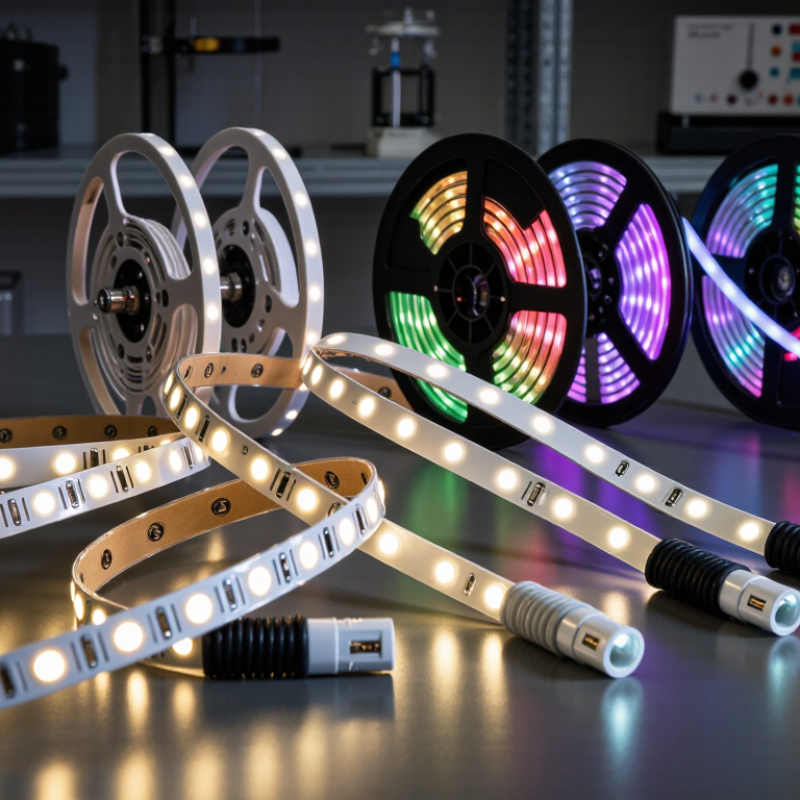
China Top 10 LED Strip Lighting Manufacturers for Global Buyers?

China’s LED Strip Lighting Industry and Its Global Role

China’s LED strip lighting industry has grown through a mix of component access, manufacturing capacity, and export experience. Its global role is not just about producing large volumes. Manufacturers serve projects ranging from retail displays to building accents, where brightness, color consistency, and heat management all matter. Many suppliers can adapt strip length, voltage, coating, and packaging to a buyer’s specifications. Still, capabilities vary, and a polished product photo proves little.

For international buyers, reliable evaluation starts with clear technical documents and practical samples. Check LED density, color temperature tolerance, power consumption, and operating temperature. Ask how the supplier tests adhesive strength and maintains consistent light output between production batches. These details can reveal more than a low unit price. Communication also matters. A delayed or vague answer before an order may signal coordination problems later.

Tips: Request a sample on the intended surface, then run it for several hours. Inspect for uneven brightness, excess heat, and adhesive lifting. Confirm the rated input voltage and ask for test records. Small checks help. Yet specifications can still miss real installation conditions, so allow time for a pilot run before placing a large order. The industry’s scale is an advantage, but buyers should not assume every factory offers the same level of engineering support.

How to Assess LED Strip Lighting Manufacturers in China

Assessing Chinese LED strip manufacturers requires more than comparing quoted prices. Check whether the factory documents LED binning, PCB copper thickness, voltage-drop limits, and thermal performance. Ask for test records from the exact strip model, not a similar product. Numbers need context. A bright sample may still show uneven color or excessive heat after hours of operation.

The International Energy Agency reports that lighting uses about 15% of global electricity. That makes efficiency and reliable lifetime claims worth verifying. Request LM-80 data for the LED packages and ask how the manufacturer supports its lifetime estimates. Also review electrical safety and photobiological test reports, production inspection records, and traceability for each batch. A certificate alone does not prove every shipment matches the tested sample.

Tips: Request a sample reel and test it at the intended voltage. Measure brightness at both ends, inspect solder joints, and check operating temperature after one hour. Ask for a written explanation of warranty exclusions and failure handling. If answers are vague, pause. Factory audits help, but even a tidy audit report can miss problems on a busy production line.

Profiles of Ten Chinese LED Strip Lighting Manufacturers

China’s LED strip manufacturers differ in more than price. The ten profiles highlight distinct production strengths and buyer considerations. One focuses on flexible indoor strips; another emphasizes outdoor models with protective silicone coatings. A third offers cut-to-length options for display projects. A fourth serves customers seeking tunable white light. Details matter.

Other profiles include a supplier specializing in high-density LEDs, one with custom circuit-board options, and one producing compact strips for narrow spaces. Another focuses on smart-control compatibility, while a ninth offers varied color temperatures for commercial interiors. The tenth profile represents a broad-range manufacturer serving multiple project types. These are useful comparison points, not verified claims about specific companies.

When assessing a supplier, request current product specifications and sample units. Check voltage, LED density, color consistency, adhesive backing, and heat performance. Ask how the factory handles quality checks and production changes. A neat catalog is not proof of reliable output. Samples may reveal uneven brightness or weak adhesive, and even careful checks can miss problems. Confirm details against the actual quotation and product documentation.

Comparing Products, Certifications, and Export Capabilities

Comparing China’s leading LED strip lighting manufacturers takes more than browsing product photos. Check whether each supplier offers the required voltage, color temperature, brightness, and cut length. For a warm indoor display, for example, compare color consistency and color rendering, not just advertised lumens. Ask for a sample and inspect the solder pads, adhesive backing, and light output after several hours of use. Small details matter.

Certifications deserve careful review. Request current documents and confirm that their scope matches the exact product model, power supply, and intended market. A certificate for one series may not cover every strip in a catalog. Test reports can add useful detail about electrical safety, photobiological performance, or ingress protection, where relevant. Paperwork is not a substitute for checking a physical sample. Some buyers overlook that.

Export capability shows up in practical routines. Ask about sample turnaround, production lead times, carton labeling, protective packaging, and the documents supplied with each shipment. Clear answers are useful; vague promises are less so. Check how the manufacturer handles specification changes and quality issues, too. A polished quotation can hide gaps, and even a capable factory may communicate imperfectly. Compare written specifications against samples and confirm key details before placing a large order.

How Global Buyers Can Verify Suppliers and Plan Purchases

Global buyers should verify more than a supplier’s product catalog. The U.S. Department of Energy’s LED guidance reports that LEDs use at least 75% less energy and can last up to 25 times longer than incandescent lighting. Those figures describe LEDs broadly, not a specific strip or factory. Ask for model-specific test reports, including power consumption, light output, color consistency, and operating temperature. Check that report numbers match the exact model and production version being quoted. A polished PDF is not proof. Request a dated sample and compare its label, reel length, and measured wattage with the documents.

Plan purchases around real installation conditions. Test a full-length reel at the intended voltage, not just a short section on a workbench. Measure brightness and color near the power feed and at the far end; voltage drop can make them differ. Ask how the supplier controls LED binning and inspects solder joints, insulation, and connectors. Confirm minimum order quantities, sample lead times, production schedules, packaging, and spare quantities in writing. Keep a retained sample for comparison when bulk goods arrive. A spreadsheet can look reassuring, yet it may miss a detail as small as a changed connector. Build time for retesting into the schedule, especially when multiple batches will be installed together.

China Top 10 LED Strip Lighting Manufacturers for Global Buyers? — How Global Buyers Can Verify Suppliers and Plan Purchases

No. Supplier Evaluation Dimension What Buyers Should Verify Evidence to Request Purchase-Planning Action
1 Business identity and factory capability Confirm the supplier’s registered business details and whether production is performed in-house, subcontracted, or split across multiple facilities. Business registration details, facility address, production-line photos or live video, and a written list of outsourced processes. Match the contracting entity, invoice issuer, and beneficiary bank account. Clarify which facility will manufacture the order.
2 LED strip construction Check LED package, LED density, PCB width and copper specification, strip length, cutting intervals, and adhesive type against the project requirements. Product datasheet, bill of materials or component declaration, PCB specification, and a sample from the intended production configuration. Freeze the approved sample and specification before placing a bulk order; identify any permitted component substitutions in writing.
3 Electrical performance Verify rated voltage, input power per metre, current, polarity, voltage drop, and compatibility with the proposed power supply and controller. Datasheet and test results for the exact strip length and configuration being quoted. Confirm whether figures are measured or nominal. Calculate power-supply capacity using the actual run length and installation layout. Plan power injection where required by the design.
4 Light output and consistency Compare luminous flux, efficacy, CCT, CRI, colour binning, and colour consistency. Check whether reported values apply to the complete strip or individual LEDs. Photometric test report, measurement conditions, stated binning tolerance, and sample results from the proposed LED and strip configuration. Specify acceptable colour and output tolerances in the purchase documents, especially for projects using multiple production batches.
5 Safety and standards documentation Check which safety standards and market requirements apply to the finished product and its intended use. Relevant standards may include IEC 62031 for LED modules and IEC 60598-1 for luminaires. Current test reports or certificates where applicable. Confirm the tested model, components, ratings, report issuer, and destination-market scope. Ask an appropriately qualified testing or compliance professional to confirm applicable requirements before shipment. Do not treat a document for a different model as proof of compliance.
6 Ingress protection and installation environment For products advertised with an IP rating, check that the rating is supported for the delivered assembly and intended installation. IEC 60529 defines IP-code classification. Relevant test documentation identifying the tested construction, including any coating, sleeve, end cap, connector, or sealing method. Specify indoor or outdoor use, exposure conditions, connectors, and installation method. Confirm whether cutting or field connections affect the claimed protection.
7 Photobiological and material compliance Assess photobiological safety where relevant; IEC 62471 addresses photobiological safety of lamps and lamp systems. For EU-bound products, check applicable substance restrictions, including the RoHS framework. Model-specific test documentation and material declarations. Verify that product descriptions and document scope match the actual goods. Define destination markets and required documentation at quotation stage. A CE marking is a manufacturer’s declaration of conformity, not by itself an independent product test certificate.
8 Quality control and traceability Review incoming-material inspection, in-process checks, final electrical testing, defect handling, and lot or date-code traceability. Quality-control plan, sample inspection records, defect classification, corrective-action process, and example batch labels. Agree on inspection criteria and the handling of nonconforming goods before production. Consider an independent pre-shipment inspection for higher-risk orders.
9 Quotation, sample, and commercial terms Compare the full specification, unit price, tooling or setup charges, minimum order quantity, packaging, warranty terms, and quotation validity. Itemized quotation, approved sample record, written warranty terms, and a pro forma invoice with consistent product descriptions. Use the same specification when comparing offers. Record payment milestones, production tolerances, change-control rules, and remedies for defects in the contract.
10 Lead time, logistics, and delivery risk Confirm production capacity for the requested quantity, component availability, packaging dimensions, shipping terms, and the documents required for import. Written production schedule, packing details, shipment plan, and a list of export and destination-market documents the supplier can provide. Build time for sample approval, production, inspection, customs clearance, and transport into the project schedule. Confirm Incoterms® and responsibilities with the supplier and freight provider.
Go to Top