How to Choose the Best Smart Potentiometer for Your Needs?
In the realm of modern electronics, the Smart Potentiometer stands out as a crucial component. Its ability to adjust resistance digitally offers great versatility for various applications. Choosing the right Smart Potentiometer can be overwhelming due to the wide array of options available. Each option presents unique features, making selection critical for optimal performance.
Understanding the specific requirements of your project is key. Performance attributes, size, and compatibility with other components matter immensely. Factors like precision, response time, and ease of integration should guide your decision. Real-world applications, from audio equipment to industrial controls, require careful consideration of these aspects.
Additionally, not all Smart Potentiometers perform equally well. Some may lack reliability in harsh conditions, while others might offer limited scalability. It's essential to read reviews and seek expert opinions. Engaging with the community can uncover insights that sales pitches often overlook. Although it’s tempting to settle for the first option, a well-informed choice can enhance overall device functionality. Your needs should dictate the path you take.
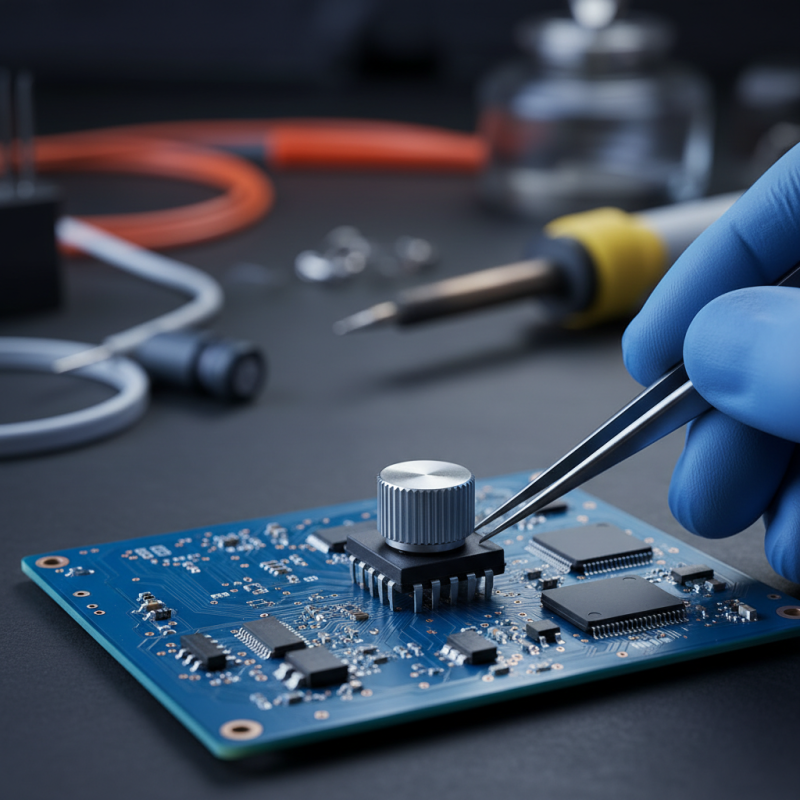
Understanding Smart Potentiometers: Definition and Functionality
Smart potentiometers are crucial components in electronic applications. They serve as variable resistors that adjust voltage levels. By understanding their definition and functionality, you can make better choices for your projects.
These devices come with embedded digital interfaces. They allow users to control resistance through signals rather than manual adjustments. Their design typically includes features like integrated circuits, making them compact and efficient. Proper functionality often requires careful calibration, which may not be straightforward for every user.
Selecting the right smart potentiometer involves assessing your specific needs. Consider compatibility with your existing systems. Look at the intended application, as it can affect performance. Be aware that some may be too complex for simple tasks. Exploring these factors can help you avoid unnecessary challenges in your electronic designs.
Key Specifications to Consider When Selecting a Smart Potentiometer
When selecting a smart potentiometer, several key specifications demand attention. One of the primary factors is the resistance range. Research indicates that most applications require a resistance range between 10kΩ to 1MΩ, depending on the circuit design. Understanding your project’s resistance needs can save time and avoid compatibility issues.
Another important specification is the resolution. Industry reports highlight that high-resolution models (16-bit or more) provide precise control in sensitive applications. This precision can significantly impact performance, particularly in audio and control systems. An appropriate resolution selection ensures that the potentiometer meets the needs of your specific use case.
Additionally, consider the control interface. Some smart potentiometers utilize I2C or SPI, which can affect ease of integration. Market analysis shows that many engineers prefer I2C for its simplicity and efficiency in multi-device communication. Volatility in software compatibility could hinder operations if not thoroughly assessed before choosing a model. Ultimately, understanding these specifications ensures that the selected smart potentiometer aligns well with your project requirements.
Evaluating Potentiometer Types: Analog vs Digital Options
When it comes to choosing a potentiometer, understanding the difference between analog and digital options is crucial. Analog potentiometers offer continuous resistance changes, which are essential for applications requiring smooth variable control. However, they can be less precise than their digital counterparts. According to a recent industry report, analog potentiometers can have an accuracy of about 1-5% depending on the model and application, which may not be suitable for high-precision tasks.
Digital potentiometers, on the other hand, utilize digital signals to control resistance. This leads to greater accuracy and flexibility in applications such as audio equipment and robotics. A study shows that digital potentiometers can achieve precision levels of up to 0.1%. However, they may require more complex circuitry and can be more costly. This trade-off between precision and price is something many engineers must carefully weigh.
In selecting the best type, it’s important to consider your specific needs. For projects where space is limited, a compact digital option may be optimal. However, if simplicity is a priority, an analog potentiometer might suffice. Assessing your requirements, frequency of use, and budget will help you make a better-informed decision, ensuring your choice aligns with your technical goals.
How to Choose the Best Smart Potentiometer for Your Needs?
| Potentiometer Type | Communication Method | Resolution | Applications | Cost Range |
| Analog Potentiometer | Mechanical | 10-12 bits | Volume Control, Sensors | $1 - $5 |
| Digital Potentiometer | I2C, SPI | 8-10 bits | Microcontrollers, Audio | $2 - $10 |
| Smart Potentiometer | Bluetooth, Wi-Fi | 12-16 bits | IoT Devices, Advanced Control | $10 - $50 |
Market Trends: Leading Brands and Their Market Share in Smart Potentiometers
In the evolving market of smart potentiometers, understanding the leading brands and their respective market shares is vital. Many manufacturers are adapting to the growing demand for smart technology in industries like automotive, home automation, and audio applications. Analyzing market trends reveals shifts in consumer preferences towards brands prioritizing innovation and user experience.
Currently, some brands dominate the market, showcasing significant shares. These companies focus on integrating advanced features, such as touchscreen interfaces and wireless connectivity. Yet, despite their impressive technology, some brands may lack robust customer support. This can lead to user frustration when issues arise, suggesting that reliability is not always guaranteed.
Another aspect to consider is pricing. Some brands offer high-end products at a premium, while others provide budget-friendly options. Users often struggle to find the right balance between cost and functionality. It’s essential to read reviews and gather experiences from existing users. This feedback can provide valuable insights into performance and potential drawbacks. The market's dynamism calls for continuous research, as preferences can shift rapidly, and what works for one application might not suit another.
Applications and Use Cases: Where Smart Potentiometers Excel in Industry
Smart potentiometers have become essential components in various industries. Their versatility allows them to excel in applications like automotive systems, medical devices, and industrial automation. These advanced components can improve accuracy and responsiveness. For instance, in automotive, they fine-tune engine performance, leading to more efficient fuel consumption. In medical devices, they ensure precise control for critical functions, enhancing patient safety.
In industrial automation, smart potentiometers can be integrated into systems that require precise position tracking or adjustable control. They enable seamless adjustments based on real-time data inputs, boosting productivity. However, it’s important to consider the specific requirements of your system. Not all potentiometers suit every application. For example, some may lack the resolution needed for intricate tasks, leading to potential errors in output. Understanding these details is crucial for making an informed decision.
Choosing the right smart potentiometer demands careful analysis. Factors such as voltage range, resistance values, and environmental conditions play a significant role. Even minor inconsistencies in these specs can lead to performance drops. Manufacturers often provide data sheets, but it's wise to seek expert advice if unsure. Testing a few options before full implementation can also save time and costs.