Why Choose Induction Strip Light for Your Lighting Needs?
Lighting plays a crucial role in our daily lives. Choosing the right lighting solution can significantly impact ambiance and utility. Induction Strip Light has emerged as a popular choice for both residential and commercial applications.
These lights are energy-efficient and provide long-lasting illumination. They use electromagnetic induction to power fluorescent lights, offering benefits like reduced maintenance costs. The durability of the Induction Strip Light is noteworthy; it often outlasts traditional lighting options. However, many still overlook its advantages.
Inadequate knowledge can lead to missed opportunities for savings and efficiency. Understanding each aspect of Induction Strip Light helps consumers make informed decisions. It is essential to weigh all options before choosing the perfect lighting solution.
Advantages of Induction Strip Lights Compared to Traditional Lighting
Induction strip lights are gaining attention as an efficient alternative to traditional lighting. They offer a range of advantages that make them a smart choice for various applications. For instance, induction lights have a lifespan of up to 100,000 hours. This is significantly longer than conventional fluorescent lights, which often last around 15,000 hours. This extended durability leads to reduced maintenance costs.
Another noteworthy advantage is energy efficiency. According to a report by the U.S. Department of Energy, induction lighting can achieve energy savings of up to 50% compared to traditional options. Reduced energy consumption not only lowers utility bills but also contributes to a smaller carbon footprint. Facilities utilizing induction lights can see a drop in their operational costs, leading to positive influence on their bottom line.
Moreover, the quality of light produced by induction strip lights is often superior. They deliver consistent illumination without flickering, which can cause discomfort. However, some users report challenges in finding the right dimming options with induction technology. Despite this, many appreciate the uniform light distribution, which enhances visibility in workspaces. This makes induction lights a practical choice for environments requiring clarity and concentration.
Advantages of Induction Strip Lights Compared to Traditional Lighting
Energy Efficiency of Induction Strip Lights: Saving on Electricity Costs
Induction strip lights are a smart choice for energy efficiency. They use electromagnetic fields to produce light, lowering power consumption significantly. This technology can save electricity costs up to 50% compared to traditional lighting systems. The reduced energy usage translates directly into lower monthly bills for homes and businesses.
These lights also have a long lifespan. They can last up to 100,000 hours with minimal maintenance required. Fewer replacements mean less waste and lower environmental impact. However, the initial cost may be higher than traditional options. This can deter some users from making the switch. It's important to consider long-term savings against upfront expenses.
Additionally, induction strip lights provide consistent illumination without flickering. This quality enhances visibility, making spaces safer and more productive. Despite their advantages, some users might find the installation process complex. Proper installation is crucial for maximizing their benefits. Users should weigh their options carefully before transitioning to induction lighting.
Durability and Longevity of Induction Strip Lights for Extended Use
Induction strip lights are gaining popularity due to their impressive durability and longevity. These lights can last significantly longer than traditional options. With their robust construction, they often withstand harsh conditions. This makes them ideal for industrial and commercial use. Operators appreciate that they need less frequent replacements.
The efficient design of induction strip lights contributes to their extended lifespan. They don't rely on filaments or fragile components. Instead, they utilize electromagnetic induction. This technology minimizes wear and tear. Users find they perform well even in extreme temperatures. However, it is important to consider installation factors. Improper installation can lead to reduced efficiency and lifespan.
Costs can add up if lights need to be replaced too often. Choosing durable lighting solutions like induction strip lights can lead to savings. On the other hand, the initial investment may appear high. Careful evaluation of specific needs is crucial. Users should weigh the long-term benefits against short-term costs. This reflection can guide better decisions on lighting needs.
Why Choose Induction Strip Light for Your Lighting Needs?
| Feature | Details |
| Lifespan | Up to 100,000 hours |
| Energy Efficiency | Up to 70% energy savings compared to traditional lighting |
| Durability | Resistant to shock, vibration, and extreme temperatures |
| Maintenance | Low maintenance; minimal replacement needed |
| Light Quality | Consistent brightness with no flickering |
| Environmental Impact | No harmful substances; fully recyclable |
Applications of Induction Strip Lights in Commercial and Residential Settings
Induction strip lights are gaining popularity for their versatility in both commercial and residential settings. In offices, these lights provide a bright, even illumination without flickering. They enhance visibility, making it easier for employees to focus on their tasks. Moreover, induction lights reduce energy consumption, which can lead to significant cost savings over time.
In residential spaces, induction strip lights are ideal for kitchens and garages. They can be installed under cabinets or in workspaces, delivering effective lighting where it is needed most. Homeowners appreciate their durability and long lifespan, minimizing the need for frequent replacements. However, some may find the initial installation cost to be a drawback. It is essential to weigh these factors when considering induction lights for your home.
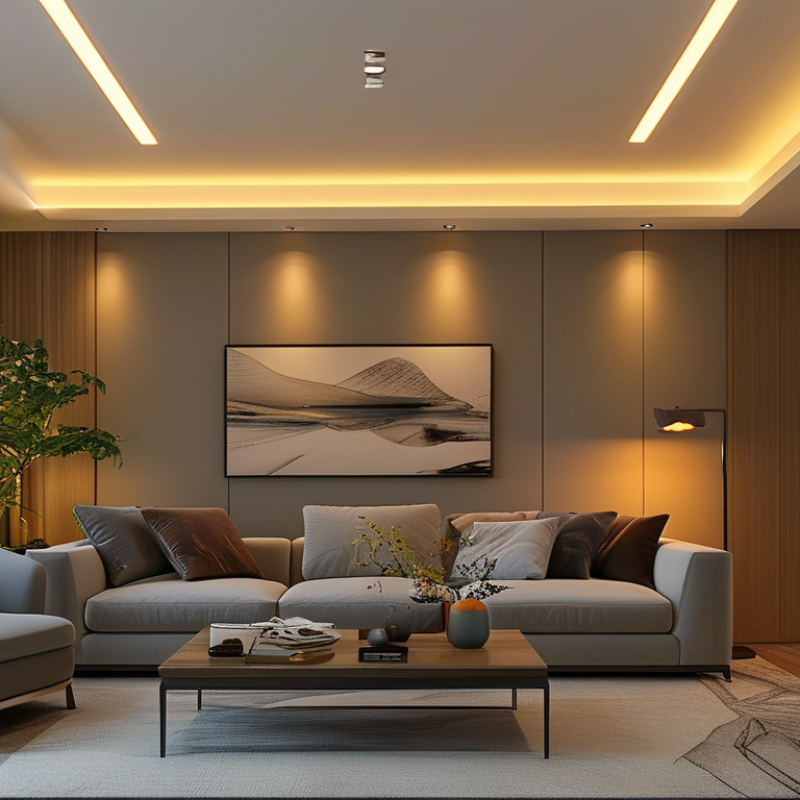
Additionally, induction strip lights contribute to a modern aesthetic. Their slim design allows for creative placements and seamless integration into various interior styles.
Yet, potential users should reflect on the installation requirements and ensure compatibility with existing electrical setups. Understanding these elements can lead to better decisions for optimal lighting solutions.
Installation and Maintenance Benefits of Induction Strip Lighting Systems
Induction strip lighting systems offer several installation and maintenance benefits that make them an attractive option for various settings. One major advantage is their energy efficiency. These systems consume less power while providing bright illumination. When installed properly, they can significantly reduce energy costs. This aspect appeals to both residential and commercial users. Additionally, their long lifespan means fewer replacements. This reduces waste and contributes to a more sustainable approach to lighting.
Installation of induction strip lights is relatively straightforward compared to traditional systems. Electricians find them easier to set up due to fewer components and simpler wiring. However, it’s essential to ensure that the installation is performed by a qualified professional to maximize safety and efficiency. Regular maintenance is minimal. Occasional cleaning and inspection are all it takes to keep these systems running smoothly. Their robust design is less prone to damage. That said, users should remain vigilant. Over time, even the best systems can experience issues. Being proactive can prevent these problems from escalating.