

How to Choose a Ceramic Knife Gate Valve?
Choosing a Ceramic Knif Gate Valve starts with understanding what will pass through it. Abrasive slurry, mineral fines, and corrosive process fluids can wear ordinary metal surfaces quickly. Ceramic components may resist abrasion, but performance depends on their material, placement, and quality. The keyword “Ceramic Knif Gate Valve” is sometimes used in product searches; check the manufacturer’s terminology and drawings before comparing models.
Small details matter. Identify the fluid’s temperature, pressure, particle size, concentration, and operating cycle. A valve handling coarse tailings may need different clearances and sealing arrangements from one controlling fine powder. Check which surfaces are ceramic-lined, how the gate moves, and whether seals suit the process. Ask for documented test data, not just broad claims about wear resistance. That sounds simple. It isn’t always.
Consider the body material, connection type, actuator, available installation space, and maintenance access. A heavy actuator may be unnecessary for occasional operation, while frequent cycling can place greater demands on the assembly. Confirm pressure and temperature limits from the datasheet, and ask how the valve behaves with solids trapped near the seat. No design is perfect. Ceramic parts can be hard and wear-resistant, yet they may be vulnerable to impact or poor handling. Comparing actual process conditions with verified specifications is more reliable than choosing by price or material name alone. A careful selection can reduce avoidable downtime, but it should still be reviewed against site conditions and maintenance practices.
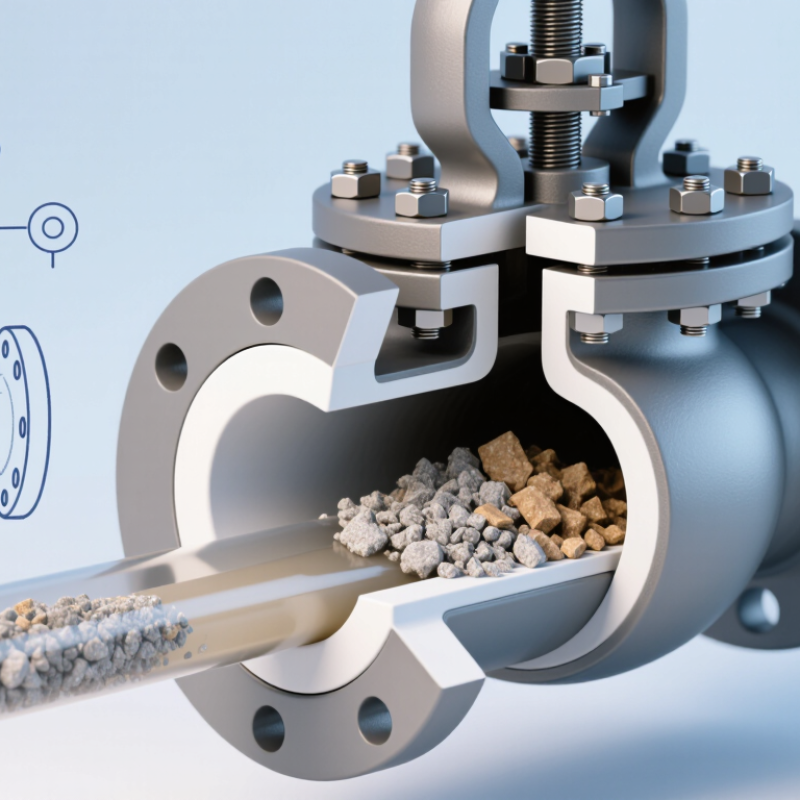
Define the Process Conditions and Slurry Characteristics
Before selecting a ceramic knife gate valve, define the actual process conditions—not just the values on a design sheet. Record operating pressure, temperature, flow rate, and how often the valve cycles. Note whether pressure changes during startup or flushing. These details affect body selection, sealing, and actuator sizing.
Describe the slurry in practical terms. What solids are present? Estimate particle size, concentration, hardness, and shape. Sharp mineral particles can wear surfaces differently from soft, rounded solids. Also check whether the slurry settles when flow slows. A valve that handles steady flow may struggle with deposits near the gate. Details matter.
Tips: Collect samples during normal operation and upset conditions. Ask operators where buildup or leakage appears. Confirm whether cleaning fluid changes the temperature or chemistry. Do not guess.
Keep measurements tied to the point of installation. Slurry properties can vary between batches, and a single sample may not represent the toughest conditions. It is tempting to choose a valve based on solids percentage alone, but that leaves out particle abrasiveness and settling behavior. If data is incomplete, document the uncertainty and request application review before final sizing. A cautious selection is often more reliable than a precise-looking assumption.
| Process factor | Example condition | Why it matters | Selection guidance |
|---|---|---|---|
| Service and operating mode | Abrasive slurry transfer; valve normally fully open or fully closed | Knife gate valves are generally selected for isolation service. Continuous throttling can accelerate wear and cause unstable flow. | Confirm the valve is suitable for the required duty. If flow regulation is needed, assess a valve designed for control service. |
| Solids concentration | Example range: 10–50% solids by weight | Higher solids loading can increase abrasion, operating torque, and the risk of material packing around the gate. | Provide the normal and maximum concentration, including start-up and upset conditions. Check gate, seat, and body design for the actual service. |
| Particle size and shape | Fine particles below 100 μm; or coarse particles up to several millimetres with angular grains | Hard, angular, or coarse particles can cause more severe abrasion and may interfere with seating or gate movement. | Specify the particle-size distribution and particle hardness. Confirm clearances and the intended shut-off performance with the valve supplier. |
| Slurry abrasiveness | Mineral, sand, ash, or other hard-particle slurry | Ceramic wear surfaces can resist abrasion, but performance depends on ceramic grade, geometry, particle impact, and operating conditions. | Identify the solids and their hardness. Review which wetted parts are ceramic and which remain metal or elastomer. |
| Pressure and differential pressure | Example process condition: 6 bar operating pressure with occasional higher differential pressure during isolation | Pressure class and differential pressure affect body strength, actuator sizing, sealing, and the force needed to move the gate. | State maximum operating and shut-off differential pressures. Select the valve rating for the full design case; do not infer a rating from this example. |
| Temperature | Example process range: 5–90 °C, with possible short-term excursions | Temperature affects the body, packing, seat materials, and thermal expansion. Ceramic components may be hard-wearing but are not immune to thermal shock. | Provide normal, minimum, maximum, and transient temperatures. Verify limits for every wetted and sealing material. |
| pH and chemical composition | Example slurry pH: 3–11, with dissolved salts or process chemicals | Ceramic chemical resistance varies by composition; the body, gate, fasteners, and elastomers may have different compatibility limits. | Provide the chemical composition, pH range, and cleaning chemicals. Check compatibility of the complete wetted assembly, not only the ceramic surfaces. |
| Flow direction and installation | Horizontal or vertical pipeline; flow direction may vary by layout | Installation orientation and flow direction can affect drainage, solids accumulation, sealing, and maintenance access. | Confirm the permitted orientation and flow direction for the selected design. Allow access for actuator removal and routine inspection. |
| Operation frequency | Occasional isolation, or repeated cycling several times per hour | Frequent cycling increases wear and can raise actuator and maintenance requirements, especially in abrasive service. | Specify cycles per day, required response time, and whether the valve must operate under full differential pressure. |
| Shutdown and flushing | Slurry may settle during a shutdown; water flushing may be available | Settled solids can make restart difficult or obstruct movement and seating. | Describe shutdown duration and flushing practice. Consider drainability and access for cleaning in the piping arrangement. |
| Required design data | Line size, flow rate, pressure, temperature, slurry composition, solids loading, particle size, pH, and cycling duty | Incomplete or average-only data can miss the most demanding operating case. | Provide normal, minimum, maximum, and upset conditions, then verify the final pressure rating, materials, actuator, and shut-off requirements for the specific valve design. |