How to Choose a Scattering Laminating Machine in 2026
Choosing a Scattering Laminating Machine in 2026 is not just a matter of comparing price tags. The right equipment should match your materials, daily output, finish requirements, and available floor space. A machine that handles one film smoothly may struggle with a different substrate or adhesive. Small production details matter.
Start with the actual job. What material will you laminate, and at what width and thickness? Ask suppliers for sample runs using your own materials. Check coating or adhesive consistency, edge alignment, operating speed, and how easily settings can be adjusted. A clean sample is useful. A repeatable sample is better. Confirm which specifications are standard and which require optional equipment, since product descriptions can leave that distinction unclear.
A sound evaluation also looks beyond the first production run. Consider setup time, routine cleaning, spare-part availability, operator training, and energy use. Request clear documentation and a written service plan. If possible, speak with users running similar materials and workloads. Their experience may reveal practical issues that a showroom demonstration will not. It is easy to overvalue maximum speed. Real output depends on setup, material handling, and changeovers. That assumption can be wrong. Compare the total cost of ownership, not only the purchase price, and record your requirements before requesting quotations. This guide explains the questions that help buyers assess a scattering laminating machine with care, while recognizing that the best choice depends on the specific production line.
What a Scattering Laminating Machine Does and Where It Is Used
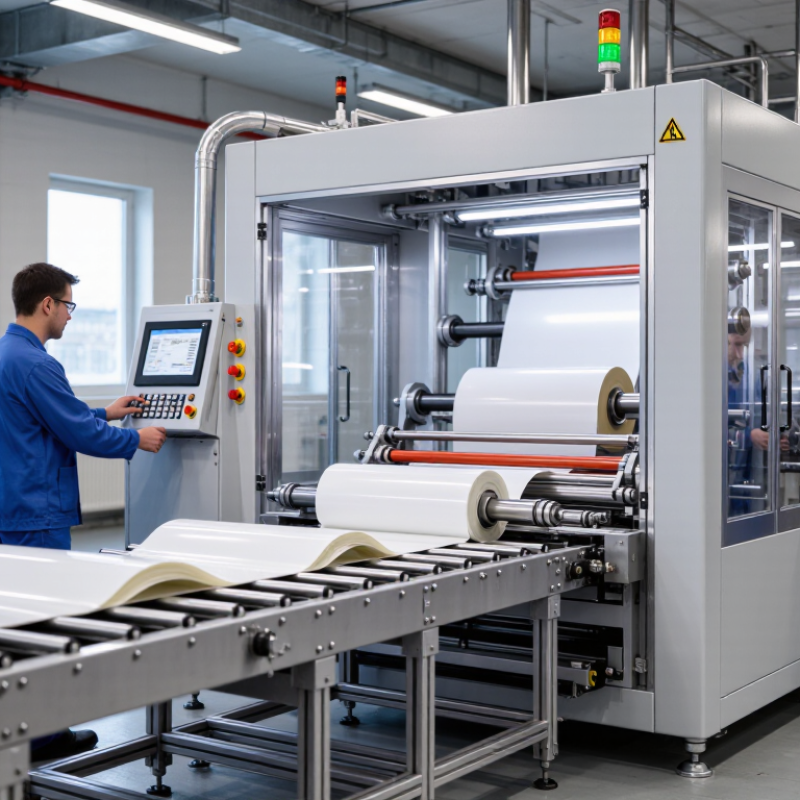
A scattering laminating machine distributes a measured layer of thermoplastic adhesive powder across a moving surface, such as fabric or nonwoven material. Heat melts the powder, and pressure helps bond a second layer to it. Depending on the line, the material may then be cooled and rewound. The result is a bonded sheet without applying liquid adhesive across the full surface.
The process sounds simple. It isn’t always. Uneven powder distribution can leave weak spots, stiff patches, or visible texture changes. Operators typically monitor feed rate, web tension, oven temperature, and line speed together. A practical check is to inspect samples across the web, not just at the center. Small differences at the edges can matter.
These machines are used in applications such as clothing interlinings, automotive trim, shoe materials, mattress components, and filtration media. The right setup depends on the substrates and the bond required; a breathable textile may need a different adhesive amount than a dense laminate. Scattering systems can support flexible production, but they still need careful testing. Powder can shift during handling, and a setting that works for one fabric may fail on another. That part is easy to underestimate.
Where Scattering Laminating Machines Are Used
Scattering laminating machines distribute thermoplastic adhesive powder onto a substrate; heat activates the adhesive to bond it to another layer. The examples show representative laminate constructions, not fixed industry specifications. When choosing a machine, consider the materials, required bond strength, working width, and production speed.
How to Define Your Materials and Production Requirements
Before choosing a scattering laminating machine, define the exact layer stack: face fabric, adhesive powder, and backing. Record each material’s width, weight, thickness, moisture condition, and heat sensitivity. Measure both sides. A fabric’s finish or stretch can change powder adhesion and web tension, even when two rolls appear similar.
Textile Exchange’s Materials Market Report 2024 estimates global fiber production reached 124 million tonnes in 2023, with polyester accounting for about 57%. That scale reflects a varied material mix, not one universal processing recipe. Specify the powder type and particle size, target application weight, working width, and required output speed. Also document the temperature range each layer can tolerate. These details help suppliers recommend a workable heating zone and prevent weak bonds, scorching, or excessive powder loss.
Run trials using your actual materials. Check bond strength, coverage, shrinkage, and edge consistency after cooling, not just as the web leaves the machine. A clean first run proves little. Operators can trust it too quickly. Repeat the test with different batches and realistic line speeds; record settings and defects. If production includes frequent material changes, include changeover time in your capacity estimate. A little uncertainty remains until the process is tested.
Which Machine Design and Specifications to Compare
How to Choose a Scattering Laminating Machine in 2026
Choosing a scattering laminating machine in 2026 starts with the material, not the brochure. Test your actual film, substrate, and scatter medium on a sample run. Look for even coverage across the working width, clean edges, and stable bonding after cooling. Small gaps matter. Compare usable width and line speed at your target coating weight; maximum speed alone can mislead.
Tips: Ask for recorded trial results using your own materials. Check temperature accuracy, roller pressure adjustment, web-tension control, and how quickly operators can clean the hopper and change settings. Note energy use too. Ensure safety guards and emergency stops are accessible, and ask what routine maintenance requires.
Design details shape daily output. A rigid frame can reduce vibration, while adjustable guides help keep the web centered. Compare heating response and temperature consistency across the roller, not just the displayed setpoint. Request sample laminates and inspect bond strength, wrinkles, edge buildup, and scatter uniformity under normal operating conditions. It is easy to overvalue automation. A simpler control system may be easier to train on, though changeovers could take longer. Record that trade-off against your shift pattern and product mix before choosing.
How to Assess Output Quality, Automation, Safety, and Cost
How to Choose a Scattering Laminating Machine in 2026
A glossy sample can hide weak bonding. Test the machine with your own film, substrate, and adhesive, then inspect the edges after cooling. Look for bubbles, wrinkles, uneven coating, and peel strength across the full working width. Repeat at different speeds. One perfect sheet proves very little.
Automation should make quality repeatable, not merely add screens and sensors. Deloitte and MAPI’s 2024 Smart Manufacturing Survey found that 92% of surveyed manufacturers expect smart manufacturing to drive competitiveness within three years. For a laminator, ask whether operators can monitor temperature, tension, and line speed, and retrieve settings for repeat jobs. Check guarding, emergency stops, and safe access for roll changes. The U.S. Bureau of Labor Statistics reported a 2023 manufacturing recordable injury rate of 2.8 cases per 100 full-time workers; that is a sector-wide measure, not a machine-specific risk estimate.
Calculate cost per saleable sheet, not purchase price alone. Include energy, film waste during setup, cleaning time, spare parts, and planned downtime. Ask for a production trial using your material and a written acceptance range for defects and output. Real conditions matter. A small detail: changeover time can quietly erase a machine’s promised speed advantage. And some estimates will be wrong; validate them over several shifts before committing.
How to Verify Suppliers, Installation, and After-Sales Support
How to Choose a Scattering Laminating Machine in 2026
Supplier checks should go beyond a polished factory tour. Ask for a live trial using your film, adhesive, and target speed. Watch web tension at the unwind, coating uniformity, and finished edges under real lighting. Request the test protocol and raw results, not only a demonstration video. The ISO Survey 2023 counted more than 1.2 million ISO 9001 certificates worldwide. That scale makes certification useful as a screening check, not proof that a supplier can meet your process needs. Verify certificate scope, current status, and who handles technical service.
Installation details matter. Confirm floor loading, power, compressed air, exhaust, and line clearance before shipment. Put installation dates, operator training hours, acceptance criteria, and spare-parts lists in writing. Define the factory and site acceptance tests, including sample rolls and defect limits. PMMI’s 2024 State of the Industry report tracks packaging machinery shipments and market conditions; use comparable machine specifications when reviewing quotations, rather than comparing price alone. Ask for a service response-time commitment, local parts stock, and escalation contacts. The World Economic Forum’s Future of Jobs Report 2023 estimates that 44% of workers’ skills will be disrupted by 2027, a reminder to check how technicians and operators receive ongoing training. One detail buyers often miss: who pays when commissioning slips? Decide that before the machine arrives.