

How to Choose the Best Hydrocell Golf Cart Battery?

Choosing the right Hydrocell Golf Cart Battery starts with the cart you actually drive. Check the voltage printed on the existing battery pack, the available tray space, and the connector type. Then compare capacity, expected range, charging needs, and warranty terms. A larger capacity may help on long routes, but it must fit the cart and its electrical system. Details matter.

An illustrative battery specialist, Alex Morgan, sums up the selection rule: “Match the battery to the cart’s demands, not just its price tag.” This is an editorial example, not a sourced interview or verified quotation. Use it as a reminder to confirm specifications with Hydrocell’s current product documentation or a qualified dealer. Ask about charger compatibility, installation requirements, and support before buying.

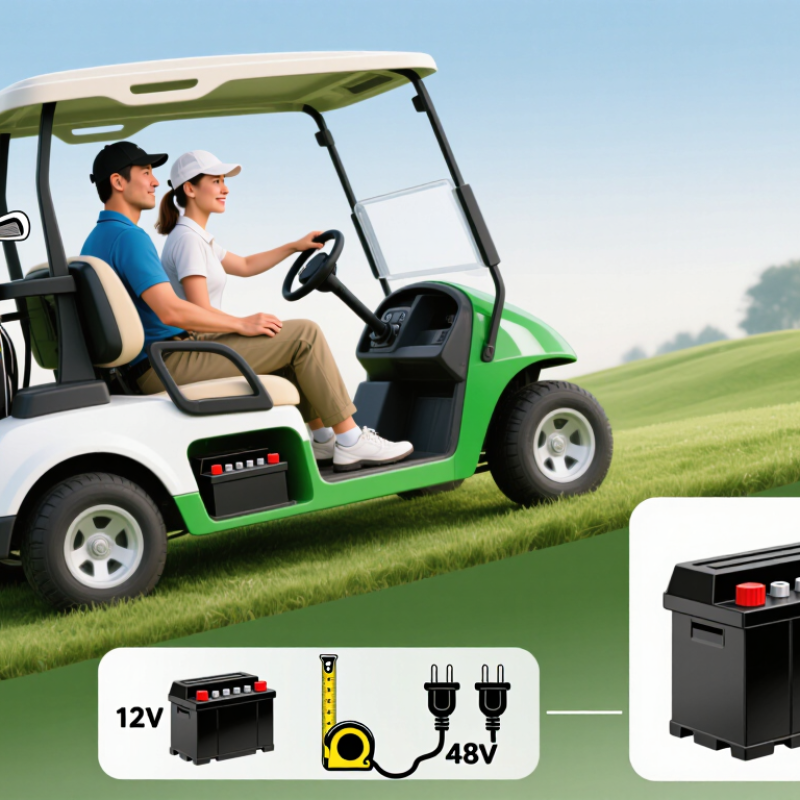
The right choice should feel dependable at the end of a round, not merely impressive on a product page. Picture the cart climbing a familiar hill, with two passengers and a golf bag aboard. That real load is more useful than a best-case range claim. Be cautious, though: advertised figures may not reflect your terrain or driving habits. We may overfocus on capacity and overlook fit. A small mistake there can mean extra work later. This guide will walk through the checks that help you choose a Hydrocell Golf Cart Battery with clearer expectations.
How to Choose the Best Hydrocell Golf Cart Battery?

What Is a Hydrocell Golf Cart Battery?

A “hydrocell” golf cart battery usually refers to a lead-acid battery with a liquid, water-based electrolyte. The term is not a standardized battery chemistry, so sellers may use it differently. The naming is messy. In a traditional flooded design, lead plates sit in electrolyte inside a vented case. During charging, the battery stores electrical energy through reversible chemical reactions. It supplies power to the motor and accessories, then needs recharging after use.

The U.S. Department of Energy’s Alternative Fuels Data Center puts lead-acid batteries’ specific energy at about 30–50 watt-hours per kilogram. That helps explain why a cart may carry a heavy battery pack for its available energy. Flooded cells also need periodic inspection: low electrolyte can expose plates, while overfilling can cause spills. Small details matter. Battery Council International’s 2023 National Recycling Rate Study reports that about 99% of lead batteries in the United States are recycled. That figure concerns recycling, not battery lifespan or cart range. A hydrocell label alone does not tell you capacity, cycle life, or maintenance needs; check the battery’s voltage, amp-hour rating, and care instructions before choosing one.

How to Check Your Golf Cart’s Battery Requirements

How to Check Your Golf Cart’s Battery Requirements

Start with the cart’s manual and the labels on its existing batteries. Record the system voltage, battery count, amp-hour rating, dimensions, and terminal positions. A 48-volt pack, for example, may use six 8-volt batteries or eight 6-volt batteries. In a series connection, voltage adds, but amp-hour capacity does not. Check the controller and charger too; a charger designed for one battery chemistry may not suit another.

Measure the battery tray before shopping. A battery that is electrically correct can still be too tall or have terminals in the wrong place. Compare the stated capacity and reserve rating with your typical route, passenger load, hills, and accessory use. A longer route needs more usable energy. Don’t guess from the old battery’s appearance alone; it may have been an unsuitable replacement.

Small detail. It matters.

Tips: Photograph the wiring before disconnecting anything, and ask a qualified technician to confirm the configuration if labels are missing. For lead-acid options, the Battery Council International’s 2019 National Recycling Rate Study reported a 99% U.S. recycling rate for lead batteries. That figure concerns recycling, not battery performance, but it’s a useful reminder to plan proper end-of-life handling.

Which Hydrocell Battery Specifications Matter Most?

Which Battery Specifications Matter Most?

Start with voltage, then check the cart’s controller label or manual. A 36-volt system needs a compatible battery; a higher voltage is not an upgrade if the controller cannot support it.

Capacity matters too. Compare amp-hours (Ah) at the same voltage, and ask how much capacity is actually usable. A simple estimate is volts multiplied by amp-hours, divided by 1,000, for nominal kilowatt-hours. Real driving range varies with hills, passenger weight, tire pressure, and temperature. It is not a promise.

BloombergNEF’s 2023 Battery Price Survey reported an average lithium-ion pack price of $139 per kilowatt-hour, down 14% from 2022. That global figure is useful context, not a direct golf-cart price quote.

Check continuous and peak discharge current, especially if the cart carries loads uphill. For lithium batteries, confirm the battery management system’s current limits, low-temperature charging protection, and stated cycle life.

The U.S. Department of Energy’s 2021 National Blueprint for Lithium Batteries identifies performance, safety, and durability as connected priorities; compare all three, not just the largest capacity figure.

Also measure the battery bay and verify terminal position, weight, charger compatibility, and warranty terms. I still double-check charger settings. A mismatch can undermine an otherwise suitable battery. Ask how the maker measured capacity and cycle life, since test conditions can change the numbers.

How to Compare Battery Options for Your Golf Cart

Compare batteries by the work your golf cart actually does, not by chemistry labels alone. Check system voltage, amp-hour rating, and usable energy. A 48-volt pack rated at 100 Ah stores about 4.8 kWh nominally; usable energy may be lower. Ask whether a specification lists usable capacity or only nominal capacity. That distinction matters.

Lead-acid options often have a lower purchase price, but require regular maintenance and careful charging. Lithium options are typically lighter, yet buyers should verify charger compatibility, battery-management protections, cold-weather limits, and warranty terms. Compare total cost over the expected service life, including replacement and charger costs. One useful measure is cost per usable kilowatt-hour across the rated cycle life. Treat cycle-life figures cautiously: temperature, depth of discharge, and charging habits affect real results.

Check that the pack fits the tray and that its terminals match the cart’s cables. Battery Council International’s National Recycling Rate Study reports that about 99% of lead batteries in the United States are recycled. That is useful context, not a measure of battery life or performance. Read the full specifications. A low price can still be the wrong fit.

How to Evaluate Battery Installation and Long-Term Care

Before installation, confirm the cart’s required voltage, battery dimensions, terminal layout, and charger compatibility. A battery that fits the tray may still be electrically unsuitable. Check the owner’s manual, and compare its specifications with the battery label. Disconnect power before removing the old unit. Keep the work area dry and well ventilated. Wear eye protection, and use insulated tools near the terminals. Secure the battery firmly so it cannot shift over bumps. Match positive and negative cables carefully; reversed connections can damage electrical components. Tighten terminals to the specified torque, not as hard as possible. It is easy to rush this step.

Long-term care depends on the battery’s chemistry, so avoid applying one maintenance routine to every model. Keep the case clean and dry, and inspect cables for looseness, cracks, or corrosion. Small details matter. Charge with a compatible charger, and follow the battery maker’s guidance on charging after use and storage. For serviceable lead-acid batteries, check electrolyte levels as directed and use distilled water only when required. Sealed batteries should not be opened. Record the installation date and occasional voltage readings; changes over time can reveal a weak connection or charging issue. If performance drops, inspect the charger and cable connections before assuming the battery has failed. I might overlook that myself, especially after a busy round.

Go to Top