

How to Choose the Best Lithium Battery Inverter in China?
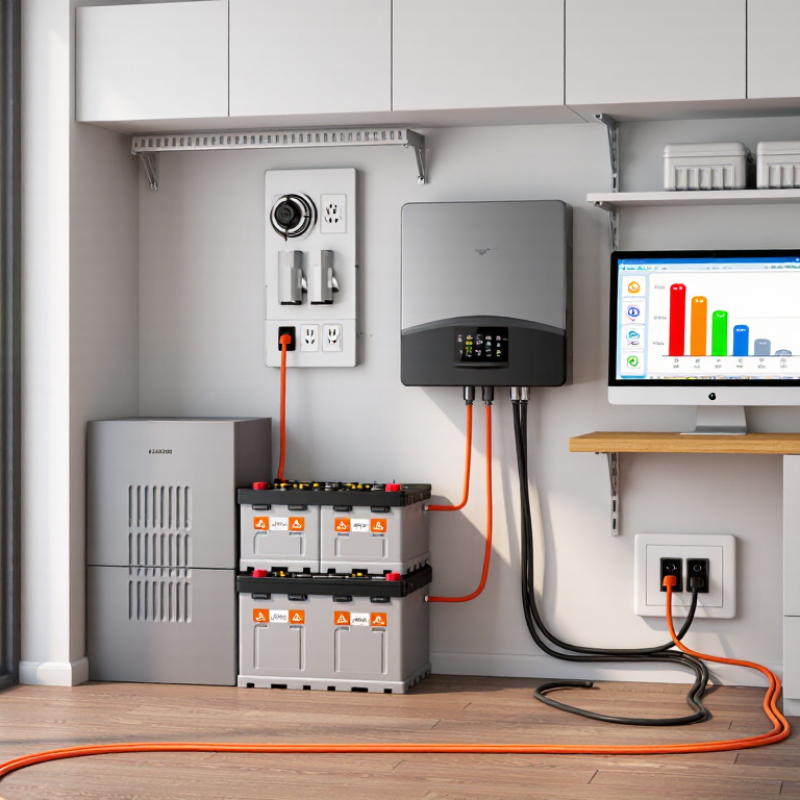
Choosing the right Lithium Battery Inverter in China starts with the battery, not the brochure. A system may look impressive on a showroom wall, yet fail to suit a home’s daily load. Check the battery’s chemistry, nominal voltage, usable capacity, and communication protocol. Then compare these with the inverter’s voltage range, continuous output, surge capability, and charging limits. A kettle switching on beside a refrigerator can expose a weak surge rating quickly.
Installation details matter, too. Ask how the unit handles grid outages, whether it supports your planned solar array, and what monitoring tools it provides. Look closely at warranty terms, service access, and the manufacturer’s technical documentation. These details can vary across models sold in China. One useful rule is: “Compatibility is a system check, not a label.” This is an editorial principle, not a verified quotation from a named expert. No source was provided to confirm an expert’s identity or exact words, and inventing an attribution would undermine trust. A verified expert quotation should be added only after checking a reliable source.
This guide will help readers compare practical specifications, supplier claims, and long-term support. It will also point out a limitation: published ratings cannot show every real-world condition. Heat, installation quality, and changing household demand all matter. Choose with evidence, not just a low price.
Match Battery Chemistry and Voltage: 16-Cell LFP Packs Are 51.2 V Nominal
A 16-cell lithium iron phosphate battery has a nominal voltage of 51.2 V: 16 cells multiplied by 3.2 V each. That number is a starting point, not the complete compatibility check. During charging, pack voltage rises, and the battery’s specified charge limit must stay within the inverter’s settings. Check the battery data sheet for its recommended voltage range and continuous charge current. The label matters.
Confirm that the inverter supports LFP charging, not merely a generic 48 V battery profile. Some inverters allow charge and low-voltage cutoffs to be adjusted; others rely on communication with the battery’s management system. Verify the supported connection method and settings before installation. A mismatch can cause nuisance shutdowns or prevent full charging. Also compare the inverter’s discharge limits with the battery’s continuous and peak current ratings. For example, a high-power load may exceed the battery limit even when the nominal voltages match. A 51.2 V match alone is not enough. Specifications can be easy to misread, so compare the actual limits side by side, and ask a qualified installer to check the configuration. One detail is easy to overlook: cable length and load can affect voltage at the inverter, so a simple bench reading may not tell the whole story.
Size Continuous Output and Surge Capacity for Peak Loads
A lithium battery inverter must handle both steady demand and brief startup surges. Check the continuous output rating against the appliances you expect to run at the same time. For example, a 700-watt refrigerator and a 500-watt pump need at least 1,200 watts continuously, before allowing for other devices. That spike matters. Motors and compressors can draw several times their running power for a short period.
Compare the inverter’s surge rating and its specified surge duration with each appliance’s starting requirements. A high peak figure is less useful if it lasts only milliseconds while a pump needs more time to start. Add the likely startup load to the running load of appliances already operating. Avoid assuming every device starts separately; a refrigerator can cycle on while a pump is running. It’s an easy detail to miss.
Also check that the battery can supply the required current at the inverter’s input voltage. High output loads can cause voltage drop, especially with long or undersized cables. Leave a practical margin rather than sizing exactly to a label’s wattage. Real-world startup behavior varies, and appliance labels may not show peak demand. When possible, use measured load data or consult the equipment specifications before choosing an inverter.
Compare Conversion Efficiency: Quality Inverters Commonly Exceed 90%
When choosing a lithium battery inverter in China, check conversion efficiency under the loads you actually use. Many modern units exceed 90% at peak efficiency, but peak figures do not describe every operating condition. A fridge cycling at night and a kettle starting briefly create different load patterns. Ask for the efficiency curve, not just one headline number.
The distinction matters: inverter conversion efficiency measures power moving through the inverter, while battery round-trip efficiency includes charging and discharging losses across the system. NREL’s 2024 Annual Technology Baseline uses 85% as a representative round-trip efficiency for utility-scale battery storage. The U.S. Department of Energy’s 2022 Grid Energy Storage Technology Cost and Performance Assessment also reports about 85% for lithium-ion systems. These figures are not inverter-only ratings, but they show why system boundaries matter.
Compare test conditions, including battery voltage, output load, and temperature. A unit may perform well near its rated load but less efficiently during light overnight use. Check whether the stated figure is peak or weighted efficiency, and request independent test documentation where available. It is a detail buyers can overlook. Efficiency alone is not enough; idle consumption can quietly drain a small battery, too.
How to Choose the Best Lithium Battery Inverter in China? - Compare Conversion Efficiency: Quality Inverters Commonly Exceed 90%
The figures below are indicative ranges found across inverter specifications and are not guarantees for every model. Compare products using the same test conditions, battery voltage, and operating mode; consult the relevant datasheet before purchase.
| Comparison Dimension | Typical Value or Range | What to Check |
|---|---|---|
| Peak DC-to-AC efficiency | About 90%–97% for many modern inverter designs | Check the stated peak value and the test conditions. Peak efficiency is not the same as efficiency at every load level. |
| Efficiency at typical loads | Often lower than peak efficiency, particularly at very light loads | Look for an efficiency curve at 10%, 25%, 50%, and 100% load, or a weighted-efficiency figure with its test method identified. |
| AC-to-DC charging efficiency | Commonly around 90%–96%, depending on the charger, battery voltage, and load | Confirm whether the figure includes only the conversion stage or the complete charging path. |
| Battery voltage compatibility | Common configurations include 12 V, 24 V, 48 V, and high-voltage battery systems | Match the inverter’s supported voltage range to the lithium battery’s nominal voltage and operating limits. |
| Battery communication | CAN or RS-485 communication is commonly used in compatible systems | Check the battery manufacturer’s supported protocol and inverter compatibility list. Communication compatibility should not be assumed from the connector alone. |
| AC output for mainland China | Residential single-phase supply is typically 220 V, 50 Hz; three-phase systems are typically 380 V, 50 Hz | Confirm the inverter’s output configuration and whether it is intended for off-grid, grid-connected, or hybrid operation. |
| Continuous and surge power | Continuous output is specified in W or kW; surge capacity and duration vary by model | Size for the continuous demand and starting surge of motors, pumps, compressors, and other inductive loads. |
| Output waveform and distortion | Pure sine-wave models commonly specify output voltage total harmonic distortion below 3%–5% under stated conditions | Check the specification and test conditions if the system will power sensitive electronics, audio equipment, or precision loads. |
| Standby consumption | Varies substantially by design and operating mode; some units draw several watts or more while idle | Compare no-load consumption and search for an energy-saving or standby mode if the inverter will run continuously. |
| Protection and certification | Protection features and certification depend on the inverter type and intended market | Verify documented protection against over-temperature, overload, short circuit, and abnormal battery conditions, plus applicable local certifications. |
| Operating temperature and cooling | Operating ranges are model-specific; high temperatures can cause output derating | Check the rated ambient-temperature range, ventilation requirements, and derating curve for the installation location. |
Selection tip: Do not choose an inverter by peak efficiency alone. Compare efficiency at your expected load, battery compatibility, continuous and surge ratings, standby consumption, and the operating conditions stated in the datasheet.
Verify Safety Compliance with IEC 62109-1 and IEC 62109-2
How to Choose the Best Lithium Battery Inverter in China?
When comparing lithium battery inverters, check whether IEC 62109-1 and IEC 62109-2 apply to the unit’s design and intended use. IEC 62109-1 covers general safety requirements for power converters used in photovoltaic systems; IEC 62109-2 adds inverter-specific requirements. A hybrid inverter may fall within this scope, but these standards do not replace checks on the battery pack or installation. Scope matters.
Request the full test report or certificate, not just a logo on a brochure. Confirm that the document names the exact model and covers its rated voltage, operating modes, and relevant hardware version. Check the issuing laboratory and whether its accreditation covers the tests performed. Then compare the report with the inverter’s nameplate and manual. Details count. If the paperwork is vague, ask for clarification before purchase. A document can look tidy and still leave gaps. I would also verify which standard editions and local requirements apply to the specific product and market; this step is easy to overlook. Safety claims deserve careful checking.
How to Choose the Best Lithium Battery Inverter in China?
IEC 62109-1:2010 sets general safety requirements for power conversion equipment used in photovoltaic systems. IEC 62109-2:2011 adds particular safety requirements for inverters. These bars show publication years only—not product certification or compliance. Ask suppliers for verifiable test reports or certificates covering the applicable parts.
Check China Grid and Product Requirements, Including GB/T 37408-2019
Choosing a lithium battery inverter in China starts at the grid connection point, not the catalogue. China added 297.6 GW of renewable capacity in 2023. Solar accounted for 216.9 GW, according to IRENA’s Renewable Capacity Statistics 2024. That scale makes compatibility practical, not cosmetic. Check voltage, frequency, phase, export limits, anti-islanding settings, and required ride-through behavior. Grid rules can vary by location and connection voltage.
For product compliance, verify the official scope and current status of GB/T 37408-2019 for the specific inverter category. Do not treat a standard number as proof by itself. Request the complete test report, model identification, and issuing laboratory details. Then compare the battery’s voltage range with the inverter’s operating window, and check continuous power, peak power, charge current, BMS communications, and fault protection. It matters.
The IEA’s 2023 report Electricity Grids and Secure Energy Transitions says annual grid investment needs to exceed USD 600 billion by 2030. This is a system-level finding, but it highlights why connection readiness deserves attention. Firmware can also affect grid-response settings after installation. I would still seek written confirmation from the local utility; a technically compatible unit may not satisfy every project-specific requirement.