How to Choose the Right Battery Connector for Your Needs?
Choosing the right Battery Connector can be a challenging task. With various types and specifications available, it’s easy to feel overwhelmed. According to industry expert Emily Carter, "Selecting a Battery Connector is crucial for ensuring safety and efficiency." Her words resonate with both beginners and seasoned professionals.
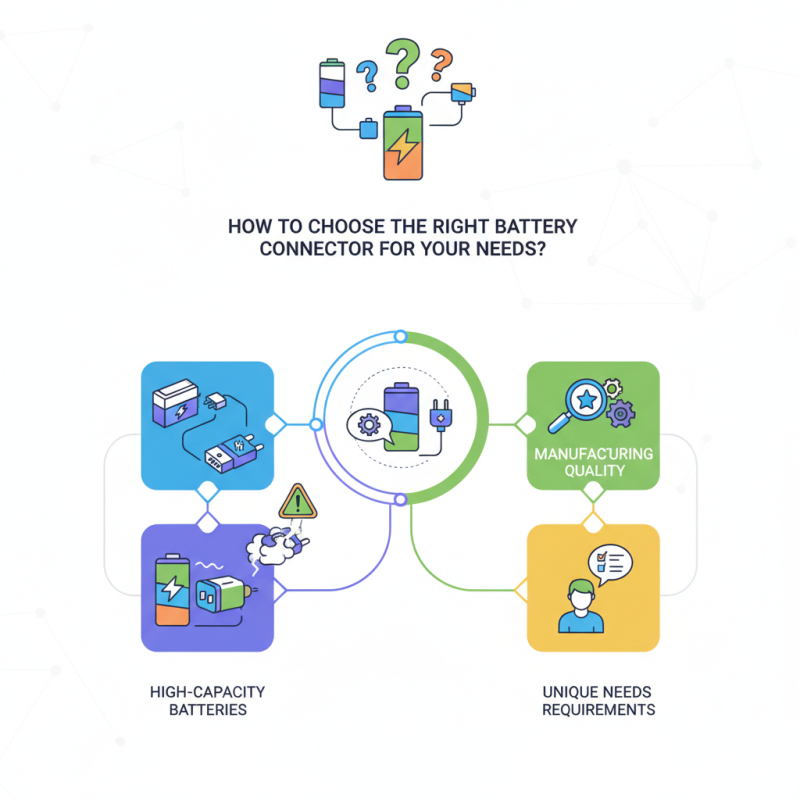
When considering a Battery Connector, it’s essential to think about compatibility and application. Different environments demand different connectors. For high-capacity batteries, robust connectors are vital to handle the load. However, one mistake can lead to hazardous situations.
It's also important to consider the manufacturing quality of these connectors. A poor-quality Battery Connector may fail when you need it the most. Look for trusted brands and reviews from real users. While some guidelines can steer you in the right direction, every project has unique needs. Reflecting on your specific requirements will lead to better choices in the long run.
Understanding Different Types of Battery Connectors Available in the Market
When selecting a battery connector, understanding the options available is essential. The market offers various types, each suited to different applications. Common connectors include Anderson Powerpole, XT60, and Molex. Anderson Powerpole connectors are versatile and ideal for higher currents, often used in robotics. XT60 connectors excel in RC hobbies, providing secure connections under high load. Molex connectors are popular in electronics due to their compact design.
According to industry reports, the global battery connector market is expected to grow significantly. Projections indicate a CAGR of 5.2% from 2021 to 2026. This growth reflects rising demand for electric vehicles and renewable energy solutions. It’s crucial to note that not every connector suits every application. Misuse can lead to poor performance or even hazards. Therefore, consider current ratings, voltage levels, and the environment when choosing.
Some connectors might be easy to find, yet difficult to work with. In cases where connectors are too loose or too tight, it can create connectivity issues. Those starting in electronics may overlook these details. Testing different connectors can yield insights about quality and reliability. Balancing factors such as durability and ease of use remains a challenge for many hobbyists and professionals.
Battery Connector Types and Their Popularity
This chart represents the popularity of various battery connector types based on market research. The data indicates how commonly each type is used in different applications.
Assessing Voltage and Current Requirements for Your Application
When selecting a battery connector, understanding your voltage and current requirements is crucial. Voltage defines how much electrical potential your device needs. Too high a voltage can damage your components. Too low, and your device may not function properly. Always consult the specifications of the devices that will use the connector.
Current requirements indicate how much power your application demands. Excessive current can lead to overheating and reduced lifespan of components. Consider peak and continuous current ratings. Plan for the worst-case scenario to avoid surprises. If your application varies, oversizing might be necessary.
Consider environmental factors as well. Extreme temperatures or moisture can affect connector performance. Ensure the connector material can withstand such conditions. Assessing these parameters takes time but pays off in improved reliability. Remember to test your setup before full deployment; real-world applications often reveal unforeseen issues. Adjustments might be essential even after thorough planning.
Evaluating Connector Durability and Environmental Resistance
Choosing the right battery connector involves more than just electrical compatibility. Evaluating durability and environmental resistance is critical for ensuring reliable performance. According to a report from the International Electrotechnical Commission (IEC), connectors face various environmental factors, such as humidity, temperature extremes, and chemical exposure. Connectors made with robust materials can withstand harsh conditions, minimizing failure rates.
A significant detail to consider is the material used in the connector construction. For example, connectors made of high-temperature thermoplastics exhibit enhanced thermal resistance. A study from the Electrical Connector Association highlights that connectors with metal housings have better resistance to physical wear and environmental stress. However, not all metal connectors perform well under corrosive conditions; careful selection is crucial.
Testing these connectors under real-world conditions is essential. Some connectors may fail under unforeseen pressure or extreme temperatures. Regular evaluations can offer insights into connectors’ long-term reliability. Using predictive maintenance strategies can identify potential issues early. This proactive approach helps in avoiding unexpected failures and improving overall system performance.
How to Choose the Right Battery Connector for Your Needs? - Evaluating Connector Durability and Environmental Resistance
| Connector Type | Durability Rating (Cycles) | Temperature Range (°C) | Moisture Resistance Rating | Material Type |
| Connector A | 5000 | -40 to 85 | IP67 | Plastic/Metal |
| Connector B | 3000 | -20 to 70 | IP65 | Polymer |
| Connector C | 10000 | -55 to 125 | IP68 | Metal |
| Connector D | 4000 | -30 to 85 | IP66 | Composite |
Selecting the Right Material for Optimal Conductivity
Choosing the right material for battery connectors is crucial for optimal conductivity and performance. Copper is often favored due to its excellent electrical conductivity. It provides a reliable connection and minimizes energy loss. This material is malleable, allowing for easy shaping during manufacturing. However, copper is prone to oxidation, which can hinder performance over time. To mitigate this, ensuring proper protective coatings is essential.
On the other hand, aluminum is another viable option. While it boasts less conductivity compared to copper, it’s lightweight and cost-effective. Aluminum connectors often withstand corrosion better than copper, making them suitable for various environments. However, users might overlook the additional maintenance aluminum connectors may require to maintain their conductivity.
Selecting the optimal material also involves considering application-specific requirements. For high-temperature environments, materials that withstand thermal stress are vital. Fatigue failure can occur with repeated connections, regardless of the chosen material. Each option carries its own set of benefits and drawbacks. Evaluating these carefully is key to a successful application.
Compatibility with Battery Types and Electrical Systems
When selecting a battery connector, compatibility is crucial. Different battery types require specific connectors to function correctly. Consider your battery's chemistry, voltage, and application. Whether you’re using lead-acid, lithium-ion, or nickel-metal hydride, ensure the connector matches the battery’s specifications.
Tips: Check the voltage rating of connectors. This helps avoid failures or hazards. Pay attention to the connector’s current rating as well. Matching these ratings is essential for safety and performance.
Electrical systems vary significantly. A connector used in a vehicle may not suit a portable device. Ensure the connector can handle fluctuations in current and voltage. Research the electrical demands of your system. Ignoring these details can lead to system failures.
Consider the environment where the connectors will be used. Outdoor applications require weatherproof options. Humidity and dust can significantly impact performance. Choosing the right connector upfront can save time and costs down the line. Always double-check specifications before making a purchase.