How to Choose the Right Hardox Liner in 2026?
Choosing the right Hardox Liner in 2026 starts with the material moving across it—not simply the hardest grade on a product chart. A crusher chute carrying sharp granite faces different wear from a truck body hauling wet, abrasive sand. Impact, sliding abrasion, plate thickness, weldability, and maintenance access all matter. Miss one, and a liner can wear unevenly or become costly to replace.
SSAB’s Hardox product data gives buyers a useful starting point: Hardox 450 has a typical hardness range of 425–475 HBW. Hardness alone, however, cannot predict service life. World Steel Association data reports that global crude steel production reached about 1.89 billion tonnes in 2023. That figure describes the scale of steel use, not the performance of any particular liner. Keep that distinction clear. A site trial and documented wear measurements are stronger evidence for a specific application.
Selection should connect operating conditions with grade, thickness, fabrication requirements, and total replacement cost. Ask for the equipment’s wear history, feed material, impact pattern, and current liner thickness. Then compare candidate grades against those details, using current manufacturer datasheets and qualified engineering advice. Small differences matter. A thin patch near a chute’s discharge lip may reveal more than a broad average measurement.
No source material was supplied here to verify a named Hardox Liner specialist’s exact words, so attributing a quotation would risk inventing one. That gap matters. Use a traceable expert quotation before publication, and treat this introduction as a starting point—not a substitute for application-specific assessment.
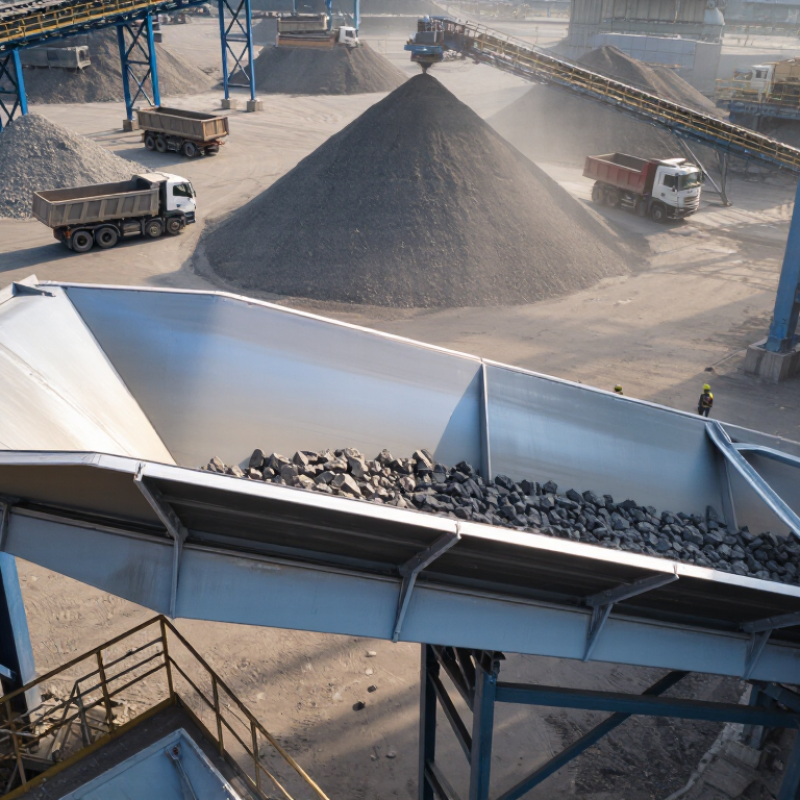
Identify the Material Flow, Impact Level, and Wear Conditions
A liner decision should begin with the material’s path, not a hardness number. Map where it slides, drops, turns, and strikes the chute. Note particle size, moisture, temperature, and tonnage per hour. UNEP’s Global Resources Outlook 2024 reports that global resource extraction reached 106 billion tonnes in 2020, roughly three times the 1970 level. High throughput makes small errors in flow assessment costly.
Small details matter. Fine, dry particles often cause steady abrasion; large rocks falling onto a plate create concentrated impact. Wet, sticky feed may build up, then release in heavy slugs. Record drop height and lump mass to estimate impact energy, and inspect where wear is deepest—not just where the surface looks polished. ASTM G65 abrasion testing can compare materials under controlled conditions, but it does not predict service life in a particular chute.
A practical choice matches the dominant wear mechanism while allowing for the secondary one. Check how material enters, whether it rebounds, and whether the liner can be safely replaced. Ask for operating records or trial-panel measurements from similar conditions. A hardness figure alone is not a field assessment. Without a site inspection, any recommendation should remain provisional; that caveat is easy to overlook when a shutdown is approaching.
Compare Hardox Grades by Hardness, Toughness, and Formability
How to Choose the Right Hardox Liner in 2026?
Compare Hardox Grades by Hardness, Toughness, and Formability
Hardness helps resist abrasion, but it does not tell the whole story. Published wear-plate datasheets commonly list 400-class plate at about 370–430 HBW, 450-class at 425–475 HBW, and 500-class at 470–530 HBW. These are typical ranges, not universal guarantees. ASTM E10 describes the Brinell hardness test; compare results only when test conditions are comparable. Harder is not always better.
Toughness matters when liners face impact from large rocks or frozen material. Check impact-test results, test temperature, and specimen direction; values without these details can mislead. Formability matters during installation. Higher-hardness plate generally needs more careful bending, and minimum inside radius depends on thickness and rolling direction. A 10 mm liner and a 25 mm liner should not be treated alike. ASTM A370 covers mechanical testing methods, but use the plate supplier’s current forming guidance for the specific material.
Tips: Match the grade to the wear pattern, not just the highest hardness. Inspect certificates, confirm thickness, and ask for bend-radius guidance before cutting. Then test one panel in service. Real wear can be uneven, and a neat spreadsheet will not catch every surprise.
Select Liner Thickness and Panel Design for the Equipment
Choose liner thickness from measured wear, not from habit. Record the original plate thickness, service hours, and remaining steel at several points across the chute. The USGS Mineral Commodity Summaries 2024 estimated U.S. crushed-stone production at about 1.5 billion metric tons in 2023, illustrating the scale of abrasive bulk handling. That matters. High-impact feed zones may need thicker plate or stronger backing, while low-impact sliding areas can often use thinner panels. Match the design to particle size, drop height, material flow, and the cost of shutdowns.
Panel layout matters as much as thickness. Place seams away from the direct impact stream, stagger joints, and use manageable panel sizes where access is tight. Check that the backing is flat and fasteners sit clear of the flow; a proud bolt can become a wear point. Measure the same locations during inspections, then compare wear rates before specifying the next replacement. A thicker liner can still be the wrong answer: it adds weight and may reduce capacity. One practical detail is easy to miss: uneven support can cause a panel to flex, even when its nominal thickness looks adequate. Use site measurements to refine the design.
Check Fabrication, Mounting, and Compatibility Requirements
Choosing an abrasion-resistant liner starts with the material it must handle. Sharp rock, damp fines, and sliding ore wear surfaces differently. Note impact points, material flow, and operating temperature before choosing plate thickness. A thicker liner is not automatically better; it can add weight and load the supporting frame.
Check fabrication limits before cutting or welding. Confirm the plate grade, thickness, and approved procedures with its technical documentation. Preheating needs can vary with these factors and workshop conditions. Plan hole positions and bend radii early. A rushed torch cut may leave edges that need extra finishing. Small gaps matter.
Mounting details can decide whether a liner stays put. Inspect the frame for flatness, existing cracks, and accessible fastener locations. Allow for thermal movement where the design requires it, and avoid joints that trap abrasive material. Fit it dry. Check clearances around chutes, doors, and moving parts, including after fasteners are tightened. Then verify the liner suits the substrate and the wear environment; moisture or corrosive material may change the choice. A tidy drawing can still miss a field obstruction. Measure the actual equipment, and review the first inspection after installation. One overlooked bracket can spoil an otherwise sound fit.
How to Choose the Right Hardox Liner in 2026?
Compare generic abrasion-resistant steel hardness classes, then confirm fabrication, mounting, and compatibility requirements for the specific plate and application.
How to use this chart: The values represent nominal hardness classes, not guaranteed test results or a complete material specification. Before selection, check the material certificate and confirm thickness-specific forming limits, weld and fastener requirements, mounting clearances, and compatibility with the supporting structure.
Estimate Service Life, Maintenance Needs, and Total Cost
To estimate service life, match the liner to the wear it actually faces. Sliding rock, sharp impact, and wet fines can wear the same chute differently. Record the plate’s starting thickness and measure it at fixed points during inspections. Measure the loss. Use the average wear rate and the minimum safe thickness to estimate remaining operating hours. Treat that figure as a working estimate, not a promise; feed size and loading can change quickly.
Maintenance needs depend on access, wear patterns, and the cost of stopping equipment. A liner that lasts longer may still require frequent checks if impact causes cracking or uneven wear. Plan inspection intervals around operating hours, and note where material builds up near seams and bolts. The estimate will be wrong at first. Revise it with field measurements. For total cost, compare purchase price, cutting and fitting labor, planned downtime, replacement frequency, and expected tonnage moved over the same period. Not just plate price. A simple cost-per-tonne comparison can reveal whether a thicker or harder plate pays off, but only when the operating data is reliable.