

How to Choose the Right LP207 Pillow Block Bearing
Choosing the right Lp207 Pillow Block Bearing starts with the machine, not just the part number. A bearing that looks correct on a catalog page may not suit your shaft, operating speed, or working environment. Small mismatches can lead to vibration, uneven wear, and repeated maintenance. Details matter.
This guide explains how to compare key selection factors before placing an order. Check the shaft diameter and mounting-hole layout against the equipment drawing. Then consider the expected load, rotation speed, available space, and exposure to dust or moisture. A clean indoor conveyor and a washdown area have different needs. Seals and lubrication matter.
The “LP207” designation is useful, but product dimensions and construction can vary by manufacturer. Verify the current technical drawing and product data rather than relying on a familiar label alone. If the load is uncertain, ask the supplier or a qualified engineer to confirm suitability. That extra check may prevent an expensive fit problem. It is easy to overlook.
Installation deserves equal attention. A correctly specified bearing can still fail early if the shaft is misaligned, the mounting surface is uneven, or lubrication is neglected. Note the operating conditions and maintenance access before choosing. This article offers a practical way to assess those details, compare options, and make a more informed selection. No single model fits every setup.
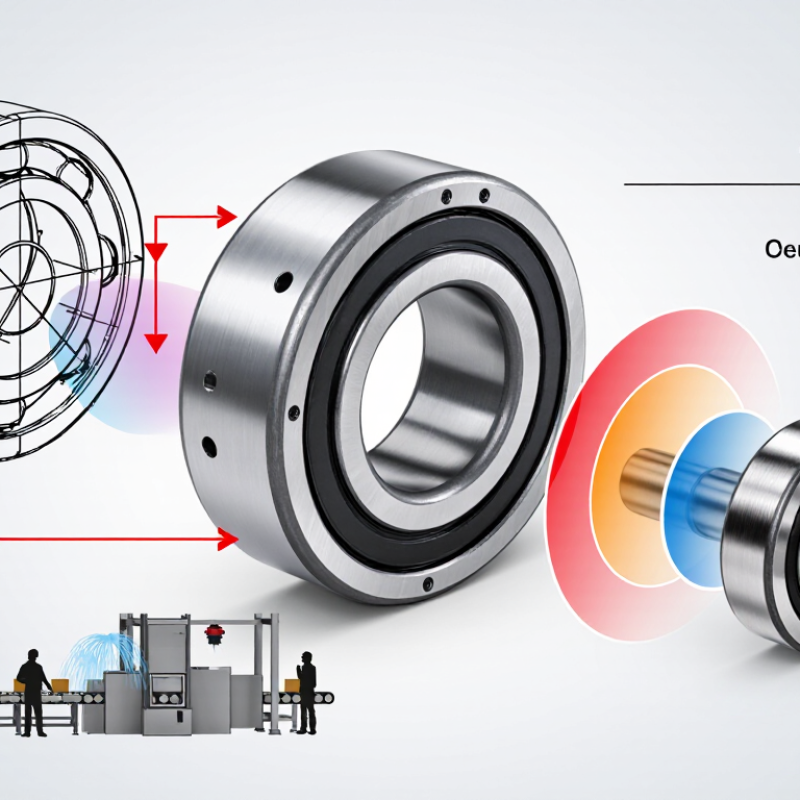
Identify the LP207 Bearing’s Core Specifications
An LP207 unit commonly has a 35 mm shaft bore, but confirm this against the product drawing. The designation alone does not establish every dimension or load rating. Check the housing length, mounting-hole spacing, center height, and insert width before installation. A mismatch of only a few millimeters can shift the shaft or prevent the mounting bolts from seating properly. That label is not enough.
Record the basic dynamic load rating, static load rating, limiting speed, seal type, and lubrication requirement. These values vary by design, so avoid transferring figures from another unit. ISO 281:2007 defines the L10 rating-life method: for ball bearings, life in millions of revolutions is calculated from the dynamic rating C and equivalent load P using (C/P)³. L10 represents the life reached by 90% of a sufficiently large group under stated conditions, not a guaranteed service interval. ISO 76:2006 addresses static load ratings and helps assess permanent deformation risk during heavy or stationary loading.
Compare the shaft diameter and fit with the bearing insert’s specified tolerances. Then check whether the operating load includes shock, belt pull, or misalignment. Small details matter. I would recheck the load calculation; real installations rarely match a neat catalog example. Keep the drawing and operating conditions together when selecting a replacement.
Match the Bearing Bore to the Shaft Size
For an LP207 pillow block, match the insert’s stated bore to the shaft’s measured diameter—not just its nominal label. If the drawing specifies a 35 mm bore, measure the shaft with a micrometer at several points along the seating area. Check for wear, taper, and burrs. Small differences matter.
ISO 286-2:2010 lists an h6 shaft tolerance of 0 to −16 micrometres for diameters from 30 to 50 mm. That is a useful dimensional reference, not a universal fit requirement for every LP207 insert. Follow the bearing drawing’s fit guidance, especially for set-screw or eccentric-lock designs. The locking method changes how the shaft is retained.
Measure twice. A shaft measuring 34.98 mm may still be unsuitable if it is out of round or scored. Clean the shaft, then compare readings across two directions and several positions. I would not force an insert onto a tight shaft; that can complicate installation and damage the seating surfaces. Check the actual bore specification before ordering, since model codes alone may not identify every variant.
Assess Load, Speed, and Operating Conditions
When choosing an LP207 pillow block bearing, estimate the actual load, not just the machine’s average force. Include belt tension, shaft weight, and any sudden starts or impacts. Compare the expected radial load with the bearing’s published dynamic and static ratings. Leave a sensible margin; a rough estimate is not a rating. Also confirm the shaft size and mounting arrangement against the product drawing, since a model code alone does not verify fit.
Speed changes the decision. Check the bearing’s permitted operating speed and lubrication guidance, then consider how long it will run at that speed. A bearing beside a warm motor may need different attention than one used intermittently. Small details matter. Listen for rising noise and check for unusual housing heat during a controlled run, but do not treat a quiet start as proof of long-term suitability.
Operating conditions can shorten service life even when loads look acceptable. Dust, moisture, vibration, and frequent temperature changes all deserve attention. Use suitable seals and lubrication for the environment, and make sure the base is flat and firmly secured. I would recheck alignment after tightening the bolts; small shifts are easy to miss. Keep a simple record of speed, temperature, and maintenance intervals, then adjust the choice if real operating conditions differ from the estimate.
Check Housing Fit, Mounting, and Lubrication Needs
An LP207 pillow block bearing should sit squarely on a clean, rigid support. Check the shaft diameter and bearing bore against the unit’s specification before fitting; similar part numbers can conceal different dimensions. The shaft should slide into position without force. Check for burrs, corrosion, or paint that could interfere with seating. Small flaws matter.
Set the housing on a flat surface and confirm that both mounting feet contact it evenly. Tighten the bolts in stages, alternating sides, so the housing does not twist. Align the shaft before final tightening; mounting bolts should not pull a misaligned assembly into place. I have seen this step rushed, and it can leave uneven loading that is hard to spot by eye. Recheck shaft movement after installation.
Lubrication needs depend on operating speed, load, temperature, and dust or moisture exposure. Confirm whether the bearing arrives pre-lubricated and locate any grease fitting before operation. Use the lubricant type and service interval specified for the unit and working conditions. Add grease gradually. Too much can raise temperature, especially in a confined housing. During the first run, listen for unusual noise and check for heat or vibration. Record what you observe; early readings may be imperfect, but they give you a useful baseline.
How to Choose the Right LP207 Pillow Block Bearing
Check housing fit, mounting dimensions, and lubrication requirements before installation.
Typical 207-size pillow block reference dimensions are shown: 35 mm shaft bore, 47.6 mm center height, 127 mm bolt-center spacing, and 161 mm base length. Dimensions can vary between LP207 designs, so confirm the supplier’s drawing and match the housing to the shaft and mounting surface. For lubrication, follow the unit’s instructions; sealed-for-life inserts generally do not require relubrication.
Confirm Compatibility Before Purchase or Replacement
An LP207 pillow block bearing should match the machine, not just the label on the old part. Before ordering, check the shaft diameter with a caliper and compare it with the bearing insert’s stated bore. A shaft that is slightly undersized can creep; one that is too large may not seat correctly. Small differences matter.
Inspect the housing footprint and mounting holes, too. Measure the distance between bolt centers, the base width, and the bearing center height. A replacement that fits the shaft but shifts the centerline can misalign a belt, roller, or conveyor. Use the equipment drawing when available, and compare it with the supplier’s dimensional drawing. Measure, don’t guess.
Check how the insert locks onto the shaft. Set screws and other locking arrangements are not interchangeable in every setup. Also confirm the operating speed, load direction, expected temperature, and exposure to dust or moisture. These conditions affect lubricant choice and service life. If the old unit is damaged, its worn dimensions may mislead you. It is tempting to order the same marking and move on; that shortcut can miss a changed shaft or mounting pattern. Verify the full part designation and dimensions before purchase or replacement.
| Compatibility Check | Reference Data or Measurement | What to Confirm Before Ordering |
|---|---|---|
| Designation and housing style | “LP207” can be used differently across product ranges. A commonly encountered related configuration is a 35 mm UC207 insert in a P207-style pillow block housing. | Match the complete unit designation, housing shape, insert type, and mounting arrangement. Do not rely on “207” alone. |
| Shaft diameter | Common UC207 insert bore: 35 mm. | Measure the shaft at the bearing seat. Confirm the replacement bore matches the shaft and any specified locking method. |
| Insert dimensions | Typical UC207 reference dimensions: 72 mm outside diameter; 42.9 mm inner-ring width; 20.6 mm outer-ring width. | Compare the insert and housing seat with the supplier’s dimensioned drawing. Dimensions may vary by design or product standard. |
| Mounting-hole centres | A common P207-style unit has mounting-hole centres approximately 127 mm apart. | Measure centre-to-centre distance between the existing base holes. Check the drawing before assuming this value applies to an LP207 unit. |
| Overall base length | A common P207-style unit has an overall base length of approximately 167 mm. | Check available mounting space and confirm the base outline against the replacement unit’s drawing. |
| Mounting height | A common P207-style unit has a shaft centre height of approximately 47.6 mm above the mounting surface. | Measure from the mounting surface to the shaft centreline; a height mismatch can cause misalignment. |
| Mounting holes and fasteners | Hole size and recommended fastener depend on the housing design; P207-style units commonly have slotted mounting holes. | Check hole width, slot length, bolt size, and available adjustment. Use the drawing for the exact unit rather than selecting fasteners by designation alone. |
| Locking arrangement | UC-style inserts commonly secure the shaft with two set screws in the inner ring. | Confirm that the existing unit uses set screws and check their position, access, and tightening requirements. Other insert designs may use a different locking method. |
| Lubrication and sealing | Grease type, relubrication provisions, and seal design vary by bearing unit. | Check operating temperature, exposure to dust or moisture, lubrication access, and the maintenance requirements of the application. |
| Load and speed suitability | Load capacity and limiting speed depend on the specific insert, housing, lubrication, and operating conditions. | Use the selected unit’s technical data and account for radial load, any axial load, shaft speed, shock, and duty cycle. |
| Alignment and installation | Pillow block units require a stable mounting surface and appropriate shaft alignment. | Check that the base is flat, the shaft is not forced into position, and the unit can be aligned before the mounting bolts are fully tightened. |
| Final confirmation | Reference dimensions are typical for a 35 mm UC207 insert and P207-style unit; they are not a substitute for the exact LP207 drawing. | Before purchase or replacement, compare the old unit’s markings and measured dimensions with the supplier’s drawing and application requirements. |