

How to Choose Translucent Glass for Your Project in 2026
Choosing Translucent Glass in 2026 starts with the conditions people will experience in the finished space. How much daylight should pass through? What should remain private? A softly diffused meeting-room wall may need a different surface from a bathroom screen or a bright street-facing entrance. “The sun never knew how great it was until it hit the side of a building,” architect Louis Kahn observed. His words offer a useful reminder: glass changes how light feels, not just how much enters.
Compare samples under the project’s actual lighting. Hold them beside the frame, then view them from both sides. Clear, patterned, acid-etched, and laminated options can differ in privacy, glare, color, and ease of cleaning. Small details matter. Ask suppliers for technical data on visible light transmission, thickness, edge treatment, and safety performance, and confirm suitability with the project’s architect or glazing professional. Requirements can vary by location and application.
Do not choose from a photograph alone. It can flatten texture and misrepresent color. A full-size mock-up may reveal awkward reflections or a privacy gap that a small sample hides. I would still leave room for doubt: the ideal balance on paper may feel too dim in a north-facing room. Judge the material in context, and document the agreed finish before ordering.
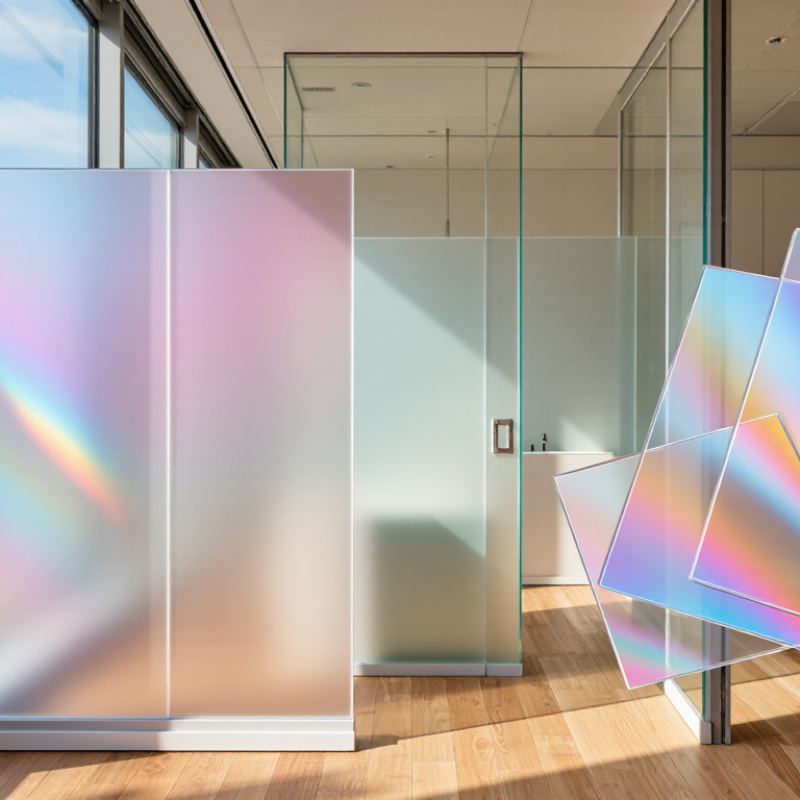
Define the Project’s Light, Privacy, and Safety Requirements
Translucent glass softens direct light, but it does not always conceal movement. Start by noting where daylight enters and what the glass must screen. A north-facing bathroom window may need a different finish from a bright office partition. Frosted, patterned, and textured surfaces scatter light differently; some also reveal vague silhouettes when a room is lit at night. Light changes everything.
Tips: Tape a sample beside the opening. Check it in morning sun, cloudy daylight, and after dark with the room lights on. A small sample can mislead, so inspect the largest practical piece.
Set a realistic privacy level before comparing finishes. For a shower or street-facing window, view samples from both sides and at several distances. If privacy matters after dark, consider a separate blind rather than expecting glass alone to solve every condition. I would not rely on a product description for this judgment; the room’s lighting and viewing angles matter. Safety needs equal attention. For doors, low-level glazing, or overhead panels, ask a qualified glazing professional about suitable safety-rated glass and local building requirements. Specify the panel size, location, and use, then confirm the glass type before ordering.
How to Choose Translucent Glass for Your Project in 2026 - Define the Project’s Light, Privacy, and Safety Requirements
Compare common translucent-glass approaches by how they diffuse light, support privacy, and address safety. The final performance depends on the glass thickness, treatment, installation, and applicable building requirements.
| Glass option | Daylight and light diffusion | Privacy characteristics | Safety considerations | Good fit for | Check before specifying |
|---|---|---|---|---|---|
| Acid-etched glass | Transmits daylight while softening views and reducing direct glare. | Provides visual screening, but silhouettes may remain visible, especially when a person is close to the glass. | The etched finish alone does not make glass safety glazing. Specify a compliant tempered or laminated construction where required. | Interior partitions, bathroom screens, doors, and daylight-sharing spaces. | Ask for light-transmission data for the exact glass and confirm which face is etched and how it should be cleaned. |
| Patterned or rolled glass | Diffuses light; the amount and direction of distortion depend on the pattern and glass thickness. | Privacy varies by pattern. Large or shallow patterns may obscure detail less effectively than dense patterns. | A decorative pattern is not, by itself, evidence that the glass meets safety-glazing requirements. | Interior doors, partitions, cabinet fronts, and privacy screens. | Review a full-size sample from both sides and check whether the selected pattern can be supplied in the required safety-glazing type. |
| Sandblasted glass | Creates a matte surface that spreads incoming light and reduces clear views. | Usually offers strong screening, but close-range shadows can still be visible; privacy changes with lighting conditions. | Surface treatment does not determine impact-safety performance. Confirm the glass type and safety classification separately. | Decorative panels and partitions where a custom, uniform or patterned finish is desired. | Confirm maintenance needs: the roughened surface can show fingerprints or retain dirt more readily than smooth glass. |
| Translucent interlayer laminated glass | Diffuses light through the interlayer; transmission and color depend on the interlayer and glass build-up. | Can provide consistent screening across the panel. Check the selected interlayer sample under both bright and low-light conditions. | The interlayer holds glass fragments together after breakage. The complete assembly still needs to meet the project’s applicable safety requirements. | Glazed partitions, doors, overhead glazing, and locations where fragment retention is important. | Specify the complete laminate build-up, edge condition, support, and required safety performance—not just the interlayer appearance. |
| Ceramic-frit or translucent coated glass | Frit coverage can control daylight and glare; greater coverage generally reduces direct transmission. | Privacy depends on coverage, pattern, and viewing angle. Sparse patterns may leave clear sightlines between areas. | Frit or coating is not automatically a safety treatment. Verify the underlying glass and finished assembly against project requirements. | Façades, sun-control panels, partitions, and applications needing a designed visual pattern. | Review the pattern at actual scale and confirm coating durability, orientation, and compatibility with heat treatment if required. |
| Translucent privacy film on clear glass | Can soften light without replacing the existing glass; the film’s opacity and finish affect transmission. | Offers adjustable coverage, but film may not provide dependable privacy at night when interior lighting is brighter than exterior lighting. | Film does not generally convert ordinary glass into safety glazing. Check film compatibility and do not treat it as a substitute for required safety glass. | Retrofits, temporary privacy, and applications where a removable or replaceable finish is useful. | Check warranty, cleaning instructions, moisture exposure, edge details, and privacy from both sides in day and night conditions. |
Specification note: Translucent finishes do not have one universal light-transmission or privacy rating. Request tested performance for the exact product configuration, test samples in the intended lighting, and verify safety-glazing requirements for the location and application.