

Why Choose a Furniture Side Drilling CNC Machine?

Choosing the right drilling system can shape the speed and consistency of furniture production. A Furniture Side Drilling Cnc Machine is designed to create holes along panel edges, where accurate placement supports dowels, connectors, and other fittings. In cabinet work, a few millimeters can affect how smoothly parts align during assembly. Precision matters.

The value of this machine depends on the work it must handle. A workshop producing repeated cabinet panels may benefit from programmable drilling patterns and reduced manual repositioning. Operators can load a panel, confirm the program, and check that clamps hold the material securely before the cycle begins. These details help protect both accuracy and workflow. They matter.

A careful purchase review should consider panel sizes, hole configurations, software compatibility, operator training, and access to maintenance support. Dust extraction and safe loading practices deserve attention, too. Ask suppliers for a practical demonstration using materials and drilling patterns close to your daily production. Then inspect the finished holes and review how quickly settings can be changed.

Automation can reduce repetitive tasks, but it cannot correct poor programming or inconsistent material quality. That is worth remembering. The best choice is not always the most complex model; it is a machine that fits the production mix, available floor space, and team’s experience. A realistic assessment helps buyers choose with confidence—and spot limitations before they become costly.
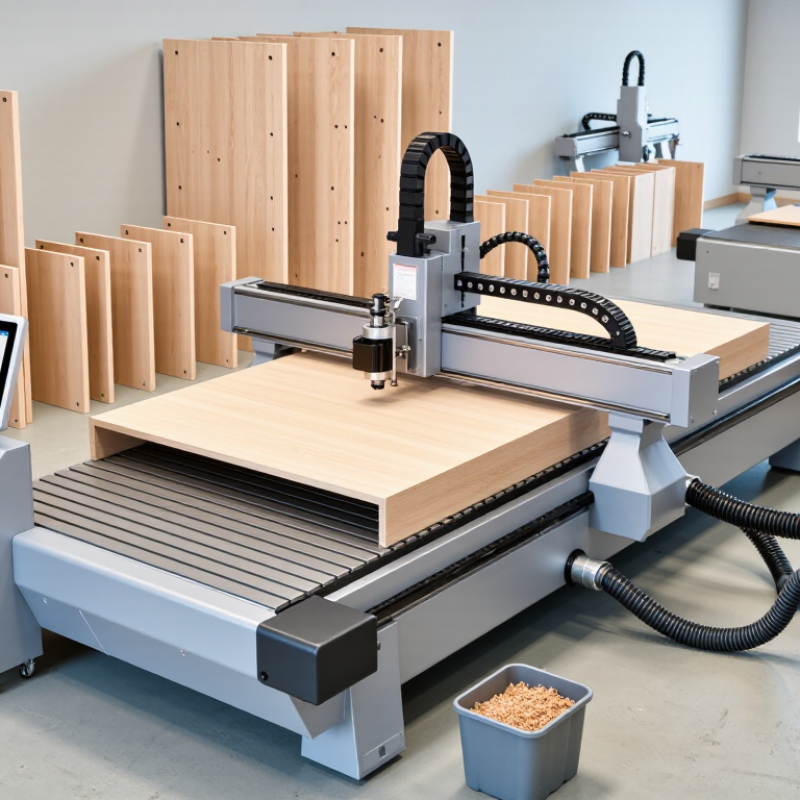
Why Choose a Furniture Side Drilling CNC Machine?

What a Furniture Side Drilling CNC Machine Is

A furniture side drilling CNC machine is a computer-controlled tool for boring holes into panel sides and faces. It can create openings for shelf supports, dowels, and connector fittings. The operator loads a cut panel, selects a drilling program, and secures the workpiece against a fence or clamp. The machine positions its drill head according to the programmed coordinates. This helps keep hole spacing consistent across repeated cabinet parts. It is not magic. Poor measurements or a loose panel can still produce misplaced holes.

The U.S. Bureau of Labor Statistics’ Occupational Outlook Handbook projects woodworker employment to decline 2% from 2023 to 2033, while estimating about 21,100 openings each year. This workforce data does not measure CNC performance directly, but it highlights the value of reliable, repeatable processes in woodworking shops. A side drilling machine can reduce manual marking and drilling, though setup, tooling, and operator checks still matter. The best fit depends on panel sizes, hole patterns, production volume, and how the machine connects with existing workflow.

Tip: Test the program on a scrap panel first. Check hole depth and alignment with the actual fittings; a small setup error can spoil a finished part.

How Side Drilling CNC Machines Work

A furniture side drilling CNC machine turns a digital hole pattern into precise openings along a panel’s edge or face. The operator loads a CAD/CAM file, selects the board thickness, and secures the panel against reference stops. The controller calculates each drilling position, then moves the panel or spindle along programmed axes. A rotating bit enters the material at set depths for dowels, connectors, or shelf fittings.

Small details matter. Clamps prevent vibration, while a correctly matched bit helps limit tear-out around the hole. Before a full batch, experienced operators check a first-off panel with a ruler or caliper. A program can be correct and still produce misplaced holes if the panel is skewed or its thickness was entered incorrectly. This is where careful setup beats blind confidence.

The wider shift toward automated production is reflected in industry data: Grand View Research valued the global CNC machine market at USD 83.99 billion in 2023. The International Federation of Robotics reported 541,302 industrial robot installations worldwide that year in World Robotics 2024. These figures describe broader automation, not side-drilling machines alone. They help explain why digital workflows are spreading, but they do not remove the need to inspect tooling, dust extraction, and hole position during production.

Key Advantages for Furniture Manufacturing

A furniture side drilling CNC machine makes precise holes in panel edges for dowels, screws, and connector fittings. In a busy workshop, that means fewer manual measurements and less panel flipping between operations. Operators can load a cabinet side, select the drilling pattern, and keep parts moving with consistent spacing. This repeatability matters when several panels must align during assembly. Small errors show up quickly: a misplaced hole can leave a joint loose or a drawer front uneven. The machine helps control that risk, though accurate programming and calibration still matter.

The wider case for automation is reflected in a 2019 Deloitte and MAPI smart manufacturing study: 86% of surveyed manufacturing executives expected smart factory initiatives to drive competitiveness within five years. That figure covers manufacturing broadly, not side drilling machines alone. Still, it points to the value of connected, repeatable processes. A side drilling CNC unit can reduce setup variation and support shorter production runs, especially when designs change often. Yet the first setup can be fussy. Tool wear, dust, and poorly prepared panels may affect results, so regular checks remain essential. Automation helps. It does not replace careful operators.

Why Choose a Furniture Side Drilling CNC Machine?

In this illustrative 8-hour shift scenario, CNC side drilling produces more panels by automating hole positioning and repeating drilling patterns consistently. Actual throughput varies with panel design, hole count, setup time, and machine configuration.

Common Applications in Panel Processing

In panel furniture production, side drilling creates the holes that help flat components join accurately. A furniture side drilling CNC machine is commonly used on cabinet sides, partitions, shelves, wardrobe panels, and drawer components. Depending on its configuration, it can drill for dowels, cam connectors, and screw fittings along an edge or face. Small alignment errors matter. A few millimeters can leave an assembled cabinet out of square.

For batch processing, programmed positions help repeat the same hole pattern across matching panels. Typical applications include connector rows, shelf-pin lines, and horizontal joint holes. Operators can adjust layouts for different cabinet sizes and panel designs. On a shop floor, this machine may fit between cutting and assembly, helping prepare components for joining. Still, it is not a substitute for a sound process. Panel thickness, reference edges, tool condition, and clamping all need checks.

The machine can also support custom orders with mixed panel dimensions, though frequent program changes may slow a small workshop. Setup deserves attention. A test panel can reveal an offset before a full batch is drilled. Even reliable automation needs occasional review, and that step is easy to underestimate.

Factors to Consider When Choosing a Machine

Why Choose a Furniture Side Drilling CNC Machine?

Factors to Consider When Choosing a Machine

Choosing a side-drilling CNC machine starts with the parts you actually make. Measure common panel lengths, thicknesses, and hole patterns, then check the machine’s working range against them. A unit that handles today’s cabinets may struggle with wider panels or a changing product mix. Consider spindle speed, drill-head configuration, tool changes, and compatibility with your design software. The Grand View Research CNC machine market report estimated the global market at USD 83.99 billion in 2023, reflecting broad investment in CNC production. That figure covers many industries, not furniture alone, so use it as context rather than proof that a particular machine will pay off.

Also assess accuracy, extraction, guarding, and the operator’s access to routine maintenance. Ask for a demonstration using your own panel and drilling pattern; a clean showroom sample may not reveal setup delays or chip buildup. Compare cycle time with loading, positioning, and unloading included. Check what training and technical support are available, and confirm that your floor layout can accommodate the machine and material flow. A high spindle count looks impressive, but it may not suit a shop producing short runs. Not every surprise fits a spreadsheet.

Tips: Bring a real workpiece to the trial. Verify hole position with a gauge, time a full changeover, and note how easily the operator clears chips. Keep a small allowance in your plan for workflow adjustments; real production is rarely as tidy as a demo.

Go to Top