

How to Choose a Lipo Polymer Battery for Your Product?
Choosing a Lipo Polymer Battery is a product decision, not a simple capacity comparison. The right pack must fit your device’s voltage, current demand, enclosure, charging method, and expected operating conditions. A compact drone, medical monitor, and wearable sensor require very different battery designs. Size matters. So does heat.
Dr. Jeff Dahn, a leading lithium-ion battery researcher, has said, “The lithium-ion battery is a very complex system.” That observation applies directly to lithium polymer products. A battery rated at 2,000 mAh may look attractive, yet its real performance depends on discharge rate, temperature, wiring resistance, and protection circuitry. A higher number can mislead. Sometimes, it does.
This guide explains how to evaluate a Lipo Polymer Battery with practical engineering judgment. It considers voltage stability, peak current, cycle life, charging limits, connector quality, cell dimensions, and safety features. Supplier test reports are useful, but they should not replace sample testing. Check the battery inside the actual product enclosure. Measure temperature during charging and peak operation. Inspect swelling, voltage drop, and connector heating.
There is no universal best battery. Every selection involves trade-offs. More capacity may increase weight and charging time. A thinner cell may reduce mechanical strength. A powerful pack may need better thermal control. These details are easy to overlook. They can also decide whether a product performs reliably after months of use. This article offers a clear framework for making a safer, evidence-based choice.
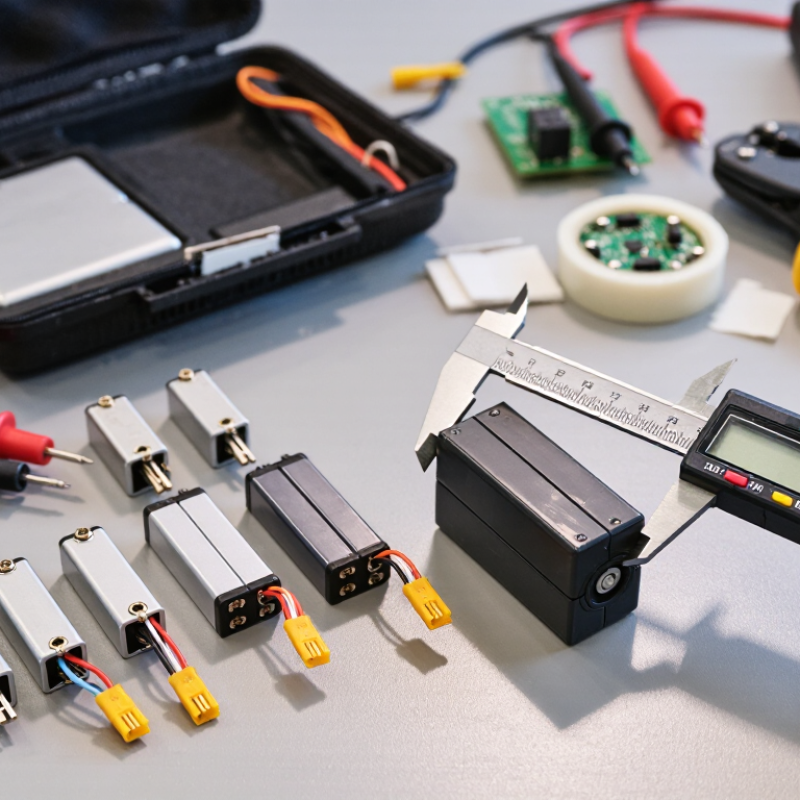
Define Product Power Requirements and Operating Conditions
Choosing a lithium polymer battery starts with measured power needs, not a convenient capacity number. Record the product’s operating voltage, average current, peak current, and expected runtime. A motor, wireless transmitter, or bright display may create short surges that average calculations hide. Measure these surges with a calibrated meter during real use. Then estimate capacity by multiplying current by operating hours. Add practical reserve for aging and cold conditions. Do not design around the label value alone. Usable capacity can be lower.
Operating conditions shape battery selection. Check the highest and lowest temperatures, charging time, vibration, humidity, and available space. A handheld device may face repeated bending or impact. An indoor sensor may remain still for years. Match continuous and peak discharge ratings to measured demand. Include protection circuitry and a suitable charger. These details reduce overheating, swelling, and unexpected shutdowns. My early estimates were too optimistic because I ignored startup current. That mistake is common, but avoidable.
Tips: Test a prototype under its hardest realistic load. Log voltage drop, temperature, and runtime. Repeat the test after several charge cycles. Leave clearance around the pack, and never compress it inside the enclosure. If the product operates near its limits, consult a qualified battery engineer. Review applicable transport and safety requirements. Paper calculations help. Physical evidence decides.
How to Choose a LiPo Polymer Battery for Your Product? – Define Product Power Requirements and Operating Conditions
| Evaluation Dimension | Required Product Information | Recommended Calculation or Selection Method | Typical Reference Values | Design Considerations |
|---|---|---|---|---|
| Nominal Voltage | Operating voltage required by the main electronics, motors, sensors, and communication modules. | Select a battery voltage that matches the product power architecture. A single LiPo cell is commonly used directly, while multiple cells in series may be required for higher-voltage systems. | One cell: 3.7 V nominal, 4.2 V fully charged. Two cells in series: 7.4 V nominal, 8.4 V fully charged. | Confirm the minimum and maximum input voltage accepted by every critical circuit. A voltage regulator may be required when the battery voltage does not match the load. |
| Continuous Operating Current | Average current consumed during the normal operating mode. | Measure or estimate the current of each subsystem, then add the values used at the same time. Include a design margin of approximately 20–30%. | Example: electronics 0.35 A + display 0.25 A + wireless module 0.15 A = 0.75 A; recommended continuous rating: at least 0.90–0.98 A. | Use measured current under actual operating conditions whenever possible. Average current is more important than standby current when calculating normal runtime. |
| Peak Current | Highest current drawn during motor startup, radio transmission, camera activation, data processing, or other short-duration events. | Identify the maximum current and its duration. Select a battery and protection circuit that can safely support the peak without excessive voltage drop. | Small portable products may draw 1.5–3 A briefly; motor-driven products may require substantially higher startup current. | Peak current should be evaluated together with wire resistance, connector rating, protection limits, and battery internal resistance. |
| Capacity | Required operating time and average load current. | Estimated capacity (mAh) = average current (mA) × required runtime (hours) ÷ usable-capacity factor. | For a 500 mA average load and 4-hour target runtime, using an 0.80 usable-capacity factor: 500 × 4 ÷ 0.80 = approximately 2,500 mAh. | Usable capacity is reduced by high discharge rates, low temperatures, battery aging, cutoff voltage, and conversion losses. |
| Discharge Rating | Continuous and peak current demand of the product. | Required continuous C-rating = continuous current ÷ battery capacity in amp-hours. Required peak C-rating = peak current ÷ battery capacity in amp-hours. | A 2,000 mAh battery supplying 4 A continuously requires at least 2C continuous capability. Additional margin is recommended. | Do not select a battery using the advertised maximum value alone. Verify the continuous rating, pulse duration, thermal conditions, and test method. |
| Runtime Profile | Percentage of time spent in active, idle, sleep, transmission, charging, and high-load modes. | Calculate a weighted average current using the duration of each operating state. | Example: 1 A for 20% of the time, 0.3 A for 50%, and 0.05 A for 30% gives a weighted average of 0.365 A. | A duty-cycle calculation is generally more accurate than using the highest or lowest current alone. |
| Charge Voltage and Method | Required charging voltage, charge current, charge time, and available charging interface. | Use a charger designed for the selected cell configuration and chemistry. Standard lithium-polymer cells are normally charged using a constant-current/constant-voltage profile. | Single-cell LiPo charging terminates at 4.2 V. A commonly used charge current is around 0.5C to 1C when permitted by the cell specification. | Charging must be controlled by an appropriate charger IC. Never charge a LiPo battery with an unregulated voltage source. |
| Charge Time | Maximum acceptable charging duration and product availability between uses. | Approximate charge time depends on capacity, charge current, battery condition, and the constant-voltage phase. The final phase usually takes longer than the constant-current phase. | At 0.5C, a complete charge commonly takes more than 2 hours; actual time varies by battery and charger settings. | Fast charging increases thermal stress and may reduce service life. The battery manufacturer’s specified charge rate should not be exceeded. |
| Physical Size | Maximum allowable length, width, thickness, connector location, and mounting space. | Reserve clearance for dimensional tolerance, swelling protection, wiring, insulation, and assembly variation. | Allow additional space around the pouch rather than compressing it inside the enclosure. | LiPo pouch cells should not be punctured, folded sharply, compressed, or exposed to edges that may damage the protective film. |
| Weight Limit | Maximum battery mass allowed by the product, especially for wearable, handheld, or airborne equipment. | Compare required watt-hours with the available battery mass and volume. Energy = nominal voltage × capacity in amp-hours. | A 3.7 V, 2.5 Ah battery stores approximately 9.25 Wh before system losses. | Higher capacity generally increases weight and size. Select the smallest battery that meets runtime, current, safety, and aging requirements. |
| Operating Temperature | Minimum and maximum ambient temperatures during operation. | Define the complete temperature range, including storage, charging, and operation. Validate performance at the coldest and hottest expected conditions. | Many LiPo cells operate near 0–45°C while charging and approximately −20–60°C while discharging, but the exact limits depend on the cell specification. | Charging at sub-freezing temperatures can cause lithium plating and permanent damage. Use temperature monitoring where cold charging is possible. |
| Thermal Conditions | Heat generated by the battery, load electronics, charger, and surrounding components. | Estimate heat sources and test the battery under maximum continuous load, peak load, and charging conditions. | High current, high ambient temperature, and restricted airflow increase battery temperature. | Keep the battery away from heaters and provide a safe thermal path. A temperature sensor or thermal cutoff may be required. |
| Voltage Drop | Lowest acceptable voltage at the product input during peak load. | Evaluate battery internal resistance, cable resistance, connector resistance, and protection-circuit resistance under peak current. | Higher-current pulses create larger voltage drops, particularly when the battery is cold or partially discharged. | If the voltage falls below the system’s undervoltage threshold, the product may reset even when usable battery capacity remains. |
| Protection Requirements | Risk of overcharge, over-discharge, overcurrent, short circuit, and abnormal temperature. | Define whether protection is integrated into the battery pack, the product circuit, or both. | Common protection functions include overcharge cutoff, over-discharge cutoff, overcurrent protection, short-circuit protection, and temperature protection. | Protection thresholds must be compatible with the product’s peak current and operating voltage. Protection is not a substitute for a suitable battery design. |
| Cell Balance | Number of cells connected in series and required consistency between cells. | Use a suitable battery-management or balancing circuit for multi-cell series packs. | Two or more cells in series require monitoring of individual cell voltages during charging. | Cell imbalance can cause one cell to overcharge or over-discharge even when the total pack voltage appears normal. |
| Storage Conditions | Expected storage duration, temperature, humidity, and state of charge. | Store the battery in a cool, dry location at the storage charge level specified for the selected cell. | Long-term storage is commonly performed at a partial state of charge rather than fully charged; periodic inspection is recommended. | Avoid storing damaged, swollen, wet, or hot batteries. Check the voltage and physical condition before returning a stored battery to service. |
| Cycle Life Target | Required number of charge and discharge cycles over the product lifetime. | Set acceptable remaining capacity, operating depth of discharge, charge rate, discharge rate, and temperature limits. | Cycle life varies widely; shallow discharge, moderate temperatures, and lower charge rates generally improve service life. | Do not compare cycle-life figures unless the test conditions and end-of-life capacity criterion are equivalent. |
| Connector and Wiring | Current level, mating cycles, assembly method, cable length, and available installation space. | Select connectors and wires with adequate continuous and peak current ratings, insulation, strain relief, and polarity control. | Wire gauge must be selected according to current, length, allowable voltage drop, insulation temperature, and installation method. | Loose connections and undersized wires can create resistance, heating, intermittent resets, or fire hazards. |
| Safety and Validation | Product category, transport needs, regional requirements, abuse conditions, and production quantity. | Plan electrical, mechanical, thermal, charging, abuse, and transportation validation before mass production. | Typical testing may include short-circuit protection, overcharge, over-discharge, vibration, drop, thermal exposure, and enclosure compatibility. | Use documented test limits and traceable battery specifications. Regulatory and transportation requirements vary by market and product type. |