Top CVT Chain and Belt Manufacturers in China?
Choosing a reliable CVT Chain / CVT Belt manufacturer in China takes more than comparing prices or browsing product photos. The right supplier should understand how transmission components perform under repeated load, heat, vibration, and wear. China’s market includes manufacturers with different product ranges, production capabilities, and levels of technical support. Some focus on standard replacement parts; others offer engineering support for specific vehicle or equipment requirements.
The details matter. Ask about material specifications, dimensional tolerances, production controls, and how durability tests are conducted. Request clear product documentation and confirm that samples match the intended application. A smooth sales conversation is useful, but it cannot replace evidence. That distinction is easy to miss.
This guide introduces key factors to consider when assessing CVT chain and belt manufacturers in China, including product expertise, quality assurance, customization, and communication. It is not a ranking based on claims alone; supplier capabilities should be checked against your own technical and purchasing needs. Even a well-established company may not suit every project. That is worth remembering. Buyers should compare relevant specifications, ask direct questions, and evaluate how consistently a supplier explains its process. A confident answer is helpful; a verifiable one is better.
What CVT Chains and Belts Do in a Transmission
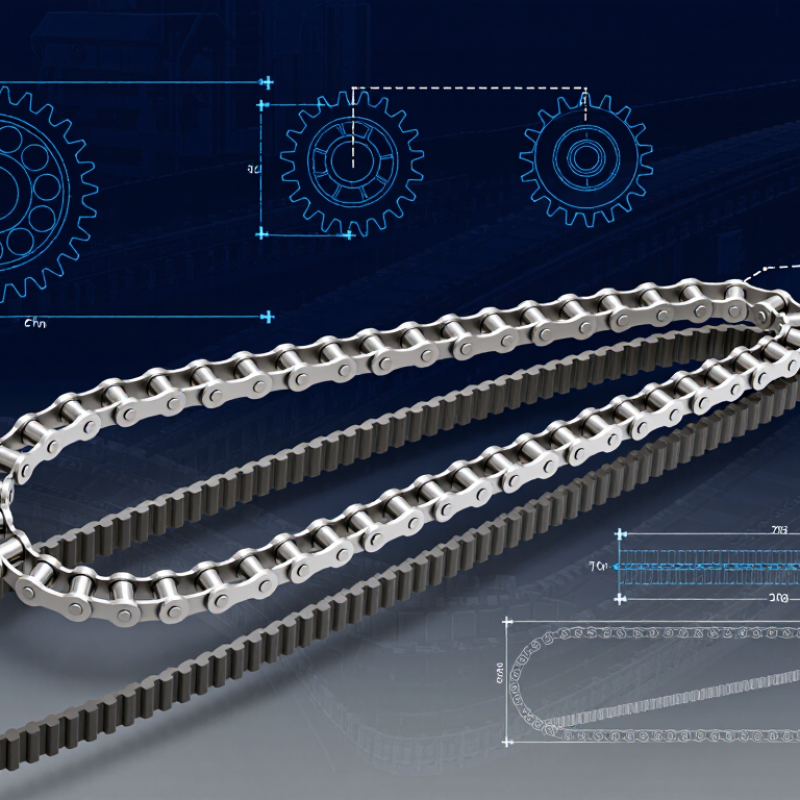
A CVT chain or belt transfers engine torque between two pulleys whose working diameters change. As one pulley narrows its groove, the other opens. The chain or belt rides higher on one pulley and lower on the other, shifting the transmission ratio without fixed gear steps. The result is often a smooth change in engine speed. No familiar gear shift.
A belt typically uses stacked metal elements held by bands; a chain uses linked metal plates and pins. Both need strong contact with the pulley faces. Hydraulic pressure clamps the pulleys, helping prevent slip under load. The control system adjusts that pressure and the ratio during acceleration, climbing, and steady cruising. Small components matter. Surface finish, lubrication, and tension affect efficiency, noise, and wear.
The U.S. Environmental Protection Agency’s 2024 Automotive Trends Report puts average fuel economy for model-year 2023 new vehicles at 27.1 miles per gallon.
That figure covers many powertrain types; it is not a CVT-specific result. It offers context, not proof that a CVT chain or belt improves economy by itself. In service, wear can be harder to judge than a simple gear change suggests. A careful assessment should consider fluid condition, operating temperature, and the vehicle’s duty cycle. The report is useful, but it cannot explain every transmission’s performance.
How China’s CVT Component Industry Is Organized
Top CVT Chain and Belt Manufacturers in China?
China’s CVT component industry is organized around specialized production stages, not one uniform supplier group. Materials and precision-forming firms make steel elements, pins, and links; downstream factories assemble push belts or chains and test them for dimensions, wear, and fatigue. Rubber V-belts for scooters and other small engines follow a different route, relying on compound formulation and cord reinforcement. The distinction matters: “CVT belt” can describe quite different products.
CAAM reported that China produced 31.28 million vehicles in 2024 in its annual industry release. That figure shows the scale of the wider automotive base, not CVT demand specifically. Within that base, component makers typically serve system integrators or vehicle manufacturers, while also supplying replacement markets. Testing capacity and stable process control can matter as much as factory size. A polished sample proves little.
The industry map is imperfect. Public reports rarely separate CVT chain and belt output from broader transmission components, so supplier comparisons need careful verification. Buyers should check the intended application, operating range, test method, and traceability records before comparing quotations. A scooter belt and an automotive steel push belt are not interchangeable.
Top CVT Chain and Belt Manufacturers in China? — How China’s CVT Component Industry Is Organized
A typical CVT supply chain spans transmission elements, pulley assemblies, hydraulic actuation, electronic control, and support systems.
Bars count representative component examples listed for each system group—not manufacturers, market share, production volume, or the full contents of every CVT design. Belt and chain are alternative transmission elements.
Leading Chinese Manufacturers of CVT Chains and Belts
Chinese manufacturers of CVT chains and belts serve scooter, motorcycle, and industrial transmission markets. Their strengths often include established metalworking, rubber processing, and production capacity. However, a large factory does not automatically mean a suitable component. Fit and consistency matter more than a broad catalogue.
For chains, buyers should examine pin and plate dimensions, heat treatment, tensile strength, and fatigue-test records. A chain may look uniform but still develop uneven wear if its parts vary slightly. For belts, inspect compound specifications, cord construction, tooth profile, and resistance to heat and repeated flexing. Ask for evidence. Test samples under realistic load and temperature conditions, not only in a clean showroom.
Reliable manufacturers can explain how they control dimensions between production batches and how they investigate early failures. Request inspection records, sample measurements, and details about the stated test method. Compare noise, temperature rise, and wear after a consistent operating cycle. Small differences matter. Communication also reveals practical capability: clear answers about tolerances are more useful than sweeping performance promises. Some suppliers may provide limited public data, so independent sample checks are worth considering. That takes time, but skipping it can be costly.
How to Assess Manufacturer Capabilities and Product Quality
A capable CVT chain or belt manufacturer should explain how its design matches the intended load, speed, temperature, and duty cycle. Ask for material specifications, dimensional tolerances, and records for heat treatment or cord bonding. Numbers can mislead. A tensile test alone does not show how a component handles repeated flexing, heat, and vibration. Request fatigue-test methods and sample results, then check whether the test conditions resemble your application.
Quality is also visible in routine controls. During a factory visit, look for calibrated measuring tools, clearly identified material lots, and inspection records linked to production batches. Ask how defects are contained and whether subcontracted processes are disclosed. A useful supplier will answer specific questions without relying only on polished brochures. Compare pre-production samples with later batches, and record dimensions, fit, noise, and wear under controlled conditions. One limitation: a short trial cannot predict years of service. I would treat any unusually broad performance claim cautiously and ask what evidence supports it. Keep the assessment practical; even a detailed audit can miss problems that appear only after extended use.
Where CVT Chains and Belts Are Used in China
In China, CVT belts are commonly used in scooters and some small motorcycles, helping riders handle frequent stops in busy streets. The belt transfers power between variable pulleys as engine speed changes. Passenger vehicles may use a steel chain or belt, depending on the transmission design. These systems can suit urban driving, but heat, load, and maintenance still matter.
CVT chains and belts also appear in selected industrial equipment, such as packaging lines, textile machinery, and adjustable-speed drives. A factory may use a CVT to vary output speed without frequent gear changes. Yet not every CVT fits dusty workshops or equipment with sudden load changes. Engineers should assess torque, speed range, alignment, lubrication, and access for servicing. Real operating conditions can be less tidy than a specification sheet suggests.
Tips: Match the part to the exact transmission design. Check dimensions, rated torque, temperature limits, and replacement intervals. Small mismatches matter. Keep service records; they can reveal wear patterns that a quick inspection misses.