

Top MCCB Circuit Breaker Manufacturers for Global Buyers

Mccb Circuit Breaker selection has become more demanding as factories, data centers, and renewable-energy projects expand worldwide. Buyers now need more than a familiar brand name. They must examine breaking capacity, rated current, thermal performance, enclosure quality, and after-sales support. A device protecting a production line should not be judged like one serving a small commercial panel.

Industry data shows why this market deserves careful comparison. Grand View Research reported that the global circuit breaker market was valued at approximately USD 7.25 billion in 2023. Its analysis also projects steady growth through 2030, driven by grid upgrades, industrial automation, and renewable-energy integration. MarketsandMarkets has similarly identified medium-voltage infrastructure, smart grids, and industrial electrification as major demand drivers. These reports address the broader circuit breaker sector, not only MCCBs. That limitation matters.

Real purchasing conditions are less tidy. A low price may hide weak testing documentation, inconsistent accessories, or limited regional service. A premium brand may still provide the wrong trip curve or unsuitable terminal arrangement. IEC 60947-2 and UL 489 remain important references, but certification requirements vary by destination and application. Verify them directly.

This guide reviews leading MCCB manufacturers for global buyers. It considers product range, short-circuit performance, certification evidence, customization, delivery capability, and technical assistance. Field experience suggests that installation support can matter as much as catalog specifications. Yet no ranking is perfect. Supplier performance can change by country, distributor, and project size. Buyers should treat this overview as a strong starting point, not a substitute for engineering validation.
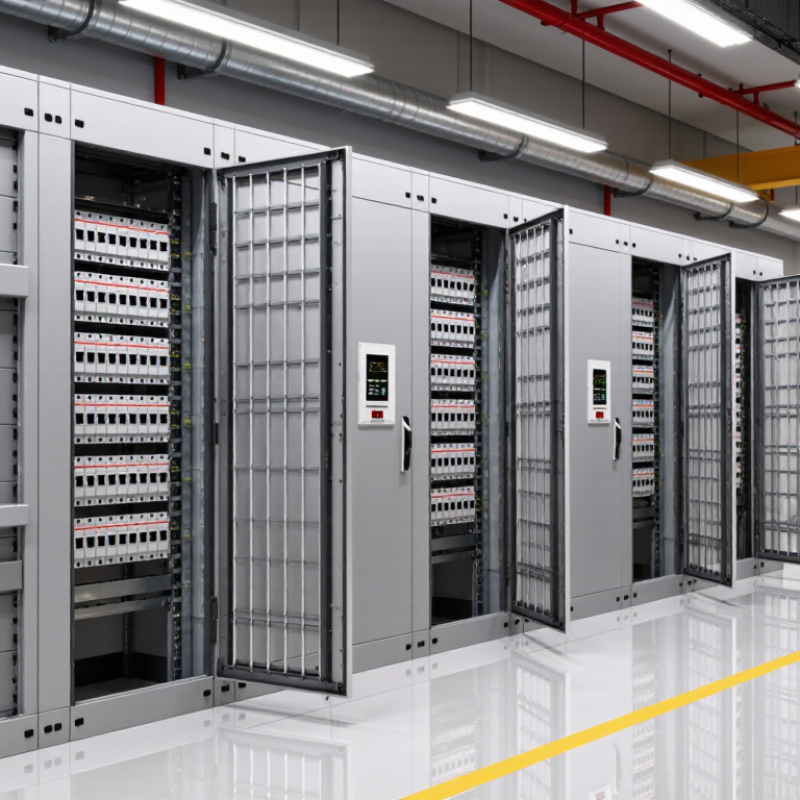
Top MCCB Circuit Breaker Manufacturers for Global Buyers

MCCB Fundamentals: IEC 60947-2, 630–1,600 A, and 10–150 kA Ratings

For global buyers, MCCB selection starts with IEC 60947-2, not a product photograph. This standard covers low-voltage circuit-breakers, including performance, testing, marking, and verification requirements. A credible manufacturer should provide clear test documentation and traceable production records. Ask for the exact edition used.

In heavy commercial and industrial systems, 630–1,600 A MCCBs manage substantial feeder currents. Their rated current must match the conductor, enclosure temperature, and expected load. Derating matters. A 1,000 A label does not guarantee 1,000 A in every installation. Ambient heat, cable grouping, and ventilation can reduce practical capacity. Field experience often exposes this gap.

Short-circuit performance requires closer reading. Ratings from 10 to 150 kA usually refer to breaking capacity, such as Icu or Ics, under specified voltage and test conditions. Icu indicates the ultimate breaking capacity; Ics reflects service performance after testing. They are not interchangeable.

Check the voltage, frequency, pole configuration, and trip-unit settings beside the kA value. A high kA rating may still be unsuitable for a panel with poor coordination or limited busbar strength. That detail is easy to miss.

Reliable purchasing also includes temperature-rise data, accessory compatibility, routine inspection records, and independent certification where required. Some specifications look complete, yet leave installation assumptions unstated. Ask for them.

Global MCCB Standards: IEC, UL 489, Voltage Classes, and Certification Data

For global buyers, an MCCB should be matched to the applicable standard, not selected by appearance alone. IEC 60947-2 is widely used for low-voltage circuit breakers. UL 489 applies to molded-case circuit breakers in North American installations. These standards assess construction, temperature rise, endurance, and interruption performance. The testing route matters.

Voltage data needs close attention. Check rated operational voltage (Ue), insulation voltage (Ui), and impulse withstand voltage (Uimp). A 415 V system may require a different configuration from a 480 V system. Frequency also affects the declared performance. Never assume that a breaker’s frame rating equals its interrupting capacity.

Certification records should identify the exact model, trip unit, pole arrangement, and tested voltage. Review Icu and Ics under IEC documentation, then compare them with the interrupting rating and SCCR information used in UL applications. Certification marks alone are not enough. In procurement reviews, I also check certificate dates, test reports, enclosure conditions, and terminal requirements. A neat document folder can still hide an unsuitable accessory.

Practical testing reveals small problems. Terminals may loosen during thermal cycling. A trip curve may not match the site’s motor starting current. Manufacturers should provide clear datasheets, traceable production records, and installation instructions. Some projects still accept copied certificates, which is a weak practice. The safer decision uses current, model-specific evidence and an independent technical review.

Global MCCB Standards: Maximum Rated Voltage Classes

The chart compares the maximum voltage levels commonly covered by IEC 60947-2 and UL 489 for molded-case circuit breaker applications. IEC 60947-2 covers low-voltage circuit breakers up to 1,000 V AC or 1,500 V DC, while UL 489 generally applies to circuit breakers rated up to 600 V AC or DC. Actual product certification and application suitability depend on the declared ratings and test requirements.

Comparing Leading MCCB Manufacturers by Icu, Ics, and Product Range

Top MCCB Circuit Breaker Manufacturers for Global Buyers

Comparing Leading MCCB Manufacturers by Icu, Ics, and Product Range

Global MCCB selection should begin with Icu, the ultimate short-circuit breaking capacity. It shows the maximum fault current the breaker can interrupt under specified test conditions. A higher Icu may suit industrial panels near powerful transformers. However, Icu alone can mislead buyers. I have seen projects choose high ratings while overlooking operating voltage and installation conditions.

Ics matters during real service. It indicates how effectively an MCCB can interrupt repeated faults and remain operational afterward. For critical facilities, a strong Ics-to-Icu ratio can support better continuity. Check the test standard, voltage, power factor, and number of test operations. Ratings are not interchangeable. A 36 kA rating at one voltage may not apply at another.

Product range also reveals manufacturing capability. Compare frame sizes, rated currents, pole configurations, and adjustable trip units. Electronic protection can provide more precise long-delay, short-delay, instantaneous, and ground-fault settings. Accessories matter too. Shunt trips, undervoltage releases, auxiliary contacts, and motor operators simplify control-panel design. Small details matter. Buyers should verify dimensions, terminal layouts, temperature derating, and coordination data before ordering. A broad catalogue is useful, but it can also create confusion when documentation is incomplete. Independent test reports and clear technical support make comparisons more reliable.

Top MCCB Manufacturers by Region, Application, Production Capacity, and Support

Top MCCB Circuit Breaker Manufacturers for Global Buyers

Regional selection matters because electrical rules and grid conditions differ. In Europe, buyers often request IEC 60947-2 compliance and detailed coordination data. North American projects commonly require UL 489 evidence and field inspection support. Asia-Pacific remains a major manufacturing and construction center.

The IEA Electricity 2024 report expected global electricity demand to grow by about 4% in 2024 and 2025. That pressure increases demand for reliable low-voltage protection. Still, regional delivery experience matters more than a factory’s location alone.

Application should guide the shortlist. Commercial buildings need compact breakers, clear trip settings, and simple maintenance. Data centers demand selective coordination, remote monitoring, and tested short-circuit performance. Industrial plants usually require higher breaking capacity and stable production batches.

Capacity claims need careful checking. Ask for monthly output, testing equipment, quality records, and recent delivery evidence. ISO 9001 certification helps, but it does not replace product testing.

Support is often overlooked. A technically strong manufacturer may still fail when drawings arrive late. I have seen this issue delay panel assembly.

Tips:

Compare at least three regional suppliers. Request test reports against IEC 60947-2 or UL 489. Check certificates with the issuing body. Ask for sample lead times, spare-parts policies, and local engineer response times.

Review five-year failure data when available. A lower purchase price can become expensive after installation. Also, do not trust capacity figures without factory-level evidence.

No supplier is perfect. Your evaluation should record the gaps.

Global Buyer Checklist: Testing, Lead Times, Warranty, and Total Cost of Ownership

Top MCCB Circuit Breaker Manufacturers for Global Buyers

A serious buyer should verify testing before comparing prices. Request routine test records for every production batch. Check insulation resistance, trip performance, temperature rise, and short-circuit capability. Ask whether testing follows the required regional standards. A factory may provide a polished report, but traceable serial numbers matter more. Visit the testing area if the order is large. Look for calibrated instruments, clear procedures, and retained samples. Small gaps here can become expensive failures.

Lead time needs more detail than “ready in 30 days.” Confirm production capacity, component availability, inspection time, packing dates, and shipping terms. Ask what happens when copper, resin, or electronic trip units are delayed. Put these conditions in the purchase agreement. Warranty terms also deserve careful reading. Confirm coverage length, response time, replacement procedures, labor limits, and exclusions for incorrect installation. A warranty without technical support is weak protection.

Total cost of ownership extends beyond the invoice. Include freight, import charges, commissioning, spare accessories, testing, energy losses, and possible downtime. Compare contact wear and adjustment needs over the expected service life. A cheaper breaker can require more maintenance. That is easy to miss. I would also request references from installations with similar load levels and climates. However, references are not proof of universal performance. Dust, heat, humidity, and poor panel ventilation can change results. No checklist is perfect, so record assumptions and review them before approval.

Top MCCB Circuit Breaker Manufacturers for Global Buyers - Global Buyer Checklist: Testing, Lead Times, Warranty, and Total Cost of Ownership

Supplier Category Typical Product Range Applicable Standards Routine Production Tests Type-Test Evidence to Request Typical Lead Time Typical Warranty Indicative Purchase Cost Estimated 10-Year TCO Index Best-Fit Buyer
Global premium manufacturer Thermal-magnetic and electronic MCCBs; approximately 15–1,600 A; breaking capacities commonly up to 100 kA, depending on frame and voltage IEC 60947-2; UL 489 where applicable; regional marking and installation requirements Dielectric withstand, insulation resistance, trip mechanism operation, calibration, terminal integrity, and auxiliary-function checks Independent short-circuit, temperature-rise, endurance, dielectric, and overload/instantaneous-trip test reports for the exact frame and rating 4–10 weeks for standard configurations; 8–16 weeks for engineered options or large-volume orders 12–24 months, subject to installation, storage, and operating conditions High; typically 1.5–3.0 times the cost of a basic value-range MCCB with similar headline current rating 100 Critical infrastructure, data centers, industrial plants, and projects requiring strong documentation and service support
Established regional manufacturer Thermal-magnetic and selected electronic models; approximately 16–800 A; breaking capacities commonly 25–70 kA IEC 60947-2 or applicable national equivalent; selected products may carry UL, CE, or other market approvals Visual inspection, mechanical operation, insulation checks, trip-current verification, contact resistance, and accessory testing Certificate of conformity, laboratory test report, temperature-rise results, short-circuit performance, and endurance data 3–8 weeks for standard products; 6–12 weeks for accessories, customization, or export documentation 12–18 months is common; confirm whether labor, freight, and replacement parts are included Medium; typically 1.0–1.8 times the cost of an entry-level equivalent 92 Commercial buildings, OEM panels, infrastructure contractors, and buyers balancing compliance with budget
Export-oriented value manufacturer Mainly thermal-magnetic MCCBs; approximately 16–630 A; breaking capacities commonly 18–50 kA IEC 60947-2 for relevant models; verify regional approval for the destination market Operating-cycle checks, dielectric withstand, insulation resistance, trip calibration, appearance, and dimensional inspection Current-model type-test report, laboratory accreditation, short-circuit rating at the required voltage, and production consistency records 2–6 weeks for stock or standard orders; 5–10 weeks for private-label or customized configurations 12 months is common; clarify claim procedures and availability of replacement accessories Low to medium; typically 0.7–1.2 times the cost of a regional equivalent 88 Standard distribution boards, general industrial loads, project contractors, and cost-sensitive export buyers
OEM/private-label manufacturer Configurable thermal-magnetic or electronic MCCBs; approximately 63–1,600 A; ratings depend on the underlying platform IEC 60947-2, UL 489, or customer-specified standards; certification must match the branded product and final market Standard routine tests plus label verification, accessory compatibility, torque checks, packaging inspection, and batch traceability Written confirmation that test reports cover the exact electrical design, frame, accessories, trip unit, and private-label configuration 6–12 weeks initially; 3–8 weeks for repeat production after approval and forecast confirmation 12–24 months by contract; remedy, spare-part stock, and technical-support terms require detailed negotiation Medium; tooling, labeling, certification, minimum order quantity, and engineering fees can increase the initial cost 95 Distributors, panel builders, electrical wholesalers, and buyers seeking customized packaging or product identity
Application-specialist manufacturer Electronic-trip, motor-protection, generator, marine, mining, or high-temperature variants; approximately 100–1,600 A IEC 60947-2 plus relevant sector, environmental, marine, or hazardous-location requirements where applicable Trip-unit programming, sensor verification, communication checks, dielectric tests, thermal checks, and application-specific functional testing Environmental, vibration, temperature-rise, short-circuit, electromagnetic compatibility, and application-specific certification evidence 8–18 weeks, depending on engineering approval, configuration, and project documentation 12–24 months; service response time and field-support coverage should be written into the purchase agreement High; purchase price may be offset by reduced nuisance tripping, better selectivity, and lower application risk 98 Large motors, generators, marine systems, process industries, mining, and installations with demanding protection coordination
Buyer checklist and calculation basis: The comparison uses representative market ranges rather than company-specific claims. Confirm the exact frame size, rated operational voltage, frequency, rated ultimate and service short-circuit capacities, trip-unit settings, accessories, certifications, Incoterms, freight, import duties, spare parts, and after-sales support before purchase. The 10-Year TCO Index is an illustrative benchmark in which 100 represents the lowest expected lifecycle cost for a typical compliant installation. It considers purchase price, freight, commissioning, testing, maintenance, downtime exposure, spare parts, warranty coverage, and replacement risk; it is not a quoted price or guarantee.
Go to Top