

Top 10 PS Sheet Extrusion Line Manufacturers Worldwide
Polystyrene sheet serves packaging, stationery, display, and thermoforming applications. A Ps Sheet Extrusion Line must therefore do more than produce a steady web. Buyers assess output stability, sheet thickness control, roll quality, energy use, and the support available after installation. Details matter: an extruder, screen changer, flat die, cooling rolls, and trimming system must work as a coordinated process.
The OECD’s Global Plastics Outlook (2022) estimated that global plastics production reached 460 million tonnes in 2019, up from 234 million tonnes in 2000. This figure describes plastics broadly, not polystyrene sheet alone. It signals the scale of the wider processing industry, but it should not be treated as a forecast for any individual machine market. Environmental performance also matters. The same report highlights growing plastic waste and the need for better resource efficiency.
This guide compares ten manufacturers worldwide through practical criteria: extrusion technology, product range, customization, documented project experience, and service coverage. These factors can help readers form a shortlist, but they cannot replace factory audits or sample-sheet trials. A polished brochure is not proof of consistent production. Some supplier claims are difficult to compare directly, and that deserves caution. The right choice depends on the target material, sheet width, thickness, output, and local maintenance capacity. No ranking can fit every plant.
What a PS Sheet Extrusion Line Is and How It Works
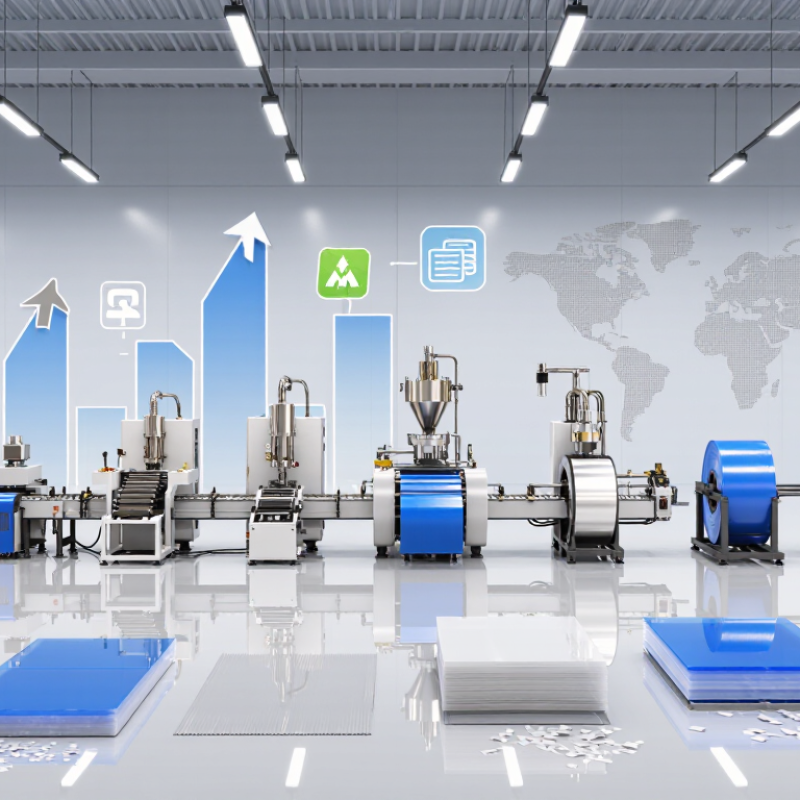
A PS sheet extrusion line turns polystyrene pellets into continuous, flat plastic sheet. The pellets enter a heated barrel, where a rotating screw conveys, melts, and mixes them. A screen pack catches many contaminants before the melt passes through a wide, flat die. The die spreads the material into a ribbon. Temperature, screw speed, and output must stay reasonably steady; otherwise, thickness and surface quality can vary.
The hot sheet then travels through chilled rollers, which cool it and help control its gauge. Operators check the sheet with measuring tools, trim uneven edges, and either wind the finished roll or cut sheets to length. Small changes matter. Clear general-purpose polystyrene and tougher impact-modified grades may behave differently, so settings should match the material and product requirements. In practice, roller alignment and cooling can be just as important as the extruder itself. A sheet may look smooth at first, yet show uneven thickness after measurement. That is a useful reminder: visual checks alone are not enough. Careful setup, routine checks, and recorded process settings help teams identify problems and repeat acceptable results.
Top 10 PS Sheet Extrusion Line Manufacturers Worldwide - What a PS Sheet Extrusion Line Is and How It Works
A practical, non-ranked overview of ten common stages and components in a polystyrene (PS) sheet extrusion line. No manufacturers or brands are listed.
| No. | Line Stage or Component | How It Works | Practical Data and Selection Notes |
|---|---|---|---|
| 1 | Material feeding | Feeds PS pellets, and any approved additives or regrind, into the extrusion system at a controlled rate. | Feeders and hoppers are selected for the resin form, throughput, and recipe. Material consistency helps maintain stable sheet output. |
| 2 | Blending and dosing | Meters and mixes the base resin with colorants, impact modifiers, or other formulation components when required. | The formulation depends on the intended sheet properties and end use; additives should be compatible with the selected PS grade. |
| 3 | Extruder and screw | A rotating screw conveys, melts, and mixes the thermoplastic material inside a heated barrel. | Screw design, diameter, and drive capacity are matched to resin, output target, and sheet requirements. Single-screw extruders are commonly used for thermoplastic sheet production. |
| 4 | Melt filtration | A screen pack or screen changer filters solid contaminants from the molten polymer before it reaches the die. | Filter selection balances cleanliness, pressure drop, resin condition, and the required sheet quality. Screen changes may be manual or continuous, depending on the equipment. |
| 5 | Melt pump (optional) | A gear pump can meter the melt and help deliver a more consistent flow to the die. | Whether a pump is appropriate depends on line design, melt pressure, output requirements, and the need for flow stability. |
| 6 | Flat (T-) die | Distributes the molten PS across the sheet width and forms a continuous flat web as the melt exits the die. | Die width and gap adjustment are chosen for the target sheet dimensions and thickness. Even flow across the die is important for uniform sheet formation. |
| 7 | Calendering and cooling rolls | A roll stack draws, gauges, smooths, and cools the hot sheet. Many sheet lines use a three-roll arrangement. | Roll temperature, gap, pressure, and speed affect thickness, surface finish, and cooling. Settings depend on the PS grade and product specification. |
| 8 | Haul-off and thickness control | Pull rolls move the cooled sheet through the line. Measurement and control systems can monitor thickness and help operators keep it within specification. | Line speed and roll settings must be coordinated with melt output and cooling. Actual tolerances are defined by the product specification and measurement method. |
| 9 | Edge trimming and scrap handling | Trimming knives remove uneven edges. Suitable clean scrap may be collected and processed for controlled reuse. | Regrind use depends on the required appearance and performance, material cleanliness, and the product specification; it is not automatically suitable for every application. |
| 10 | Cutting, stacking, or winding | The finished sheet is cut to length and stacked, or wound into rolls when the product format and sheet flexibility allow it. | The take-off system is selected for sheet thickness, width, stiffness, and downstream handling requirements. |
Note: This is a general process overview, not a manufacturer ranking or a specification for a particular production line. Equipment configuration and operating settings vary by material grade, product design, and required output.