Top Suppliers of Thermoforming Molds in China
Choosing among the top suppliers of Thermoforming Molds in China takes more than comparing prices or polished catalog photos. A mold must match the material, part geometry, machine, and expected production volume. A thin-walled tray, for example, may need different cooling and venting choices from a deep-draw enclosure. Small design decisions can affect cycle time, surface finish, and scrap rates.
Plastics manufacturing researcher Dr. David Kazmer offers a useful perspective: tooling, part design, and process capability should be assessed together. This is a paraphrase of his broader manufacturing perspective, not a verbatim quotation. It points to a practical question for buyers: can a supplier explain how its mold design will work on your actual production line? Ask for details on mold materials, cooling layout, machining precision, testing procedures, and after-sales support. Request relevant project examples, and confirm what inspection records the supplier can provide.
A capable supplier should discuss trade-offs clearly, not promise that every mold will run perfectly from the first trial. Details matter. This guide introduces leading Chinese suppliers and the factors that help distinguish them, including technical experience, communication, quality controls, and customization capability. Company information and capabilities can change, so treat any shortlist as a starting point. Verify claims directly, review samples or trial results where practical, and make sure the proposed mold fits your product and production conditions. No shortlist is perfect. That deserves a second look.
China’s Thermoforming-Mold Suppliers: Landscape and Tooling Types
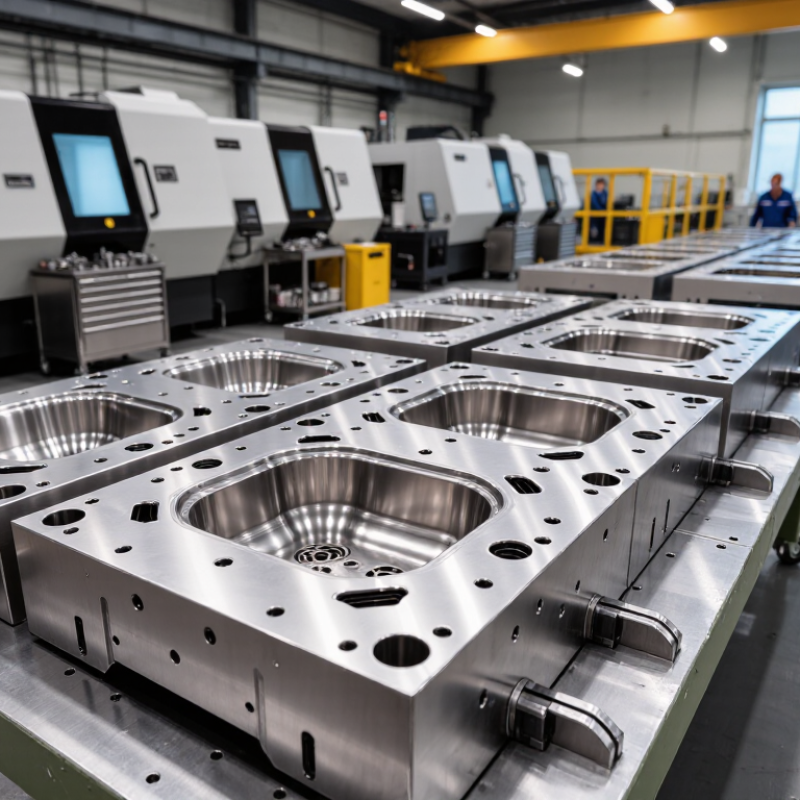
China’s thermoforming-mold suppliers range from precision tool shops to integrated manufacturers offering design, machining, trials, and repairs. Their tools serve food trays, medical packaging, appliance liners, and other formed-plastic products. Buyers compare sheet size, cavity count, cycle targets, and after-sales support. Small details matter. A poorly positioned cooling channel can leave uneven walls or slow part release.
Common options include aluminum molds, which transfer heat quickly and suit shorter runs, and steel molds, which withstand repeated production. Single-cavity tools can support pilot runs; multi-cavity designs increase output but require careful heating and trimming control. Plug-assist tooling helps form deeper parts. Trim dies are often specified separately, though edge quality affects assembly and material waste. The package is not always obvious.
Grand View Research valued the global thermoforming plastics market at USD 48.4 billion in 2023. Its 2024 report forecasts 5.4% annual growth through 2030. These figures indicate demand, not Chinese mold sales. Buyers can request resin-specific trial records, wall-thickness measurements, cooling-cycle data, and spare-part drawings. Those details reveal more than a polished sample. Quotations may exclude trim tooling, sampling, or design revisions, so compare their scope carefully.
Vacuum Forming’s ~0.10 MPa Pressure Differential and Design Limits
Top Suppliers of Thermoforming Molds in China
Vacuum Forming’s ~0.10 MPa Pressure Differential and Design Limits
Vacuum forming relies on atmospheric pressure to press a heated plastic sheet against a mold. At sea level, the theoretical pressure difference is about 0.10 MPa. In production, leaks, altitude, and vacuum-system performance reduce the usable difference. It is not unlimited force.
That limit shapes mold design. Deep draws can thin the sheet, especially around corners and narrow features. Generous radii, sensible draft, and well-placed vacuum holes help the material settle more evenly. A small test piece can reveal trouble early. Watch the corners.
For buyers comparing thermoforming mold suppliers in China, ask how they assess draw depth, vent placement, and expected wall thickness—not just surface finish. A supplier should discuss the part’s geometry and material before promising a result. Pressure alone cannot fix poor sheet heating or uneven clamping. One detail is easy to overlook: tiny vents can leave marks, while too few may trap air. The trade-off is real, and it deserves a trial run. Even a carefully designed mold may need adjustment after the first formed parts are measured.
Vacuum Forming Pressure Differential and Design Limits
At standard sea-level atmospheric pressure (about 101.3 kPa), the pressure differential is approximately atmospheric pressure minus the chamber’s absolute pressure. The chart values are calculated examples: the theoretical sea-level maximum is about 101 kPa, while practical results depend on altitude, leaks, equipment, material temperature, and part geometry.
Tooling Materials: 6061 Aluminum (~167 W/m·K) vs. P20 Steel (~29 W/m·K)
For thermoforming molds, the conductivity gap between 6061 aluminum and P20 steel can shape cooling behavior. Typical reference values are about 167 W/m·K for 6061 and 29 W/m·K for P20. Aluminum moves heat away from the formed sheet much faster. That can support shorter cooling cycles, especially on broad, shallow tooling. But a number on a data sheet is not a cycle-time guarantee. Channel layout, wall thickness, and coolant flow matter too.
A shop-floor check is useful. After a short production run, compare temperatures at the mold face and near the cooling passages. Aluminum often responds quickly, while P20 may retain heat longer between cycles. There are trade-offs. P20 is generally harder and more resistant to wear, which can matter with abrasive sheet materials or long production runs. 6061 is easier to machine, but its lower hardness may bring faster surface damage. Not a perfect comparison: alloy condition and mold design change the result.
For a supplier review, ask how the tool will be used, not just which metal is cheaper. Request material documentation, cooling-channel details, and a realistic cycle estimate based on the intended sheet and part geometry. Thermal conductivity is a strong clue, not the whole story. I would still verify it with a trial run.
Supplier Evaluation: Quality Systems, Tolerances, Capacity, and Lead Times
Choosing a thermoforming mold supplier in China means checking evidence, not polished factory photos. ISO’s 2022 Survey counted 1,265,216 ISO 9001 certificates worldwide. That figure shows broad adoption, not mold-making skill. Ask for the supplier’s audit scope, calibration logs, nonconformance records, and corrective-action examples from similar tooling projects.
A reliable quote ties tolerances to your drawings instead of promising “high precision.” Request cavity-by-cavity CMM results, steel certificates, and a first-article inspection report. Check critical dimensions after the mold reaches stable operating conditions. Even a neat report can miss a practical issue: a part may release poorly despite meeting its dimensions. Ask how the supplier records forming trials and adjusts plugs, vents, or cooling.
For capacity, confirm which CNC, EDM, and polishing processes are in-house. Ask how many molds are active and who covers critical work during equipment downtime. Lead time should show separate dates for design approval, machining, assembly, trial, and corrections. Not one optimistic number. I would also ask for recent delivery records on comparable molds; a promised schedule is easy to write, while a documented schedule is harder to dismiss.
Leading Chinese Suppliers: Processes, Industries Served, and Verified Metrics
Top suppliers of thermoforming molds in China should be assessed by process capability, not catalog breadth alone. Ask how they machine aluminum tools, manage cooling channels, and check surface finish. A useful supplier can explain when a single-cavity prototype is enough and when multi-cavity tooling makes sense. Details matter. Request evidence such as dimensional inspection reports, sample-part measurements, and documented mold trials. Check whether reported tolerances apply to the finished part or only the mold; the distinction is easy to miss.
Industries served often include food packaging, medical trays, appliance liners, and automotive interior components. Each brings different needs for material compatibility, wall thickness, edge quality, and production speed. Compare suppliers using verifiable metrics: quoted lead time, trial cycles, cavity count, defect rate, and annual output capacity. Ask for the measurement period and calculation method behind each figure. A low defect rate sounds useful, but without a sample size, it says little.
Where possible, review parts made from the intended sheet material and inspect trim edges under consistent lighting. Confirm that the supplier can share inspection records and explain corrective actions from previous trials. Some claims may still be hard to verify remotely. That deserves scrutiny. A practical scorecard, supported by samples and dated reports, gives buyers a clearer basis for comparing suppliers than polished sales language alone.