

What Are the Top Types of Cereal Bar Cutting Machines?

Choosing a Cereal Bar Cutting Machine starts with the bar itself. A soft oat mixture, a dense protein slab, and a chocolate-coated snack do not cut in exactly the same way. Ingredients, temperature, thickness, and coating can all affect the finished edges. Small details matter.

Common options include guillotine, rotary, ultrasonic, and wire-cutting systems. Guillotine machines use a descending blade and can divide formed slabs into consistent lengths. Rotary cutters use rotating blades, often supporting continuous production. Ultrasonic systems vibrate a blade at high frequency, which may help limit drag on sticky or delicate products. Wire cutters can suit softer mixtures, though wire tension and product firmness need careful adjustment. None is ideal for every recipe.

This guide compares these machine types by cutting method, typical applications, and practical trade-offs. It also considers factors buyers should check, such as target output, product dimensions, cleanability, adjustment needs, and blade maintenance. A machine that performs well on a dry cereal bar may struggle with a warm, tacky coating. That can be easy to overlook.

Specifications are useful, but they cannot replace a product trial. Ask suppliers to test representative bars, including the recipe and temperature used in real production. Inspect cut surfaces, crumbs, portion consistency, and changeover time. There is no universal winner. The right choice depends on the product, production line, and the compromises a manufacturer can accept.
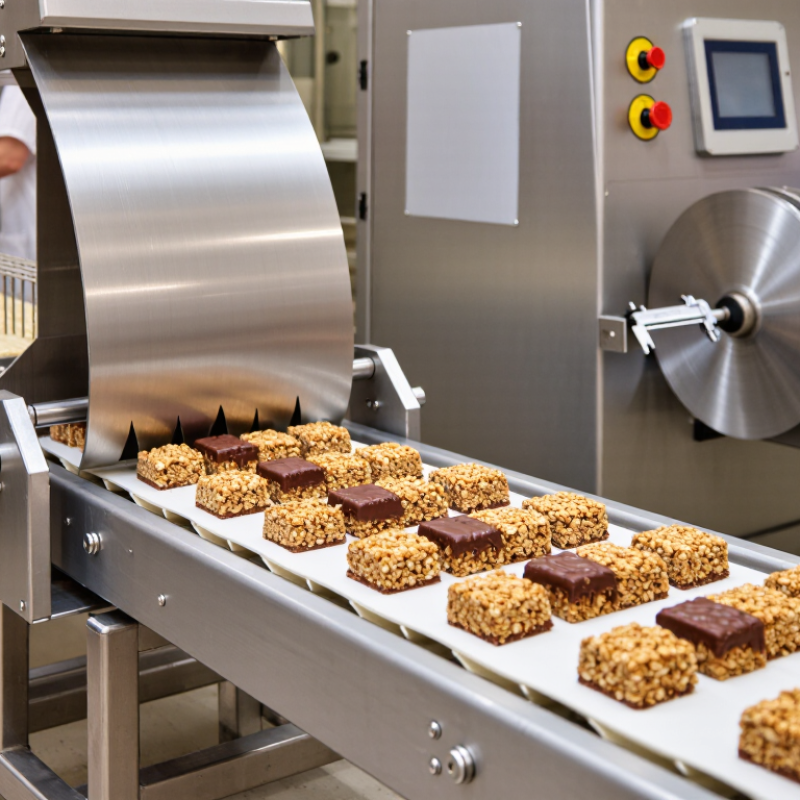
What Are the Top Types of Cereal Bar Cutting Machines?

Guillotine Cutters for Straight, Portion-Controlled Cereal Bars

Guillotine cutters use a vertically descending blade to divide a cereal slab into straight, repeatable portions. A conveyor advances the slab, then pauses or indexes it beneath the blade. This approach suits bars with square edges and defined lengths, especially when each piece must fit a wrapper or tray.

The cut depends on more than blade sharpness. Slab thickness, temperature, and ingredient distribution can all affect portion size. A warm, sticky bar may cling to the blade; a dry one may crumble at the edges. Operators often adjust blade timing, spacing, and hold-down pressure after checking samples from the line. Small changes matter. A few millimeters can create noticeable weight differences across a batch.

Guillotine systems are useful for controlled, straight cuts, but they are not automatically ideal for every recipe. Dense bars may need a slower stroke, while delicate inclusions can shift under pressure. That part is easy to overlook. A practical trial should measure both piece weight and edge quality, using bars taken from different points in the slab. Cleaning access and guarded moving parts also deserve attention during equipment selection. A tidy cut is helpful, but consistent results still depend on the product and setup.

Rotary Blade Cutters for Continuous, High-Speed Production

Rotary blade cutters suit cereal bars when production must run continuously at high speed. A rotating knife meets the moving slab at a controlled point, creating repeated cuts without stopping the conveyor. Operators can adjust blade speed and spacing to match line speed and target bar length. The approach works best when the cereal mass is evenly formed and cooled enough to hold its shape. Otherwise, sticky edges or loose inclusions can leave ragged cuts. Small details matter: keep the blade clean, check alignment, and inspect the first bars after each adjustment.

Demand helps explain the interest in dependable throughput. The International Food Information Council’s 2024 Food & Health Survey reported that 70% of Americans snack at least once a day. Grand View Research estimated the global cereal bar market at about $11.6 billion in 2023, with projected growth through 2030. These figures signal a large snack category, not a guaranteed sales forecast for any single factory. Speed alone is not the whole story. A rotary cutter can reduce stop-start losses, but blade wear, product temperature, and feed consistency still shape the final result. One practical trade-off deserves attention: faster cutting may increase crumbs or deform soft bars. Track waste and cut quality during real production runs, not only during setup.

What Are the Top Types of Cereal Bar Cutting Machines? - Rotary Blade Cutters for Continuous, High-Speed Production

Machine Type Cutting Method Production Mode Best Suited For Key Advantages Considerations
Rotary blade cutter A rotating blade cuts a continuous sheet or slab into portions as it moves through the machine. Continuous; well suited to synchronized conveyor lines and multi-lane production. Regularly shaped cereal, granola, and snack bars made from a consistent slab. Supports high-throughput operation, repeatable portion length, and integration with upstream forming and downstream packaging equipment. Blade speed and conveyor speed must be coordinated. Sticky, brittle, or chunky recipes may require adjustments to blade geometry and cutting settings.
Reciprocating guillotine cutter A straight blade moves down through the product and retracts after each cut. Intermittent or indexed; can also be integrated into automated lines. Bars or slabs that need a straight crosscut, especially where cutting flexibility is important. Simple cutting action and adaptable cut length; can handle products that are less suitable for a continuously rotating blade. The repeated blade cycle can limit throughput compared with a well-matched continuous rotary system.
Ultrasonic cutter A vibrating blade cuts through the product while reducing sticking and drag at the cutting edge. Continuous or indexed, depending on line design. Soft, sticky, layered, or coated bars that tend to deform or cling to conventional blades. Can produce clean cuts with less product pull and buildup on the blade when the recipe and settings are suitable. Requires specialized equipment and process setup; performance depends on product composition, temperature, and cut dimensions.
Wire cutter Tensioned wires pass through a slab or product to create portions. Usually indexed or batch-style, though automated configurations are available. Soft or delicate products where a thin cutting element can help limit compression. Thin wires can reduce the cutting footprint and may suit products that are easily crushed by a thicker blade. Wires need regular inspection and tensioning; very hard inclusions or sticky mixtures can make cutting less consistent.
Rotary slitter Parallel circular knives divide a continuous slab into long strips; a crosscutting unit can then form individual bars. Continuous, typically used for longitudinal cutting before crosscutting. Wide slabs that need to be divided into multiple lanes or bar widths. Enables continuous lane formation and can be combined with rotary or guillotine crosscutting. Knife spacing determines strip width. The slab must feed evenly to maintain consistent lanes and minimize edge waste.

Note: Actual output and cut quality depend on bar dimensions, recipe, slab temperature, blade design, number of lanes, and line synchronization. Rotary blade cutters are commonly selected for continuous, high-speed production when the product and process are suited to rotary cutting.

Ultrasonic Cutters for Clean Cuts in Sticky or Delicate Bars

Ultrasonic cutters can help produce clean edges on sticky or delicate cereal bars. Their rapidly vibrating blades may reduce drag, limiting the squashing and pulling that can occur with dense syrups, soft fruit, or chocolate coatings. The result is often a neater cut face and fewer crumbs around the blade. Small details matter. Bar temperature, recipe, thickness, and line speed all affect cutting quality, so one setting rarely suits every product.

Tips: Test a few bars before a full run. Check the cut edges, bar shape, and blade buildup. Adjust one setting at a time, and record what works.

Ultrasonic cutting is not a fix for every production problem. If bars are too warm or unevenly formed, cuts may still look rough. A blade can also need cleaning, even when vibration reduces sticking. During trials, inspect several bars from different points on the line, not just the first piece. Look for compressed corners, loose inclusions, or thin syrup strands between portions. These clues can show whether the issue comes from the cutter or from the bar itself. Setup can be a little fussy, but careful testing gives operators useful evidence before changing the whole process.

Wire Cutters for Soft Bars and Multi-Layer Products

What Are the Top Types of Cereal Bar Cutting Machines?

Wire Cutters for Soft Bars and Multi-Layer Products

Wire cutters suit soft cereal bars that may compress under a blade. Tensioned wires pass through the slab and divide it into portions with limited downward pressure. This can help preserve soft fillings and visible layers. For layered bars, wire spacing and feed speed need careful adjustment. If the product shifts during cutting, the edges may look uneven. Small changes matter.

Tips: Test a few bars before setting a full production run. Keep product temperature consistent, and inspect cut edges for smearing or crushed layers. If wires bow or drag, check tension and reduce feed speed within the machine’s operating limits. Clean wires regularly, especially when bars contain sticky syrup or chocolate.

Wire cutting is not automatically the best choice for every recipe. Nuts, dense inclusions, or a firm outer coating can interrupt a smooth cut. A short trial with the actual product can reveal problems that a sample block may not show. A neat cut is only part of the result; portion weight and layer alignment deserve attention too. Some adjustments may need repeating. That’s normal.

Slitting Machines for Dividing Wide Cereal Bar Sheets into Strips

What Are the Top Types of Cereal Bar Cutting Machines?

Slitting Machines for Dividing Wide Cereal Bar Sheets into Strips

Slitting machines turn a cooled, wide cereal-bar sheet into parallel strips before cross-cutting. Adjustable knife spacing helps operators match strip width to the finished product. On the line, watch how bars with nuts or sticky syrups pass beneath the blades. These ingredients can cause drag, uneven edges, or crumbs. Clean cuts matter, but they are not the whole story.

PMMI’s 2023 State of the Industry report valued U.S. packaging machinery shipments at $10.9 billion, up 6.4% from 2022. This broad figure reflects investment across packaging machinery; it does not guarantee that a slitter will improve a specific line. Assess cutting accuracy, sheet thickness, changeover time, and how quickly staff can clean the blade area. A machine may run fast yet create more waste if the sheet shifts or knives become coated.

Tips: Test the slitter with your actual recipe, not a plain sample. Check strip width at several points across the sheet. Sticky residues can build up, so include blade cleaning in the production plan. Even a small width variation may affect later packing.

Go to Top