

What Are the Top 10 Glasses With a Camera in Them?
Glasses With A Camera In Them are moving from novelty gadgets toward practical wearable computers. Tiny cameras now sit beside lenses, while microphones, speakers, and artificial intelligence support hands-free recording, translation, navigation, and visual assistance. The best models must do more than capture sharp video. They should feel light, protect privacy, manage battery heat, and remain comfortable during ordinary conversations.
Market research supports this shift. Grand View Research estimates that the global smart glasses market will expand strongly through 2030, driven by artificial intelligence, augmented reality, and enterprise applications. IDC’s wearable-device reporting also shows continuing investment in head-worn technology, although camera-equipped glasses are not always measured as a separate category. That reporting gap matters. Some market figures combine display glasses, industrial viewers, and camera glasses, making direct comparisons imperfect.
Andrew Bosworth, Meta’s chief technology officer, described the opportunity simply: “Glasses are the ideal form factor for AI.” That idea shapes this guide. The following list examines ten leading options through camera quality, audio performance, battery behavior, software support, comfort, and privacy controls. It also considers real situations: filming a bicycle ride, answering a call in a busy café, or capturing a short voice note while carrying groceries.
No model is flawless. A camera may struggle indoors. Battery claims can feel optimistic. Privacy indicators may not reassure everyone. These weaknesses deserve attention, not marketing language. Readers should verify regional features, app compatibility, storage policies, and current prices before buying. The ranking aims to be useful, but wearable technology changes quickly—and some “top” choices may age faster than expected.
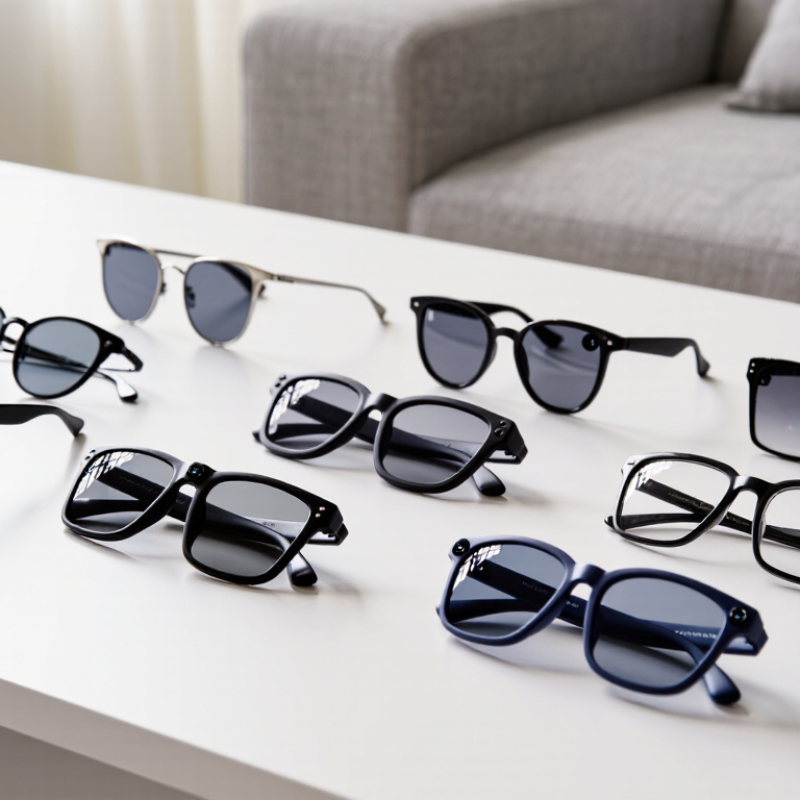
What Defines Camera-Equipped Glasses and How They Work
Camera-equipped glasses combine ordinary eyewear with a miniature imaging system. A small camera sits near the frame or bridge, capturing still images or short video. A processor manages the sensor, microphones, wireless connection, and storage. Some models send files to a phone, while others process basic functions locally. A visible recording light can signal activation, although indicators are not always easy to notice outdoors.
Grand View Research estimates that the global smart glasses market will expand strongly through 2030, driven by wearable computing and hands-free interfaces. Counterpoint Research also reported continued growth in smart-glasses shipments during 2024. These figures include products without cameras, so they should not be treated as direct camera-glasses sales. The category is still difficult to measure.
In real use, camera glasses work best for quick, first-person moments. Users can capture a street view, read visual information, or document a repair while keeping both hands free. Battery life remains a practical weakness. Small frames leave little room for power cells, and video recording drains them quickly. Image quality can also change under bright sunlight or indoor shadows. Marketing language sometimes hides these limits. A good evaluation should check resolution, stabilization, storage, audio quality, charging time, and privacy controls. The most important feature may be the simplest one: a clear recording indicator.
| Rank | Glasses Type | Camera Placement | Typical Capture Capability | How They Work | Power and Storage | Privacy Features | Best-Suited Use |
|---|---|---|---|---|---|---|---|
| 1 | Everyday Smart Glasses | Small forward-facing camera integrated into the front frame or bridge | Still images and short video clips; commonly wide-angle capture for first-person views | A physical button or voice command activates the camera. A mobile application may transfer files through Bluetooth or Wi-Fi. | Rechargeable lithium-ion battery; internal storage is usually limited and files are often synchronized to a phone | Visible recording lightManual control | Hands-free memories, travel, daily activities, and accessibility assistance |
| 2 | Audio-Enabled Camera Glasses | Camera positioned near one hinge or at the upper corner of the frame | Short first-person videos, photographs, microphones for recorded sound, and open-ear audio | The camera, microphones, speakers, and wireless connection are controlled through frame buttons, a phone, or voice commands. | Small rechargeable battery; continuous recording is restricted by battery capacity, heat, and storage limits | Recording indicatorMute control | Quick social content, calls, navigation prompts, and hands-free documentation |
| 3 | Sports Camera Glasses | Centered above the nose bridge or aligned with the wearer’s forward field of view | Wide-angle video designed to capture cycling, skiing, running, or other moving activities | An action-oriented camera records from the wearer’s viewpoint. Stabilization may reduce shake, while a phone is used for settings and playback. | Rechargeable battery; storage may be internal or removable, depending on the design | Status lightWeather-resistant casing | Outdoor sports, first-person training footage, and activity review |
| 4 | Safety and Industrial Camera Glasses | Camera embedded in a protective frame, brow bar, or detachable front module | Documentary photographs, short clips, remote visual support, and task verification | The camera can transmit a worker’s viewpoint to a phone, tablet, or remote support system over a wireless network. | Replaceable or rechargeable battery options; operation time depends on streaming, brightness, and network use | Recording indicatorProtective eyewear standards may apply | Inspections, maintenance, training, field service, and workplace documentation |
| 5 | Prescription Camera Glasses | Miniature camera concealed within or attached to a prescription-compatible frame | Still images and brief video while retaining corrective lenses | The optical lenses correct vision, while the separate camera module captures the scene along the wearer’s viewing direction. | Rechargeable battery and compact local storage; transfer generally requires a companion device | Recording lightPhysical shutter or button on some designs | Users who need vision correction and hands-free image capture |
| 6 | Accessibility-Oriented Camera Glasses | Forward-facing camera mounted near the bridge or temple | Scene recognition, text reading, object identification, and optional image capture | Computer-vision software processes camera input and may describe detected text or objects through a speaker, phone, or connected service. | Battery life varies with camera use and wireless processing; many functions depend on a connected smartphone or network | Audible status feedbackVisible indicator | Reading assistance, navigation support, object recognition, and independent daily tasks |
| 7 | Live-Streaming Glasses | Wide-angle camera integrated into the front frame | Real-time video transmission, still images, and synchronized audio | Captured video is compressed and sent through a paired phone or wireless network to a streaming platform or private viewer. | High power consumption during streaming; battery capacity and network strength limit session length | Prominent recording lightPrivacy controls | Live events, remote demonstrations, guided assistance, and field reporting |
| 8 | Augmented-Reality Camera Glasses | One or more cameras positioned on the front or sides of the frame | Environmental mapping, hand tracking, spatial awareness, and optional photo or video capture | Cameras provide visual data to onboard or connected software, which can anchor digital information to physical surroundings. | Usually requires a relatively high-capacity battery; processing may be split between the glasses and a connected device | Recording indicatorPermission controls | Training, navigation, visualization, research, and interactive applications |
| 9 | Modular Camera Glasses | Detachable camera module mounted on the bridge, temple, or front accessory rail | Camera performance depends on the selected module; common functions include photographs and short video | The removable module connects to the frame mechanically and communicates with a phone through a wireless link or cable. | Separate module battery or shared frame battery; storage may be internal, removable, or phone-based | Removable cameraPhysical power switch | Users who want to switch between ordinary eyewear and camera-equipped eyewear |
| 10 | Research and Prototype Camera Glasses | Camera locations vary, including the bridge, temples, lenses, or multiple frame positions | Eye tracking, gaze studies, head-position data, scene recording, and experimental computer vision | Multiple sensors collect synchronized visual and motion data for analysis by specialized software, often through a computer or research device. | External battery packs or tethered power are common in research systems; storage capacity depends on the study design | Research consent controlsRecording indicator | Human-computer interaction, ergonomics, medical research, and controlled testing |