Why Choose NTC Heaters for Global Sourcing?
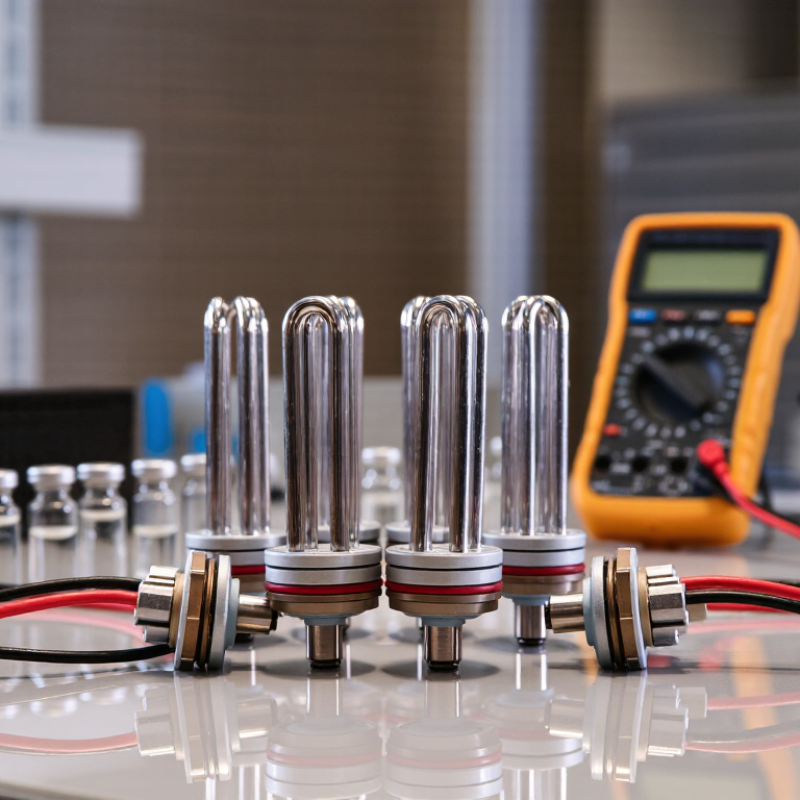
Global sourcing decisions often begin with a simple question: can the component perform reliably across different markets and operating conditions? For many equipment manufacturers, the answer includes the Ntc Heater. This compact heating element supports controlled warming in sensors, medical instruments, automotive systems, battery packs, and industrial equipment. Its negative temperature coefficient allows resistance to decrease as temperature rises, helping designers manage heat with responsive control.
“An NTC device is only as reliable as the temperature control system around it,” says Dr. Thomas H. Wenzel, an experienced thermistor applications specialist. His point deserves attention. A capable supplier should provide resistance-temperature curves, tolerance data, insulation details, and documented production controls. Those details matter when a heater operates inside a narrow metal tube or starts repeatedly in a cold warehouse.
Global sourcing can also improve access to ceramic materials, custom lead lengths, molded housings, and automated testing. A qualified manufacturer may offer samples, traceability records, and batch comparison reports before mass production. That reduces unpleasant surprises during assembly. Still, no sourcing plan is flawless. Shipping delays happen. Specifications can be interpreted differently. A spreadsheet cannot capture every failure.
Buyers should therefore assess more than price. They should review thermal response, wattage stability, operating life, moisture resistance, and supplier communication. Factory audits, incoming inspection, and controlled samples add practical confidence. The best Ntc Heater partner is not simply the cheapest factory. It is the supplier that explains limitations clearly, documents performance honestly, and improves when testing reveals a weakness.
Define NTC Heater Technology Through 2,000–5,000 K B-Values
Why Choose NTC Heaters for Global Sourcing?
NTC heater technology depends on predictable resistance changes as temperature rises. The B-value, measured in kelvin, describes this curve. Typical specifications range from 2,000 to 5,000 K. A lower B-value usually produces a gentler resistance change. A higher B-value creates stronger thermal sensitivity within the same temperature range.
The relationship is commonly assessed with the Steinhart–Hart equation or a simplified beta equation. Engineers should compare B25/50, B25/85, or another stated reference, rather than comparing numbers alone. A 3,400 K component may behave differently from another 3,400 K component if tolerances, materials, or test temperatures differ. That detail matters.
In practical sourcing, request resistance tolerance, operating temperature, thermal response time, insulation data, and test conditions. Check whether the component is used for sensing, inrush control, or direct heating. These functions require different designs. I have seen early selections fail because the B-value looked suitable, but the assembly responded too slowly in airflow. A first selection is rarely perfect. Test samples under real voltage, mounting pressure, and ambient conditions. Documentation should also cover electrical safety, material traceability, and applicable regional requirements. Global sourcing becomes more reliable when suppliers provide consistent measurement methods, not merely attractive datasheet figures.
Verify Global Compliance with IEC 60539-1, UL 499, and RoHS
Why Choose NTC Heaters for Global Sourcing?
Global sourcing requires more than comparing resistance values and unit prices. NTC heaters should be evaluated against IEC 60539-1, UL 499, and RoHS requirements. These standards address different risk areas, so one certificate cannot prove complete compliance.
IEC 60539-1 helps verify NTC thermistor performance, stability, insulation, and temperature-related behavior. Ask suppliers for current test reports, rated-temperature data, and lot traceability. Check whether the report covers the exact construction, materials, and operating range. Small changes matter.
UL 499 focuses on electric heating appliances and their safety in practical use. When an NTC heater becomes part of a larger assembly, review insulation, leakage current, abnormal operation, and fire-resistance evidence. Component recognition may not equal approval for the finished product. That distinction is often missed.
RoHS verification should include material declarations and, when necessary, laboratory screening for restricted substances. Request records linked to production batches, not generic statements. A supplier may provide complete paperwork, yet process changes can create gaps. Review again.
Use samples in real conditions. Measure warm-up time, surface temperature, resistance drift, and performance after repeated thermal cycles. Keep photographs, serial numbers, and test dates in the sourcing file. This makes technical discussions clearer and supports later audits.
Perfect documentation is rare. That is why independent review remains valuable.
Why Choose NTC Heaters for Global Sourcing?
Verify product suitability against IEC 60539-1 for NTC thermistors, UL 499 for electric heating appliances where applicable, and RoHS substance limits for market access.
The chart shows the maximum concentration limits under RoHS for restricted substances in homogeneous materials: 0.10% for lead, mercury, hexavalent chromium, PBB, PBDE, BBP, DBP, DEHP, and DIBP, and 0.01% for cadmium. IEC 60539-1 and UL 499 address different product and safety considerations, so the applicable edition, product construction, and end-use requirements should be confirmed during sourcing.
Reference framework: IEC 60539-1, UL 499, and EU RoHS Directive 2011/65/EU with applicable amendments.
Build a Sourcing Scorecard for MOQ, Lead Time, Reliability, and Cost
Why Choose NTC Heaters for Global Sourcing?
A sourcing scorecard makes NTC heater decisions more practical than price comparisons alone. Track MOQ, lead time, reliability, and total cost in separate columns. Record the supplier’s quoted MOQ beside your actual monthly demand. A low MOQ may reduce inventory, but it can increase unit pricing and packaging costs. Use evidence.
For lead time, request production and shipping estimates separately. Note whether the supplier has backup materials and stable testing capacity. Reliability should include resistance tolerance, temperature response, insulation performance, and sample test results. Ask for inspection records from recent production batches. A prototype may perform well, while a larger batch reveals variation. That risk deserves its own score.
Cost should include tooling, freight, testing, rejected parts, and possible delays. I usually assign weights based on the product’s operating environment. For a safety-sensitive heating assembly, reliability may deserve more weight than MOQ. For seasonal equipment, lead time can become the deciding factor. Numbers can mislead.
Test several samples before approving a supplier. Then run a small pilot order under normal production conditions. Compare the delivered results with the original scorecard. If the scores disagree, revise the model rather than defending the first decision. This imperfect step often exposes hidden assumptions, such as treating a short quoted lead time as guaranteed capacity. Keep dated test reports, shipping records, and corrective-action notes for future sourcing reviews.
Why Choose NTC Heaters for Global Sourcing? - Build a Sourcing Scorecard for MOQ, Lead Time, Reliability, and Cost
Anonymous sourcing benchmark for NTC heater procurement. Scores use a 1–5 scale, where 5 represents the strongest sourcing performance.
| Sourcing Option | Typical NTC Heater Configuration | MOQ
(pieces) | Lead Time
(weeks) | Field Failure Rate
(ppm) | Unit Cost
(USD) | MOQ Score
(20%) | Lead-Time Score
(25%) | Reliability Score
(30%) | Cost Score
(25%) | Weighted Total
(100%) |
| Option A | Standard epoxy-coated NTC heater, 12–24 V, 20–60 W | 500 | 3–4 | 850 | $1.85 | 5.0 | 5.0 | 3.5 | 5.0 | 4.55 |
| Option B | Aluminum-encapsulated NTC heater, 24 V, 50–120 W | 1,000 | 4–6 | 420 | $2.70 | 4.5 | 4.0 | 4.5 | 4.0 | 4.25 |
| Option C | Ceramic-insulated NTC heater, 110–230 V, 100–300 W | 2,500 | 6–8 | 260 | $4.60 | 3.5 | 3.0 | 5.0 | 3.0 | 3.68 |
| Option D | Custom metal-sheathed NTC heater with integrated sensor, 24–48 V, 80–200 W | 5,000 | 8–10 | 180 | $6.90 | 2.5 | 2.0 | 5.0 | 2.0 | 3.03 |
Recommended Use Case
Option A is suitable for pilot production, demand uncertainty, and cost-sensitive applications.
Best Reliability Profile
Options C and D offer stronger protection for high-temperature or continuous-duty applications, but require higher volume commitments.
Validation Checklist
Confirm thermal output, insulation resistance, dielectric strength, temperature cycling, dimensional tolerance, and lot traceability before approval.
Benchmark assumptions: annual production sourcing, standard packaging, stable component availability, and excluding tooling, freight, duties, certification, and custom engineering charges. Field failure rate is expressed as failures per million shipped units.