

7 Best Lithium Ion Solar Batteries for 2026
Choosing a Lithium Ion Solar Battery is not just a matter of picking the largest capacity. Your home’s daily energy use, solar inverter, backup needs, and installation space all affect which system makes sense. A battery that performs well in one house may be a poor fit in another. That matters.
This guide to the 7 Best Lithium Ion Solar Batteries for 2026 compares practical details, including usable capacity, power output, round-trip efficiency, warranty terms, and system compatibility. It also considers battery chemistry: lithium iron phosphate (LFP) is common in home storage because of its thermal stability and long cycle life, while other lithium-ion chemistries may offer different size or performance trade-offs. Specifications vary by model and operating conditions, so published figures should be checked against the manufacturer’s documentation.
Installation and ownership deserve attention, too. Confirm whether a battery can work with your inverter, whether it supports whole-home or essential-load backup, and how its output handles appliances such as pumps or refrigerators. Look closely at temperature limits and warranty conditions. A headline capacity can sound impressive, but usable energy and continuous power tell a more helpful story. No single battery is best for every home. The comparisons below aim to make the trade-offs clearer, while leaving room for a simple truth: your installer’s assessment and your actual usage data still matter.
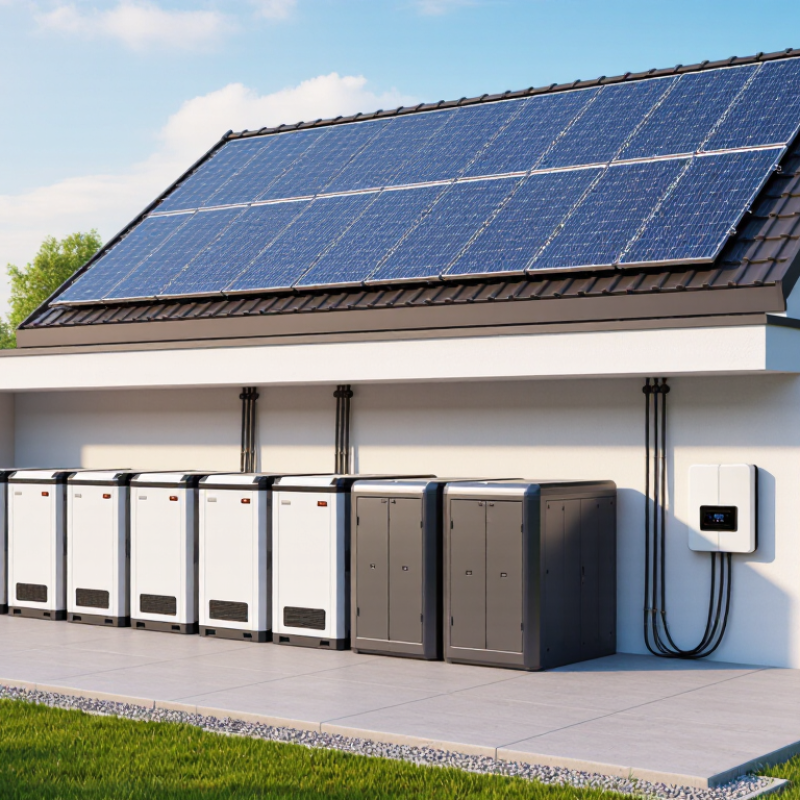
Lithium-Ion Battery Types and Their Role in Solar Storage
7 Best Lithium Ion Solar Batteries for 2026
Lithium-ion batteries store solar power for use after sunset or during outages. Their chemistry affects capacity, lifespan, safety, and cost. Lithium iron phosphate, or LFP, is often chosen for stationary storage because it offers stable operation and many charge cycles. It is usually heavier and larger than some alternatives. Nickel manganese cobalt, or NMC, can pack more energy into less space, but heat management and operating limits deserve careful attention. Neither type is automatically best.
The battery’s role depends on the household’s energy pattern. A home that runs large appliances at night may need greater usable capacity and output power. A smaller system may prioritize cycle life and predictable daily charging. Battery ratings can be confusing: advertised capacity is not always the amount available to use. Check usable capacity, continuous power, warranty conditions, and compatibility with the inverter. Details matter.
Tips: Compare the battery’s usable kilowatt-hours with your evening consumption, not just its headline capacity. Keep installation conditions within the manufacturer’s specified temperature range. Also ask how the system handles reserve power and battery monitoring. A neat specification sheet is helpful, but real usage varies, and estimates can be wrong.
Key Specifications for Comparing Solar Batteries in 2026
Comparing solar batteries in 2026 starts with usable capacity, not the biggest number on the label. A battery rated at 10 kWh may provide less energy for daily use, depending on reserve settings and operating limits. Compare usable kilowatt-hours with evening demand: lights, refrigeration, and several hours of heating or cooling. Numbers need context.
Power ratings matter just as much. Continuous output shows what the battery can run steadily; surge output covers brief starts from motors, pumps, or compressors. A home may have enough stored energy but still exceed its inverter’s output when appliances start together. Check AC or DC compatibility, inverter limits, and whether the system can provide backup during an outage. These details are easy to overlook.
Compare round-trip efficiency, warranty terms, cycle-life conditions, and operating temperature range. Cycle claims depend on discharge depth and test conditions, so read the fine print rather than treating one figure as a guarantee. A hot garage or cold utility room may affect charging and performance. Installation space matters. Leave room for service access, though exact requirements vary by system. A comparison spreadsheet helps, but neat columns can hide assumptions about backup loads and daily use.
How the Seven Battery Options Are Evaluated
The seven battery options should be judged against the same practical tests, not headline capacity alone.
Compare usable kilowatt-hours, continuous power, round-trip efficiency, warranty terms, and expansion limits. A battery with ample storage may still struggle to run several household loads at once. Check whether quoted capacity is usable and whether efficiency figures include inverter losses. Small details matter.
Temperature tolerance and safety documentation also deserve close review. NREL’s 2024 Annual Technology Baseline uses four-hour battery configurations in its utility-scale storage analysis, offering a useful reference point, though home systems operate differently. The International Energy Agency reported that battery storage additions in the power sector reached 42 gigawatts in 2023, over 130% above 2022. That growth makes clear comparisons more important, not less. Real homes differ.
For each option, record installation requirements, backup capability, monitoring features, and performance conditions. Check warranty coverage for both years and energy throughput; the headline term alone can be misleading. Safety claims should be supported by relevant testing or certification documents, rather than marketing language. A tidy spreadsheet helps, but it cannot capture every installation constraint. Shade, inverter compatibility, and household usage patterns may shift the ranking. I would treat any single “best” score cautiously, especially when test conditions are not disclosed.
Seven Top Lithium-Ion Solar Batteries and Their Strengths
Seven lithium-ion solar batteries stand out for different strengths: usable capacity for evening loads, steady power for daily appliances, and surge output for pumps or refrigerators. Modular designs can grow with a household’s needs. Integrated inverters may simplify installation, while fast backup switching helps keep essential circuits running. Thermal controls and clear warranty terms also matter. Small details matter.
NREL’s 2024 Annual Technology Baseline models utility-scale lithium-ion storage at 85% round-trip efficiency; residential systems vary. Treat that figure as a planning reference, not a promise for a specific battery. Compare usable energy, continuous output, expansion limits, inverter compatibility, backup response, temperature operating range, and warranty conditions. Honestly, a polished specification sheet can still hide awkward installation limits.
Tips: List the appliances you need during an outage, then check their combined power demand and expected runtime. Ask an installer to verify panel, inverter, and battery compatibility. Leave room for cloudy days; the sun does not follow a tidy schedule.
7 Best Lithium Ion Solar Batteries for 2026 - Seven Top Lithium-Ion Solar Batteries and Their Strengths
| Battery Profile | Chemistry | Typical Nominal Capacity | Typical Usable Energy | Typical Round-Trip Efficiency | Key Strength | Best Suited For |
|---|---|---|---|---|---|---|
| 1. Compact Home Battery | Lithium iron phosphate (LFP) | About 5–6 kWh | About 4.5–5.7 kWh | Typically around 90–96% | Smaller storage size can suit essential loads and limited installation space. | Apartments or smaller homes with modest evening usage. |
| 2. Modular LFP Battery | LFP | About 9–11 kWh per unit | About 8–10 kWh per unit | Typically around 90–96% | Expandable systems can add capacity as household needs change. | Homes planning to increase solar use or backup coverage over time. |
| 3. High-Capacity LFP Battery | LFP | About 13–16 kWh | About 12–15 kWh | Typically around 90–96% | More stored energy can support longer periods of household consumption. | Larger homes or households seeking extended evening backup. |
| 4. Compact NMC Battery | Nickel manganese cobalt (NMC) | About 5–10 kWh | About 4.5–9 kWh | Typically around 90–95% | NMC cells generally offer higher energy density than LFP cells. | Installations where a compact footprint is a priority. |
| 5. AC-Coupled Retrofit Battery | LFP or NMC, depending on system | About 5–13.5 kWh | About 4.5–12.8 kWh | System-level efficiency varies; often about 88–94% | Can be compatible with some existing solar inverter setups. | Retrofitting storage to an existing solar installation. |
| 6. High-Voltage Hybrid Battery Stack | LFP, commonly used in modular stacks | About 8–20 kWh per system | About 7–19 kWh | Depends on battery and inverter; check system specifications | Designed to pair with compatible hybrid inverters and stacked battery modules. | New solar installations designed around a hybrid inverter. |
| 7. Weather-Resistant LFP Battery | LFP | About 5–15 kWh | About 4.5–14 kWh | Typically around 90–96% | An outdoor-rated enclosure can allow installation where indoor space is limited. | Homes needing an outdoor installation; confirm the unit’s temperature and ingress ratings. |
Figures are representative ranges for residential lithium-ion solar storage, not specifications for a particular product. Usable energy, efficiency, output, warranty, operating temperature, and compatibility vary by model and installation; check the manufacturer’s current datasheet before purchasing.
Choosing a Battery for Your System, Budget, and Energy Needs
Choosing a lithium-ion solar battery starts with your actual energy use, not the largest capacity you can afford. Check your electricity bills and note how much power you use after sunset. A home running a refrigerator, lights, and internet overnight needs a different setup from one powering electric heating or vehicle charging. Small loads add up.
Compare usable capacity, continuous output, and surge output. Capacity tells you how much energy the battery can store; output limits how many appliances it can run at once. Check that its voltage and inverter are compatible with your solar system. Also review the warranty’s capacity-retention terms, operating-temperature range, and installation requirements. Details matter.
Budget for more than the battery itself. Installation, extra electrical equipment, and system changes can affect the final cost. A lower price per usable kilowatt-hour may look attractive, but only if the battery suits your daily loads. Lithium iron phosphate batteries often emphasize long cycle life and thermal stability, though individual specifications vary. Real household patterns are rarely neat; estimates can miss a cold week or an unexpected outage. Leave a practical reserve, and compare options using your own energy data.
Lithium-Ion Battery Cycle Life: LFP vs. NMC
Typical cycle-life ranges can help compare battery chemistries when choosing a home storage system.
These are indicative industry ranges, not guarantees for a specific battery. Actual cycle life depends on product design, operating temperature, charge and discharge rates, and depth of discharge.
Related Posts
-
China Best Solar System Batteries Suppliers for Global Buyers
-
Unveiling the Future: Breakthroughs in Latest Battery Technology You Need to Know About
-

Unmatched Quality of Best Lithium Ion Cells from China's Leading Manufacturers Trusted Worldwide
-
What Is a Lithium Cell and How Does It Work?
-
Why Choose a Lithium Ion Battery Pack for Your Needs?
-
How to Choose the Right Lithium Ion Solar Battery for Your Needs?