
Why Choose a LiFePO4 Solar Battery?
A Lifepo4 Solar Battery is often chosen for its long service life, steady output, and comparatively strong thermal stability. Those traits matter in a home system: the battery may sit in a garage through hot afternoons, then supply lights and appliances after sunset. Yet chemistry alone cannot guarantee safe or reliable performance. Cell quality, battery-management controls, installation, and operating temperature all shape results.
The market is growing quickly. The International Energy Agency’s 2024 report, Batteries and Secure Energy Transitions, says global battery-storage additions reached about 42 GW in 2023, more than 130% above 2022. That growth makes careful product comparisons more important, not less. Battery-market analyst James Frith’s practical takeaway can be paraphrased this way: judge a battery by lifetime value, not just its upfront price. That distinction is useful when comparing LiFePO4 with other chemistries, though actual savings depend on local tariffs, usage, and system design.
There is no perfect battery. A LiFePO4 model may cost more initially, and its advertised cycle life is not a promise under every real-world condition. Check the warranty, usable capacity, charging limits, and independent test evidence. Then match those details to your daily energy needs. This guide examines why homeowners choose this chemistry—and where a more cautious choice may make sense.
What Is a LiFePO4 Solar Battery?
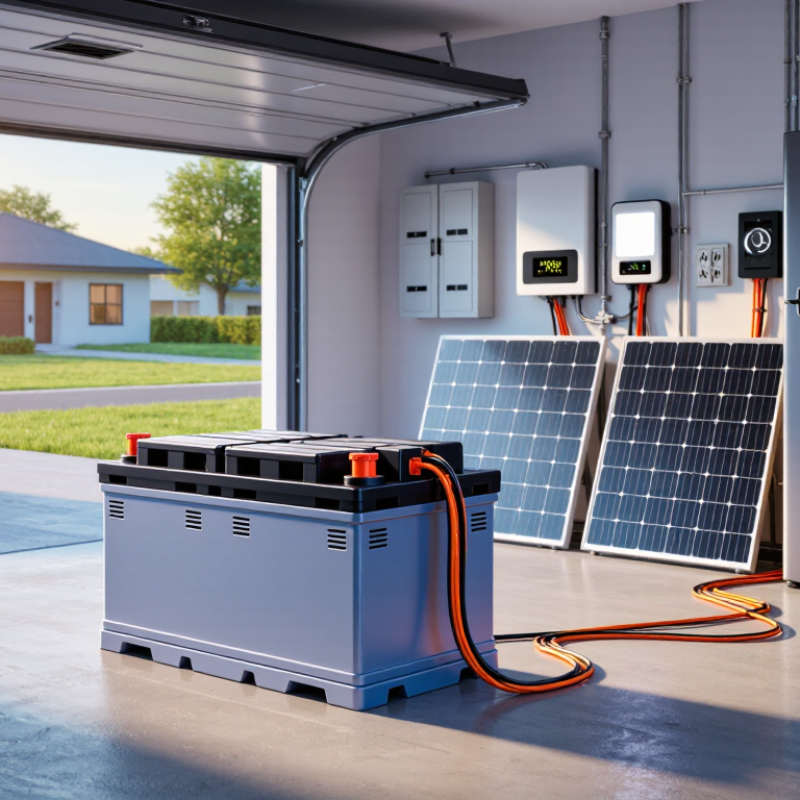
A LiFePO4 solar battery is a rechargeable lithium-ion battery that uses lithium iron phosphate in its positive electrode. Its cells store electricity as chemical energy, then release it when solar panels produce too little power. A typical system also includes a battery management system, which monitors voltage, temperature, and charging. The inverter may be separate. LiFePO4 cells have a nominal voltage of about 3.2 volts each, so several cells are connected to build a practical battery pack.
The chemistry is known for thermal stability and long cycle life, though actual performance depends on cell quality, temperature, and charging settings. It usually stores less energy per kilogram than some other lithium-ion chemistries. That trade-off can matter when space or weight is limited. The International Energy Agency reported that LFP batteries made up nearly 40% of the electric-car battery market in 2023. That figure describes cars, not solar installations, but it shows how widely the chemistry is used. Details matter.
Tips: Check the battery’s usable capacity, continuous power rating, warranty conditions, and compatibility with your inverter. Keep it within the manufacturer’s recommended temperature range. A large capacity number alone can mislead; usable energy and daily household demand matter more. And sizing is not always straightforward. A household with electric heating may need a different system from one that mainly powers lights and a refrigerator.
How Does It Store and Deliver Solar Energy?
A solar panel produces direct-current electricity when sunlight reaches its cells. A charge controller regulates that power before it enters a LiFePO4 battery. Inside the battery, lithium ions move between electrodes during charging, storing energy in chemical form. No sunlight is needed while the battery is discharging. The stored energy becomes electrical current for a home or small off-grid system.
When a light or appliance needs power, the battery supplies DC electricity. An inverter can convert it to AC for common household devices. A battery management system monitors cell voltage, current, and temperature, helping keep operation within specified limits. It is not magic. Cold conditions can restrict charging, and an undersized inverter may struggle with appliances that draw a brief surge. Correct system settings matter; a mismatch can waste energy or reduce battery life.
Tips: Check the battery’s charging limits and the controller settings in the manuals. Keep connections secure, and allow ventilation around electrical equipment. Track daily energy use, not just the battery’s advertised capacity. Small loads add up. A cloudy week can expose gaps in your plan, so some reserve capacity is sensible.
What Makes LiFePO4 Different from Other Battery Chemistries?
LiFePO4 uses an iron-phosphate cathode, unlike nickel-rich chemistries such as NMC. That chemistry avoids nickel and cobalt and is known for strong thermal stability. In a home battery, this can mean a more forgiving choice near a warm garage wall or utility room. It does not make a system risk-free: installation, ventilation, controls, and operating temperature still matter. Chemistry is only part of the story.
The trade-off is lower energy density, so a LiFePO4 pack may need more space for the same stored energy. That matters in a tight cabinet. Cycle life also depends on cell quality, depth of discharge, temperature, and charging limits, so advertised figures are not guarantees. The International Energy Agency’s Global EV Outlook 2024 reported that LFP batteries accounted for nearly 40% of the global electric-car battery market in 2023, reflecting growing use beyond home storage. A market share is not a performance test, but it shows the chemistry has moved well beyond a niche. For solar owners, usable capacity, warranty terms, and cold-weather behavior deserve as much scrutiny as chemistry. The comparison is not perfect. A well-designed system matters.
Why Choose a LiFePO₄ Solar Battery?
A key difference is cycle life: LiFePO₄ batteries can typically deliver more charge-discharge cycles than many other common battery chemistries.
Bars show approximate midpoints of representative cycle-life ranges: lead-acid 300–500 cycles, NMC lithium-ion 1,000–2,000 cycles, and LiFePO₄ 2,000–5,000 cycles. Actual cycle life varies with battery design, depth of discharge, temperature, and charging conditions; these figures are not guaranteed specifications.
How Do Safety, Lifespan, and System Compatibility Compare?
A LiFePO4 solar battery can offer a useful safety margin: its iron-phosphate chemistry is generally more thermally stable than nickel-rich lithium-ion chemistries. But chemistry alone cannot prevent faults. Poor wiring, damaged cells, or inadequate cooling can still create hazards. Still, not risk-free. Choose a system with a battery management system, suitable overcurrent protection, and clear installation guidance; keep it away from heat and moisture.
Lifespan depends on depth of discharge, temperature, and charge rate, not just the chemistry. The Pacific Northwest National Laboratory’s 2022 Grid Energy Storage Technology Cost and Performance Assessment reports roughly 3,000–6,000 cycles for lithium iron phosphate batteries. Treat that as a test-based range, not a household guarantee. A battery in a hot garage, repeatedly drained to its limit, may age sooner. Check the warranty’s cycle and capacity terms.
Compatibility deserves equal attention. Confirm that the inverter supports the battery’s voltage range, charging limits, and battery-management communications. A connector that fits is not proof of a working match. NREL’s 2024 Annual Technology Baseline uses 85% round-trip efficiency for utility-scale battery storage, but that figure does not predict a home system’s performance. Ask for system-specific efficiency and verify settings before commissioning.
Which Solar Applications Benefit Most from LiFePO4?
LiFePO4 solar batteries are especially useful where storage is charged and discharged often. In an off-grid cabin, daytime panels can store power for evening lights, a refrigerator, and device charging. The chemistry generally supports frequent cycling, while a battery management system helps monitor voltage and temperature. That matters.
Recreational vehicles and boats can also benefit when solar power must fit limited space and weight. A compact battery may supply lighting, pumps, and electronics without relying on a generator every night. For homes with solar backup, LiFePO4 can serve essential circuits during an outage, such as a router, selected lights, or a medical-device outlet. Runtime still depends on battery capacity and the loads connected.
Remote monitoring sites and small farms are other practical applications, especially where grid access is limited. But no battery suits every installation. Cold charging conditions, inverter settings, ventilation, and available sunlight all affect performance. It is easy to focus on cycle-life figures and overlook those details. A correctly sized system, matched to its charge controller and daily energy use, is usually more useful than simply choosing the largest battery.
| Solar Application | Benefit Level | Why LiFePO4 Can Be a Good Fit | Key Design Considerations |
|---|---|---|---|
| Home solar energy storage | High | Stores daytime solar generation for use after sunset, and its long cycle life can suit regular charge-and-discharge use. LiFePO4 also has good thermal stability compared with many other lithium-ion chemistries. | Match battery capacity to household loads and backup needs. Confirm inverter compatibility, battery management system requirements, installation location, and applicable electrical codes. |
| Off-grid homes and cabins | High | Can support repeated cycling where solar is a primary energy source. Its relatively high usable capacity can help reduce the amount of stored energy that must remain unused, subject to the battery’s specifications. | Size the system for seasonal sunlight, peak loads, and several low-sun days. Include a suitable charge controller and a backup charging plan where needed. |
| Recreational vehicles and camper systems | High | Often offers more usable energy per unit of weight than lead-acid batteries, which can be helpful when vehicle payload and storage space are limited. It also supports frequent cycling during trips. | Check the battery’s approved mounting orientation, temperature limits, charging profile, and compatibility with the vehicle’s alternator or DC-to-DC charger. |
| Marine and boat solar systems | High | Its lower weight than comparable lead-acid storage can benefit weight-sensitive installations, while a long cycle life can suit regular onboard use. | Use equipment rated for the marine environment. Protect connections from moisture and corrosion, and follow manufacturer guidance for ventilation, charging, and battery placement. |
| Remote monitoring and telecommunications | High | Can provide dependable storage for solar-powered equipment in locations where routine battery maintenance or replacement is difficult. | Design for the site’s lowest expected temperatures and longest period of poor sunlight. Verify standby power needs, battery monitoring, and low-temperature charging protection. |
| Solar streetlights and standalone lighting | Moderate to high | Repeated nightly discharge can make cycle life an important consideration. Compact battery systems may also simplify integration into standalone lighting equipment. | Size storage for the required hours of illumination and local weather conditions. Confirm that the charge controller supports the battery chemistry and includes suitable protection. |
| Seasonal or occasional-use solar systems | Moderate | LiFePO4 may offer long service life when operated within its specified limits, but its advantages may be less valuable when the battery is used infrequently. | Compare total system cost and expected use. Follow storage and maintenance instructions, and avoid charging below the battery’s permitted temperature range unless it has appropriate protection. |
Note: Actual cycle life, usable capacity, charging limits, and system performance vary by battery design, operating temperature, depth of discharge, and installation. Always follow the battery and inverter manufacturers’ specifications.
Related Posts
-
China Best Solar System Batteries Suppliers for Global Buyers
-
7 Best Lithium Ion Solar Batteries for 2026
-
Top Strategies for Effective Power Storage Battery Management
-
Why Choose Lithium Iron Batteries for Your Energy Needs?
-
Top Strategies for Leveraging Best New Battery Technology in Your Business
-
Explore the Top Choices for Best Solar System Batteries in 2023